Day School · Secondary School
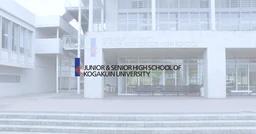
Junior & Senior High School of Kogakuin University
Japan
Last updated: May 1, 2026
- Qualifications offered
- IGCSE
- Tuition from
- ¥480,000 - ¥648,000(2025-2026)≈ $3,034 - $4,096
Overview
Junior & Senior High School of Kogakuin University is an IGCSE school. Taught in Japanese and English. Annual tuition: ¥480,000–¥648,000.
Junior & Senior High School of Kogakuin University is a co-educational private day school in Tokyo (ages 13–18) affiliated with Kogakuin University, a science and engineering university. The school offers three specialized 'Hybrid' streams — Science, Advanced Arts & Science, and International — with a distinctive K-STEAM curriculum integrating technology, global liberal arts, and project-based learning. Its Hybrid International course conducts STEM classes in English and targets CEFR C1 proficiency, preparing students for global universities. The school has been ranked first among Japanese schools focusing on ICT education and provides career guidance oriented toward world top-200 universities.
At a Glance
Direct university pipeline — 93 students (2025) advanced to affiliated Kogakuin University's engineering programs, providing clear STEM pathway
Global university placements — Recent graduates accepted to US, UK, Australian universities including UC Davis, University of Sydney, and Queen's Belfast
High English proficiency target — International Class aims for CEFR C1 level at graduation with science/math taught in English
Multiple exam opportunities — 4 exam rounds (Feb 1-6) with flexible 2-subject or 4-subject testing; merit scholarships available for top performers
Premium STEM-focused education — Annual tuition ¥943,000-¥1,200,000 depending on track; best for families seeking engineering-oriented, globally-minded curriculum
Tuition & Fees
Tuition from
¥480,000 - ¥648,000(2025-2026)≈ $3,034 - $4,096
Application Fee
¥250,000≈ $1,580
Est. First Year Total
¥980,000≈ $6,194
Tuition by Grade
| Grade | Annual Tuition | Application Fee | Deposit |
|---|---|---|---|
| Junior High (Advanced Class) | ¥480,000≈ $3,034 | - | - |
| Junior High (International Class) | ¥576,000≈ $3,641 | - | - |
| Senior High (Advanced Arts & Science / Arts & Science Course) | ¥480,000≈ $3,034 | - | - |
| Senior High (International Course) | ¥648,000≈ $4,096 | - | - |
Additional Fees
Enrolment Fee
¥250,000≈ $1,580
Approximate values based on ECB reference rates (Oct 5 – 9, 2026). Actual amounts may vary.
Scholarships & Financial Aid
2Special Scholarship Entrance Exam (特待入試)
Merit-BasedJASSO University Reserve Scholarship (日本学生支援機構 予約奨学金)
Need-BasedCurriculum & Academics
Languages of Instruction
Languages of Instruction
Compulsory / Optional
Accreditations & Memberships
Outcomes & Results
University Destinations
Admissions
Admissions Overview
Admissions are conducted via annual written entrance examinations with multiple rounds for both junior high (typically February) and senior high. Junior high applicants may choose from 4-subject or 2-subject exam combinations, with special rounds for scholarship candidates (特待入試) and separate International and Returnee (帰国生) tracks. The International course requires at least Eiken Grade 2 (CEFR A2) English proficiency. Required documents include the application form, photo, school transcript (調査書), and health certificate for graduates. Exam fees are approximately ¥25,000–¥30,000. There are no publicly disclosed acceptance rates or interview requirements.
Requirements
Senior High (General Tracks)
English Requirement: Intermediate English
Application Fee: 25,000
Junior High (International Course)
English Requirement: Advanced English
Application Fee: 30,000
Key Dates
Senior high 1st general entrance examination (第1回一般入試)
Application period for Junior High International course Round 1 exam: January 10–31
Application period for Senior High 1st general exam: January 26 – February 3
第1回A特待入試 — merit scholarship entrance examination for junior high
School Life
Support & Wellbeing
Co-curricular Activities
16 activitiesTeam Sports(3)
Grades: Secondary
Individual Sports(5)
Grades: Secondary
Music(1)
Grades: Secondary
Drama & Theatre(1)
Grades: Secondary
STEM(1)
Grades: Secondary
Visual Arts(1)
Grades: Secondary
School-specific(4)
Grades: Secondary
Facilities
12 facilitiesSchool-specific(12)
Campuses
Main Campus
Junior & Senior High School of Kogakuin University
Tokyo, Japan
Schoozy Insights
Admissions Deep Dive
Multi-track admissions with February exam rounds; International course requires Eiken Grade 2 minimum. Merit scholarships available through special entrance exams.
Read More
Overview
The Junior & Senior High School of Kogakuin University operates a comprehensive admissions system serving students ages 13–18 in a co-educational day school format. The school is affiliated with Kogakuin University, a science and engineering institution, which influences its STEM-focused curriculum and admissions philosophy.
Application Timeline & Process
Junior High School Admissions
The junior high admissions process follows a concentrated February examination schedule with multiple exam rounds. For 2026 admissions:
- Application Period: Typically January 10–31 for first-round exams
- Exam Dates: Multiple rounds held February 1–6, 2026
- First Round: February 1, 2026 (includes special scholarship track)
- Additional Rounds: February 2, 3, and 6
The school publishes admissions guidelines several months in advance, with 2026 requirements posted in September 2025. All applications are submitted through an online system.
Senior High School Admissions
Senior high admissions follow a similar but slightly later timeline:
- Application Period: January 26–February 3, 2026
- First General Exam: February 10, 2026
- Exam Fee: ¥25,000
Both divisions offer specialized tracks for overseas and returnee students, though detailed schedules are published primarily in Japanese.
Exam Formats & Requirements
Standard Track Options
The junior high entrance examinations offer flexible subject combinations to accommodate different student strengths:
Four-Subject Option:
- Japanese
- Mathematics
- Social Studies
- Science
Two-Subject Combinations:
- Japanese/Math
- English/Math
- English/Japanese
This flexibility allows students to showcase their abilities in their strongest subjects while meeting admissions requirements.
International Course Requirements
The International track maintains significantly higher English proficiency standards:
- Minimum Requirement: Eiken Grade 2 (approximately CEFR A2 level)
- English Exam: Mandatory for all International course applicants
- Additional Testing: Cambridge English and IELTS exams administered throughout the year
- Target Proficiency: Graduates expected to reach CEFR C1 level
International course examinations include multiple rounds on February 1, 2, 3, and 6, with dedicated application windows typically running January 10–31.
Required Documentation
Applicants must submit a complete application package including:
Mandatory Documents
- Official application form (downloaded from school website)
- Recent photograph
- 調査書 (school report/transcript from current school)
- Health certificate (for graduates/transfer students only)
- Entrance examination fee payment (¥25,000–¥30,000 depending on exam type)
Optional Documents
- 入学諸経費延納願 (tuition deferral request form) for certain selective exams
- English proficiency certificates (Eiken, Cambridge, TOEFL, IELTS) for International course applicants
All materials must be submitted by the application deadline, which typically closes 1–2 weeks before the examination date.
Selection Criteria
Assessment Methodology
While the school does not publicly disclose detailed selection criteria or acceptance rates, the admissions process clearly emphasizes:
Academic Performance: Entrance exam scores serve as the primary evaluation metric across all subjects tested.
English Proficiency: For International course applicants, demonstrated English ability through standardized tests is essential.
Special Consideration: The 特待入試 (special scholarship examination) specifically identifies top-performing students for merit-based tuition reduction.
Track-Specific Requirements
Hybrid Science Class: Designed for students with strong mathematics and science foundations, with instruction in Japanese.
Hybrid Advanced Arts & Science: Targets students preparing for highly competitive university pathways, requiring strong performance across multiple subjects.
Hybrid International Class: Requires both demonstrated English proficiency (minimum Eiken Grade 2) and strong STEM capabilities, as science and mathematics are taught in English.
The school does not mention interviews, portfolios, or holistic review processes in its public admissions materials, suggesting a predominantly exam-based selection system.
Merit Scholarships
The school operates a merit-based scholarship program linked directly to entrance examinations:
特待生 (Special Scholarship Students) System
Certain exam rounds are explicitly designated as scholarship selection exams, particularly the "第1回A特待入試" (First Round A Special Scholarship Exam). Top performers in these examinations receive tuition reduction benefits, though the school does not publicly specify:
- Percentage of tuition covered
- Number of scholarships awarded
- Duration of scholarship benefits
- Renewal criteria
Families interested in merit scholarships should contact the admissions office directly for detailed information about award amounts and eligibility.
Overseas & Returnee Admissions
The school maintains dedicated admission pathways for:
- Overseas Examination: For students currently residing abroad
- 帰国生 (Returnee) Examination: For Japanese students returning from extended overseas residence
These specialized tracks acknowledge the unique educational backgrounds of internationally mobile families, though detailed schedules and requirements are published primarily in Japanese and require direct inquiry.
Key Considerations for Applicants
Ideal Candidate Profile
The admissions structure reveals the school's preference for students who are:
- Academically Strong: Particularly in mathematics, science, and English
- Globally Minded: Comfortable with international perspectives and language learning
- Technology-Oriented: Interested in STEM fields and ICT integration
- Collaborative: Suited to project-based and active learning environments
Students Who May Not Fit
- Those preferring traditional lecture-based instruction
- Students without strong English foundation (for International course)
- Families seeking primarily liberal arts focus
- Those uncomfortable with technology-intensive curriculum
Financial Readiness
Given the concentrated application timeline and non-refundable examination fees, families should:
- Prepare applications well in advance of January deadlines
- Budget for exam fees (¥25,000–¥30,000 per attempt)
- Consider first-year costs of ¥943,000–¥1,200,000 depending on track
- Factor in additional expenses for textbooks (¥30,000–¥130,000) and study trips
Application Strategy
The multiple examination rounds offer strategic advantages:
- Early Rounds: Higher competition but more subsequent opportunities if unsuccessful
- Multiple Attempts: Students can sit for several exam dates to improve chances
- Subject Selection: Flexibility in choosing 2-subject vs. 4-subject exams allows strategic positioning
- Scholarship Timing: First-round exams often include scholarship consideration
Prospective families should carefully review the annual admissions guidelines (published September for following year) and utilize the online application system to manage deadlines across multiple exam rounds.
Sources
- Kogakuin University Junior & Senior High School Official Admissions
- Junior High School Exam Information - Study1
- Senior High School Exam Information - Studyh
- International Class Curriculum
- School Philosophy and Course Structure
- 2025 Tuition and Fee Structure
- General Entrance Exam Guidelines
- Round Square School Profile
University Placement Analysis
Kogakuin graduates matriculate to diverse institutions, with strong placement in engineering-focused Japanese universities and growing international acceptances across US, UK, and Australian instit...
Read More
Overview of University Placement
The Junior & Senior High School of Kogakuin University demonstrates a diverse university placement profile reflecting its dual emphasis on STEM education and global awareness. As a school affiliated with Kogakuin University (a science and engineering institution), placement data shows both strong domestic university outcomes and an expanding international footprint.
Domestic University Placements (2025)
National and Public Universities
The 2025 graduating cohort (including repeaters) achieved acceptances to several prestigious national and public universities:
- Hokkaido University: 2 students
- Tokyo Gakugei University: 2 students
- University of Electro-Communications: 2 students
- University of Aizu: 1 student
These placements reflect the school's strong foundation in science and technology education, with particular success in engineering-oriented national institutions.
Private University Outcomes
Elite Private Universities
Graduates secured admissions to Japan's most selective private institutions:
- Keio University: 1 student
- Waseda University: 2 students
- Sophia University: 7 students
- Tokyo University of Science: 4 students
The acceptance to these highly competitive institutions demonstrates that Kogakuin successfully prepares students for Japan's most rigorous university entrance examinations.
GMARCH Universities
The school showed particularly strong placement in the prestigious GMARCH group (Gakushuin, Meiji, Aoyama Gakuin, Rikkyo, Chuo, and Hosei universities):
| University | Number of Students |
|---|---|
| Meiji | 12 |
| Aoyama Gakuin | 9 |
| Rikkyo | 6 |
| Chuo | 12 |
| Hosei | 18 |
| Gakushuin | 1 |
This significant GMARCH placement indicates that the school effectively serves students aiming for selective private universities across various disciplines.
Affiliated University Placement
Reflecting the school's direct affiliation with Kogakuin University, a substantial number of graduates matriculated to the parent institution in 2025:
- Advanced Engineering: 16 students
- Engineering: 30 students
- Integrated Architecture: 23 students
- Integrated Information Technology: 24 students
Total to Kogakuin University: 93 students
This pathway provides a clear progression for students interested in engineering and technology fields, with the advantage of familiarity with the institution and potentially streamlined admissions.
International University Placements
Recent International Acceptances (2025)
The school has developed a notable international placement track, with 2025 graduates securing acceptances to institutions across multiple countries:
United States
- Michigan State University
- Hofstra University
- Gonzaga University
- Arizona State University
- Northeastern University (Oakland)
Australia
- University of Sydney
- University of Western Australia
United Kingdom
- Queen's University Belfast
Canada
- Simon Fraser University
Each of these institutions received one matriculating student in 2025.
Cumulative International Record (2019-2025)
Over the six-year period from 2019 to 2025, Kogakuin graduates have gained admission to a diverse array of international institutions:
Notable US Universities
- Baylor University
- Oregon State University
- Syracuse University
- Rutgers University
- UMass Amherst
- University of Alabama–Birmingham
- Temple University
- Williams College
- University of California, Davis
UK Institutions
- University of Dundee
- University of Exeter
Other Regions
- University of Pécs (Hungary)
- Semmelweis University (Hungary)
- Sunway University (Malaysia)
- Thompson Rivers University (Canada)
This expanding international footprint demonstrates the effectiveness of the school's International Class curriculum and global university preparation program.
Academic Support and Preparation
English Proficiency Goals
The school's International Class sets an ambitious target of CEFR C1 proficiency for graduates. This advanced English level is essential for success at international universities and represents a significant competitive advantage. The curriculum employs Cambridge and Oxford materials with immersion methods to achieve this goal.
University Counseling Approach
Kogakuin provides dedicated career guidance with specific focus on global opportunities. The school explicitly states it "provides career guidance with an eye toward universities ranked in the top 200 in the world," indicating a structured approach to helping students identify and apply to internationally competitive institutions.
Academic Preparation by Track
The school's three-track system prepares students for different university pathways:
Hybrid Advanced Arts & Science: Targets highly selective Japanese universities in technical and medical fields
Hybrid Science: Focuses on mathematics and science preparation for STEM programs
Hybrid International: Prepares students specifically for global university applications with STEM subjects taught in English
Placement Analysis and Observations
Strengths
Engineering Focus: The dominant placement in engineering and technology programs aligns with the school's STEM-oriented mission and affiliation with Kogakuin University.
Diversified Outcomes: While many students choose the affiliated university, significant numbers also gain admission to competitive national, private, and international institutions.
Growing International Presence: The expansion of overseas placements demonstrates successful implementation of global education initiatives.
Notable Patterns
Affiliated University Pipeline: Nearly one-third of placement data reflects matriculation to Kogakuin University, suggesting this remains a primary pathway for many families.
Broad Geographic Distribution: International acceptances span four continents, indicating flexible preparation for various educational systems.
Competitive Private University Access: Strong GMARCH placement shows the school successfully prepares students for Japan's competitive private university landscape.
Data Limitations
The school does not publicly report:
- Total graduating class size
- Acceptance rates versus matriculation rates
- Average standardized test scores (SAT, ACT, IB)
- Scholarship awards received by students
- Graduation rates or university completion statistics
- Breakdown by course track (how many International Class students versus Science Class)
These omissions make it difficult to calculate precise placement percentages or evaluate outcomes relative to cohort size.
Conclusion
Kogakuin University's affiliated junior and senior high schools demonstrate solid university placement outcomes aligned with their engineering-focused, globally-minded mission. The combination of strong domestic placements—particularly in STEM fields—and growing international acceptances reflects the school's dual commitment to Japanese higher education excellence and global opportunities. The significant pipeline to the affiliated Kogakuin University provides a clear pathway for engineering-focused students, while the expanding international placement record shows increasing success in preparing students for overseas study at respected institutions across multiple countries.
School Culture & Community
STEAM-focused school with motto "Challenge, Creation, Contribution" emphasizing active learning, global citizenship, and engineering heritage through three hybrid tracks and extensive international...
Read More
Educational Philosophy & Values
The Junior & Senior High School of Kogakuin University operates under the motto "Challenge, Creation, and Contribution," reflecting its heritage as a school affiliated with Kogakuin University, a science and engineering institution. This philosophy emphasizes training students to contribute to society through innovation and problem-solving.
The school champions a cutting-edge K-STEAM approach that integrates global liberal arts with engineering disciplines. According to the principal's message, the school ranks first among Japanese schools focusing on ICT education and actively promotes cooperation and collaboration with universities and organizations worldwide. The educational model centers on:
- Peer Instruction Lectures (PIL) and Project Based Learning (PBL)
- Active learning environments emphasizing "learning by doing"
- Collaboration among peers rather than passive instruction
- Real-world problem-solving through programs like "Mission on the Ground"
This approach aims to develop 21st-century skills and global citizenship, preparing students not just for exams but for meaningful contributions to society.
Academic Structure & Student Tracks
The school offers three distinct "Hybrid" course streams designed to accommodate different student interests and goals:
Junior High School Tracks
Hybrid Advanced Arts & Science Class: Targets students preparing for highly competitive university pathways, offering a balanced curriculum that prepares students for either humanities or sciences at top-tier institutions.
Hybrid Science Class: Specializes in mathematics and science education (taught in Japanese) with advanced English instruction. Ideal for students with strong STEM interests who prefer instruction in their native language.
Hybrid International Class: Emphasizes STEM subjects taught in English with intensive language training. The curriculum uses Cambridge and Oxford texts with immersion methods, aiming for graduates to achieve CEFR C1 proficiency in English. Entry requires at least Eiken Grade 2 (approximately CEFR A2) proficiency.
Senior High School Tracks
The senior high maintains similar divisions: Hybrid International, Hybrid Science, and two Hybrid Arts & Science courses (Advanced and regular), each building on the junior high foundation with increased specialization.
This structure attracts globally minded students comfortable with technology and science, creating a community of academically motivated peers sharing similar interests in innovation and international engagement.
Student Life & Annual Events
The school calendar features a robust program of activities fostering community and global awareness:
Key Annual Events
April:
- Entrance ceremonies and orientation camps
- Mt. Takao hiking trip for new students
- Health and physical examinations
Throughout the Year:
- School-wide sports festivals
- Language proficiency testing (EIKEN, IELTS, Cambridge exams)
- Science Festival (August)
- Parent-Teacher-Student Conferences (held each term, notably in July)
- Career guidance seminars and university open campus participation
International Programs
The school emphasizes global experiences:
- Asian Student Leadership Conference in Singapore (July)
- Summer study trips to Australia for homestays
- Science and technology camps in the USA
- Various overseas exchange programs aligned with the school's global citizenship mission
These programs reflect the school's commitment to developing internationally aware students and provide regular opportunities for cross-cultural engagement.
Extracurricular Activities
The school offers an extensive range of clubs spanning athletics, arts, and academics:
Sports Clubs
- Soccer, baseball, tennis, badminton
- Basketball (separate boys' and girls' teams)
- Swimming, judo, track & field
- Soft tennis
Cultural & Academic Clubs
- Drama and dance
- Brass band (wind instruments)
- Art club
- Automotive club
- Science club
Club participation data from May 2025 shows dozens of active organizations, though specific participation rates are not publicly disclosed. The variety of offerings suggests strong student engagement across diverse interests.
Parent & Family Engagement
The school maintains active communication with families through:
- Parent-Teacher-Student Conferences held each academic term
- PTA membership (annual dues of ¥15,000)
- Regular updates on academic progress and school events
The structured conference schedule indicates the school values collaborative relationships between educators and families in supporting student development.
Student Support & Well-being
While formal counseling services are not detailed in public materials, the school's approach to student well-being includes:
- Small class sizes facilitating personalized attention
- Active learning environments promoting peer collaboration
- Early-year health checkups and physical examinations
- Career guidance with emphasis on global university options (including institutions ranked in the top 200 worldwide)
The emphasis on peer collaboration, reflection, and support in classroom learning suggests attention to holistic student development, though specific mental health resources are not publicly documented.
Community Character & Ideal Fit
The school community is characterized by:
Student Profile
The ideal Kogakuin student is:
- Academically motivated, especially in STEM subjects
- Globally minded with interest in international issues
- Comfortable with technology-enhanced learning
- Willing to engage in collaborative, project-based work
- (For International track) Proficient in English with desire to reach advanced fluency
Students Who May Not Fit
- Those preferring traditional, lecture-based instruction
- Students seeking purely exam-oriented education without project work
- Applicants lacking English proficiency for International courses
- Families uncomfortable with high tuition costs (¥900,000-1,200,000 annually)
- Students uninterested in intensive science/ICT curriculum
Global Citizenship & Round Square Membership
As a member of Round Square, an international network of schools, Kogakuin emphasizes values of internationalism, democracy, environmentalism, adventure, leadership, and service. This membership reinforces the school's commitment to developing students who can navigate and contribute to a globalized world.
The school's provision of career guidance targeting universities ranked in the top 200 globally demonstrates its commitment to preparing students for international academic pathways and careers.
Community Strengths
The school's culture stands out for:
- STEAM Integration: Unique combination of engineering heritage with liberal arts education
- Language Excellence: Structured progression to C1 English proficiency in International track
- Active Learning: Consistent emphasis on collaboration and hands-on problem-solving
- Global Connections: Extensive overseas programs and international university preparation
- University Affiliation: Direct pathway to Kogakuin University while supporting diverse university placements
This combination creates a distinctive community for families seeking rigorous STEM education within an internationally minded environment.
Sources
- Kogakuin School Philosophy - Official Site
- Principal's Message - Official Site
- International Class Overview - Official Site
- School Events Junior High - Official Site
- Club Activities - Official Site
- Club Activities List (Japanese) - Official Site
- Round Square School Profile
- Admission Information - Study Portal
- 2025 Tuition & Fees Announcement
Total Cost Analysis
First-year costs range from ¥943K-¥1.2M depending on track, with International courses requiring significantly higher fees. Above Tokyo's private school average but mid-range overall.
Read More
Overview
Junior & Senior High School of Kogakuin University implemented significant fee structure changes for 2025 entrants, eliminating certain one-time charges while raising annual maintenance costs. Total expenses vary substantially between academic tracks, with the International courses commanding premium pricing due to enhanced English programming and specialized instruction.
Junior High School Costs
First-Year Expenses
Advanced Class (First Year):
- Entrance Fee: ¥250,000 (one-time)
- Annual Tuition: ¥480,000
- Facilities Maintenance Fee: ¥192,000 (increased from ¥108,000 previously)
- PTA Dues: ¥15,000
- Student Council Fee: ¥5,500
- Japan Sports Council Insurance: ¥480
- Total: ¥942,980
International Class (First Year):
- Entrance Fee: ¥250,000 (one-time)
- Annual Tuition: ¥576,000
- Facilities Maintenance Fee: ¥192,000
- Educational Enrichment Fee: ¥60,000 (International class only)
- PTA Dues: ¥15,000
- Student Council Fee: ¥5,500
- Japan Sports Council Insurance: ¥480
- Total: ¥1,098,980
Additional Junior High Costs
Beyond mandatory tuition and fees, families should budget for:
- Textbooks and Materials: Approximately ¥130,000 annually
- Overseas Study Reserve: Approximately ¥150,000 accumulated over three years for the mandatory cultural experience program scheduled for Year 3
- Uniforms: Not specified but required
- Entrance Exam Fee: ¥25,000-¥30,000 depending on exam track
Second and Third Year Costs
After the first year, the one-time entrance fee is eliminated, reducing annual costs to approximately ¥692,980 for Advanced Class students and ¥828,980 for International Class students (excluding textbooks and activities).
Senior High School Costs
First-Year Expenses
Arts & Science Courses (First Year):
- Entrance Fee: ¥250,000 (one-time)
- Annual Tuition: ¥480,000
- Facilities Maintenance Fee: ¥192,000
- Educational Enrichment Fee: ¥84,000
- PTA Dues: ¥15,000
- Student Council Fee: ¥5,500
- Japan Sports Council Insurance: ¥1,050
- Total: ¥1,027,550
International Course (First Year):
- Entrance Fee: ¥250,000 (one-time)
- Annual Tuition: ¥648,000
- Facilities Maintenance Fee: ¥192,000
- Educational Enrichment Fee: ¥84,000
- PTA Dues: ¥15,000
- Student Council Fee: ¥5,500
- Japan Sports Council Insurance: ¥1,050
- Total: ¥1,195,550
Additional Senior High Costs
- Textbooks: Approximately ¥30,000 annually
- Materials and Event Fees: Approximately ¥110,000 annually
- Study Tour Reserve: Approximately ¥80,000 accumulated for the mandatory Year 2 study tour
- Entrance Exam Fee: ¥25,000 for general exams
Subsequent Years
Second and third-year students pay approximately ¥777,550 annually for regular courses and ¥945,550 for the International course (excluding supplementary costs).
Fee Structure Changes (2025)
The 2025 revision brought notable adjustments:
Eliminated:
- Equipment/Facility Fee: Previously ¥130,000 for new students
Increased:
- Facilities Maintenance Fee: Rose from ¥108,000 to ¥192,000 (78% increase)
Maintained:
- Entrance fees remained at ¥250,000
- Base tuition rates unchanged for Advanced classes
These changes partially offset each other, with net first-year costs decreasing slightly despite higher annual maintenance fees.
Comparative Analysis
Tokyo Private School Context
According to Tokyo Metropolitan Government data, the average first-year cost at full-time private high schools in Tokyo is approximately ¥971,469. Kogakuin's costs position as follows:
- Advanced/Regular Courses: ¥943K-¥1.03M (slightly below to slightly above average)
- International Courses: ¥1.10M-¥1.20M (well above average)
- Tokyo Private School Maximum: ¥1.92M (Kogakuin is mid-to-upper range)
The school's fees reflect its specialized STEAM curriculum, advanced facilities, and university affiliation while remaining more accessible than Tokyo's most elite institutions.
Hidden and Variable Costs
Transportation
The school provides complimentary bus service to campus, potentially reducing commuting expenses for families. However, students using public transportation must budget accordingly.
Meals and Daily Expenses
Lunch fees and cafeteria costs are not itemized separately in published materials. Families should anticipate daily meal expenses.
International Programs
While overseas study reserves are collected systematically, actual program costs may vary. The school schedules:
- Junior High: Cultural experience program in Year 3 (¥150,000 reserve)
- Senior High: Study tour in Year 2 (¥80,000 reserve)
- Optional programs: Summer study trips to Australia, USA, and Singapore; costs not publicly disclosed
Club Activities
Extracurricular participation may incur additional expenses for equipment, uniforms, competition fees, and travel. The school offers numerous sports and cultural clubs but does not publish associated costs.
Financial Aid Considerations
Merit-Based Scholarships
The school operates a "特待生" (tokutaisei/special treatment) system linked to specific entrance exams. Top performers in designated exam rounds may receive tuition reductions, though exact award amounts are not publicly disclosed. Families interested in merit scholarships must:
- Apply through special scholarship exam tracks (e.g., "第1回A特待入試")
- Achieve high scores in competitive entrance examinations
- Contact admissions directly for scholarship details
External Funding
The school facilitates access to Japan Student Services Organization (JASSO) scholarships for graduating seniors entering university. Applications open in late May with July deadlines. These post-secondary awards do not reduce high school tuition.
No Multi-Child Discounts
Published materials contain no mention of sibling discounts or multi-child tuition reductions. Families with multiple enrolled students should budget for full fees per child.
Six-Year Total Cost Projection
Junior and Senior High (Complete Program)
Advanced/Regular Track:
- Junior High (3 years): ¥943K + ¥693K + ¥693K = ¥2.329M
- Senior High (3 years): ¥1.028M + ¥778K + ¥778K = ¥2.584M
- Six-Year Total: ¥4.913M (excluding textbooks, activities, and optional programs)
International Track:
- Junior High (3 years): ¥1.099M + ¥829K + ¥829K = ¥2.757M
- Senior High (3 years): ¥1.196M + ¥946K + ¥946K = ¥3.088M
- Six-Year Total: ¥5.845M (excluding textbooks, activities, and optional programs)
Adding estimated textbooks, materials, and program reserves brings comprehensive six-year costs to approximately ¥5.5M-¥6.5M depending on track selection.
Summary
Kogakuin's tuition structure reflects its positioning as a science and technology-focused institution with strong international programming. The International courses command a 20-35% premium over regular tracks, justified by extensive English instruction, specialized curricula, and enhanced global opportunities. While above Tokyo's private school average, costs remain accessible compared to elite international schools. Families should carefully evaluate track selection based on both educational fit and financial capacity, noting that the six-year commitment represents a substantial investment in STEM-oriented education with strong university preparation.
Who Is This School Best For?
Best for academically motivated students interested in STEM education, global learning, and English proficiency, particularly those aiming for top universities in Japan or abroad.
Read More
Who Is This School Best For?
The Junior & Senior High School of Kogakuin University is designed for a specific type of student: academically driven, globally minded, and passionate about science, technology, engineering, and mathematics (STEM). The school's distinctive curriculum tracks and international focus make it an excellent fit for some families while potentially challenging for others.
Ideal Student Profiles
STEM-Focused Learners
Kogakuin is fundamentally a school for students who thrive in science and technology environments. Affiliated with Kogakuin University (a science and engineering institution), the school emphasizes what it calls "K-STEAM" education—integrating global liberal arts with engineering disciplines.
The Hybrid Science Class specifically targets students who excel in mathematics and science, with these subjects taught intensively in Japanese. This track is ideal for students planning careers in engineering, computer science, or natural sciences. The school's philosophy of "Challenge, Creation, and Contribution" reflects its engineering heritage and focus on training students to solve real-world technical problems.
Globally Ambitious Students
The school places exceptional emphasis on international education, making it perfect for students with global university aspirations. The Hybrid International Class is particularly demanding, requiring students to:
- Enter with at least Eiken Grade 2 (CEFR A2) English proficiency
- Study science and mathematics primarily in English
- Achieve CEFR C1 proficiency by graduation
- Participate in international exchanges and leadership conferences
This track uses Cambridge and Oxford textbooks and employs immersion methods to develop advanced English skills. The school explicitly provides "career guidance with an eye toward universities ranked in the top 200 in the world," demonstrating its commitment to global university placement.
Recent graduates have enrolled at institutions including the University of Sydney, Michigan State, Arizona State, Queen's University Belfast, Simon Fraser University, and numerous other international universities across the United States, United Kingdom, Australia, Canada, Hungary, and Malaysia.
High-Achieving Academic Students
The Hybrid Advanced Arts & Science Class is designed for students targeting Japan's most competitive universities, including Tokyo University, Kyoto University, and top medical schools. The 2025 cohort saw graduates enter prestigious institutions such as:
- National universities: Hokkaido University, Tokyo Gakugei University, University of Electro-Communications
- Elite private universities: Keio (1), Waseda (2), Sophia (7), Tokyo University of Science (4)
- GMARCH group: Meiji (12), Aoyama Gakuin (9), Rikkyo (6), Chuo (12), Hosei (18)
A significant number also matriculated to affiliated Kogakuin University (93 students across various engineering and architecture programs), which offers a streamlined pathway for students interested in the university's technical programs.
Active, Collaborative Learners
Kogakuin's pedagogical approach centers on active learning methodologies. The school practices "Peer Instruction Lectures (PIL)" and "Project Based Learning (PBL)," emphasizing collaboration, hands-on problem-solving, and interdisciplinary thinking. Students participate in "Mission on the Ground" programs, partnering with universities and organizations to address real challenges.
This environment suits students who:
- Prefer interactive, discussion-based learning over passive lectures
- Enjoy working in teams and collaborative projects
- Are comfortable with technology and ICT-integrated education
- Want to engage with practical, real-world applications of knowledge
Families Committed to International Experience
The school calendar includes numerous global opportunities that require family financial and logistical support:
- Summer study trips to Australia for homestays
- Science and technology camps in the United States
- Asian Student Leadership Conference in Singapore
- Various overseas programs with advance deposits (approximately ¥150,000 for junior high students, ¥80,000 for senior high)
Families who value these experiences and can support their children's participation will find the school's international programming exceptional.
Who May Not Fit
Students Struggling with English
For the International course, inadequate English ability is a significant barrier. The entrance requirement of Eiken Grade 2 and the expectation to reach C1 proficiency means students uncomfortable with English-medium instruction would struggle. Even the standard tracks require "advanced English" study, so families seeking Japanese-only education should look elsewhere.
Students Preferring Traditional Education
Kogakuin's active learning model may not suit students who:
- Thrive in traditional lecture-based, teacher-centered classrooms
- Prefer memorization-focused examination preparation
- Are uncomfortable with group work and peer collaboration
- Dislike technology-integrated learning environments
The school explicitly states that "learning should not be passive," which defines its entire educational philosophy.
Families with Budget Constraints
The school's costs are substantial and above Tokyo's private school average:
- Junior High first-year total: ¥942,980 (standard) to ¥1,098,980 (International)
- Senior High first-year total: ¥947,550 (standard) to ¥1,199,550 (International)
- Additional costs: textbooks (¥30,000-¥130,000), event fees (¥110,000), overseas trip deposits
Compared to Tokyo's average private high school first-year cost of ¥971,469, Kogakuin ranges from slightly below to significantly above average. No sibling discounts are offered, and need-based financial aid is not prominently advertised beyond merit-based entrance exam scholarships (amounts unspecified).
Families requiring substantial financial assistance may find limited options.
Students Seeking Non-STEM Focus
While the Arts & Science tracks exist, the school's identity is fundamentally rooted in science and engineering. Students passionate about humanities, fine arts, or social sciences as primary focuses might find better alignment at schools with those specializations.
The Ideal Kogakuin Family
The best fit is a family that:
- Values STEM education and sees it as central to their child's future
- Prioritizes global competitiveness and international university options
- Can support significant financial investment in education (¥1-1.2 million annually per child)
- Encourages independent, active learning rather than passive instruction
- Supports extensive extracurricular participation (clubs spanning sports, arts, and academics are plentiful)
- Embraces the school's engineering-focused philosophy of challenge, creation, and contribution
Academic Preparedness
Prospective families should honestly assess whether their child can handle:
- Rigorous entrance examinations in multiple subjects (Japanese, Math, Science, Social Studies for standard track; English proficiency requirements for International track)
- Fast-paced, technology-integrated curriculum from day one
- High expectations for English development, even in non-International tracks
- Project-based assessments requiring initiative and collaboration
Final Considerations
Kogakuin University's affiliated junior and senior high schools are not for everyone, nor do they try to be. The school has carved out a clear identity: a globally-focused, STEM-centered institution preparing students for competitive universities in Japan and abroad. For families whose values and aspirations align with this mission—and who have the resources to support it—Kogakuin offers an exceptional educational environment with strong university outcomes and genuine international opportunities.
However, families seeking a more traditional Japanese education, humanities focus, or more affordable tuition should explore other options. The school's demanding English requirements, active learning methodology, and above-average costs require careful consideration before applying.
K-STEAM and the 'Challenge, Creation, Contribution' Ethos
Kogakuin's philosophy blends engineering heritage with active learning (PIL, PBL) and a K-STEAM framework integrating global liberal arts, ICT, and real-world problem-solving.
Read More
Educational Philosophy
Junior & Senior High School of Kogakuin University operates under the school motto "Challenge, Creation, and Contribution" — a phrase that traces back to the founding mission of Kogakuin University itself: training engineers to contribute to society. The school interprets this motto not merely as a slogan but as a pedagogical framework shaping every aspect of student life.
Active Learning at Its Core
The school explicitly rejects passive instruction. Its official philosophy page states: "Learning should not be passive" — and this principle is enacted through two key methodologies:
- Peer Instruction Lectures (PIL): Students teach and explain concepts to each other, deepening understanding through articulation.
- Project Based Learning (PBL): Real-world problems are tackled through structured projects, encouraging interdisciplinary thinking, iteration, and collaboration.
These approaches make classrooms dynamic spaces where students are expected to engage, question, and build upon each other's ideas rather than simply absorb information from a lecturer.
K-STEAM: Engineering Meets Liberal Arts
From 2021, the school introduced its K-STEAM initiative — a curriculum philosophy that integrates Science, Technology, Engineering, Arts (broadly defined as global liberal arts), and Mathematics. Unlike traditional STEM-only approaches, K-STEAM explicitly incorporates humanistic perspectives: students explore ethical, cultural, and societal dimensions of technological development. This positions Kogakuin graduates as not just technically proficient but as thoughtful global citizens.
The school has been ranked first among Japanese schools focusing on ICT education, reflecting the depth and seriousness with which it treats digital literacy and technology.
Global Dimension
The philosophy extends into a strong global orientation. Through partnerships with universities and organizations, students engage in programs like "Mission on the Ground" — a real-world challenge framework. The International course's explicit target of CEFR C1 English proficiency by graduation, combined with study trips to Singapore, Australia, and the USA, embeds international fluency as a core educational outcome rather than an elective extra.
Career Guidance for Top-200 Universities
The school articulates an ambitious aspiration in its admissions guidance: it "provides career guidance with an eye toward universities ranked in the top 200 in the world." This signals that Kogakuin's philosophy is not just about building character or cultivating curiosity — it is also firmly outcome-oriented, preparing students for competitive global higher education pathways.
In sum, Kogakuin's philosophy is an intentional synthesis: the rigor and problem-solving mindset of an engineering tradition, the breadth of a liberal arts vision, and the practical skills of a 21st-century ICT curriculum.
Hybrid Streams: Science, Arts & Science, and International Tracks
Three 'Hybrid' streams — Science, Advanced Arts & Science, and International — offer differentiated pathways for students from STEM-focused to English-immersion global education.
Read More
Academic Culture and Curriculum Streams
Kogakuin Junior & Senior High School distinguishes itself through a tripartite "Hybrid" class structure introduced in 2015 for junior high and expanded to senior high in 2017. Rather than a one-size-fits-all curriculum, each stream is engineered for a distinct learner profile and post-secondary destination.
The Three Junior High Streams
1. Hybrid Science Class Designed for students with strong aptitude in mathematics and science. Core STEM subjects are taught in Japanese, with additional advanced English instruction integrated throughout. This track is suited to students who aspire to science or engineering programs at competitive Japanese universities, including Kogakuin University itself.
2. Hybrid Advanced Arts & Science Class Targets students aiming for highly competitive universities across both humanities and sciences. The curriculum provides intensive preparation for Japan's top-tier university entrance exams, making it the most academically rigorous of the domestic-oriented tracks.
3. Hybrid International Class The flagship global track. STEM subjects are taught substantially in English, and the program deploys Cambridge and Oxford textbooks alongside immersive English methodology. The explicit academic target is CEFR C1 English proficiency by graduation. Entry requires at minimum Eiken Grade 2 (approximately CEFR A2), ensuring a baseline of English readiness from day one. This class is the bridge to overseas university applications, with career guidance oriented toward world top-200 institutions.
Senior High Expansion
The senior high mirrors this structure, offering:
- Hybrid International (English-medium STEM, global university prep)
- Hybrid Science (Japanese-medium, math/science focus)
- Hybrid Advanced Arts & Science (top-tier Japanese university prep)
- Hybrid Arts & Science (standard private university prep, often targeting Kogakuin University)
Affiliated University Pipeline
The affiliation with Kogakuin University creates a distinctive internal pathway. In the 2025 placement data, 93 graduates matriculated directly into Kogakuin University across its four faculties (Advanced Engineering 16, Engineering 30, Integrated Architecture 23, Integrated Information Technology 24). This pipeline provides certainty for students who thrive in the school's STEM environment but prefer the security of an internal university progression.
Assessment and Learning Design
All streams share a commitment to active learning through PIL and PBL methodologies. Standardized language proficiency exams (EIKEN, IELTS, Cambridge English) are embedded in the academic calendar as formal checkpoints — particularly for International course students — ensuring language development is systematically assessed rather than left to chance.
This structured differentiation makes Kogakuin unusual among Japanese private schools: families can select a stream that precisely matches their child's strengths and ambitions at the point of entry, with the flexibility to aim for domestic or global universities from within the same institution.
Affiliated University Pipeline, ICT Leadership, and Global University Guidance
Kogakuin's direct pipeline to its parent engineering university, Japan's top ICT school ranking, and active guidance for world top-200 universities make it uniquely positioned among Tokyo private schools.
Read More
Unique Features
Among Tokyo's crowded private secondary school landscape, Kogakuin Junior & Senior High School stands out on three distinct dimensions: its engineering university affiliation, its nationally recognized ICT leadership, and its dual-track university counseling (domestic elite + global top-200).
1. Direct Pipeline to Kogakuin University
Unlike independent private schools, Kogakuin Junior & Senior High is formally affiliated with Kogakuin University, one of Japan's established science and engineering institutions. This affiliation is not merely nominal: in the 2025 placement cycle, 93 graduates entered Kogakuin University across four faculties:
- Advanced Engineering: 16
- Engineering: 30
- Integrated Architecture: 23
- Integrated Information Technology: 24
This internal pathway provides a meaningful safety net for students who thrive in the school's STEM environment but want certainty in their university placement. For families prioritizing science/engineering degrees, this affiliation effectively guarantees access to a quality engineering education without the extreme pressure of Japan's ronin (浪人) system.
2. Ranked #1 for ICT Education in Japan
The school's principal explicitly states that Kogakuin has been ranked first among schools focusing on ICT — a distinction that reflects a systematic, school-wide commitment to digital literacy, computational thinking, and technology integration. ICT is not a standalone course but is woven throughout all three Hybrid streams, from data analysis in science classes to digital project presentation in arts contexts.
3. Global University Counseling Orientation
For students in the International course, the school provides dedicated counseling targeting universities ranked in the top 200 globally. The 2025 placement data confirms graduates at the University of Sydney, Michigan State, Simon Fraser, Northeastern, Queen's University Belfast, University of Western Australia, and others — spanning the USA, UK, Canada, and Australia. Over the 2019–2025 period, alumni have been placed at dozens of international institutions including Williams College, University of Exeter, University of Dundee, Baylor, Syracuse, Rutgers, UMass Amherst, and others.
4. Language Proficiency as a Formal Milestone
Uniquely for a Japanese private school, language proficiency testing (EIKEN, IELTS, Cambridge English) is embedded in the school calendar as a formal, scheduled assessment — not left to individual student initiative. The International course's target of CEFR C1 by graduation is ambitious; most Japanese high school students graduate well below this level. This institutionalized approach to English proficiency development distinguishes Kogakuin from schools that treat English as just another classroom subject.
5. Real-World Challenge Programs
The "Mission on the Ground" program and partnerships with external organizations give students structured exposure to solving authentic societal problems — going beyond classroom simulations to genuine engagement with real-world challenges. This entrepreneurial, solutions-oriented dimension aligns with the K-STEAM philosophy and prepares students for the collaborative, innovation-driven environments of leading global universities and employers.
About the School
Leadership
- Principal
Mission
Challenge, Creation, and Contribution — training students to contribute to society through science and engineering, embracing active learning, peer collaboration, and global citizenship.
Educational philosophy
Kogakuin Junior & Senior High School follows the motto 'Challenge, Creation, and Contribution,' rooted in its parent university's legacy of engineering education. The school practices Peer Instruction Lectures (PIL) and Project Based Learning (PBL) to foster active, collaborative, and interdisciplinary learning. Students are encouraged to tackle real-world challenges through K-STEAM, an integration of global liberal arts and engineering. The International course emphasizes English immersion targeting CEFR C1, while all tracks incorporate ICT education — for which the school has been ranked first among ICT-focused schools in Japan.
Core values
Challenge, Creation, Contribution
Frequently Asked Questions
What curriculum does Junior & Senior High School of Kogakuin University teach?
Junior & Senior High School of Kogakuin University offers IGCSE.
How much is annual tuition at Junior & Senior High School of Kogakuin University?
Annual tuition at Junior & Senior High School of Kogakuin University ranges from ¥480,000 to ¥648,000 (JPY), depending on the grade level.
What additional fees should I budget for at Junior & Senior High School of Kogakuin University?
In addition to tuition, Junior & Senior High School of Kogakuin University charges a registration fee of ¥250,000.
What are the admission requirements for Junior & Senior High School of Kogakuin University?
Admissions are conducted via annual written entrance examinations with multiple rounds for both junior high (typically February) and senior high. Junior high applicants may choose from 4-subject or 2-subject exam combinations, with special rounds for scholarship candidates (特待入試) and separate International and Returnee (帰国生) tracks. The International course requires at least Eiken Grade 2 (CEFR A2) English proficiency. Required documents include the application form, photo, school transcript (調査書), and health certificate for graduates. Exam fees are approximately ¥25,000–¥30,000. There are no publicly disclosed acceptance rates or interview requirements.
When is the application deadline for Junior & Senior High School of Kogakuin University?
The application deadline for Junior High International Course Round 1 Application Deadline is 2026-01-31.
Explore More Schools
Learn about these curricula
Compare, fees & rankings
Last updated: May 1, 2026
Sources: the school's official website, accreditation bodies (e.g. IBO, CIS), and public records.