International School · Boarding School · Secondary School
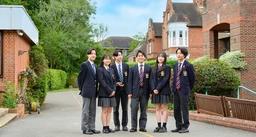
Rikkyo School in England
Horsham, United Kingdom
Last updated: May 1, 2026
- Curriculum
- British National Curriculum / IGCSE
- Tuition from
- £29,700 - £37,800(2026)≈ $39,283 - $49,997
- Students
- ~190
Overview
Rikkyo School in England is an international boarding UK National Curriculum, IGCSE school for ages 10–18 in Horsham, United Kingdom. Founded in 1972, it has approximately 190 students. Taught in Japanese. Annual tuition: £29,700–£37,800.
Rikkyo School in England (立教英国学院) is a co-educational, full-boarding Japanese international school in rural West Sussex, England, established in 1972 under the Anglican Rikkyo (St. Paul's) school network. It serves approximately 190 students aged 10–18 across Primary, Middle, and High School divisions, following the Japanese MEXT national curriculum taught primarily in Japanese with extensive English instruction. The school's defining character is its fusion of Christian boarding ethos with Japanese academic tradition, offering a unique environment where students grow bilingually and biculturally in the English countryside. University pathways include guaranteed Rikkyo University recommendation for qualifying graduates, as well as UK university foundation programmes in partnership with UCL and the University of Surrey.
At a Glance
Guaranteed Rikkyo University pathway — 74.5% of 2024 graduates advanced to Rikkyo University Tokyo with no entrance exam required
Three annual entry points — Flexible admissions in September, January, and April to accommodate Japanese family relocation schedules
100% boarding environment — All students live on campus in West Sussex; interviews conducted in Tokyo and UK locations for accessibility
Holistic admissions (no entrance exams) — From 2026, selection based on transcripts, interviews, and essays rather than written tests
Best for Japanese nationals seeking UK immersion — Requires Japanese language proficiency for MEXT curriculum with intensive British-taught English
Tuition & Fees
Tuition from
£29,700 - £37,800(2026)≈ $39,283 - $49,997
Application Fee
£3,970≈ $5,251
Est. First Year Total
£37,640≈ $49,785
Tuition by Grade
| Grade | Weekly Boarding | Full Boarding | Application Fee | Deposit |
|---|---|---|---|---|
| Primary (Elementary) | £29,700≈ $39,283Tuition £29,700≈ $39,283 + Boarding: included + Meals: included | £33,000≈ $43,648Tuition £33,000≈ $43,648 + Boarding: included + Meals: included | - | - |
| Secondary (Junior High) | £32,400≈ $42,854Tuition £32,400≈ $42,854 + Boarding: included + Meals: included | £36,000≈ $47,616Tuition £36,000≈ $47,616 + Boarding: included + Meals: included | - | - |
| Senior High | £34,020≈ $44,997Tuition £34,020≈ $44,997 + Boarding: included + Meals: included | £37,800≈ $49,997Tuition £37,800≈ $49,997 + Boarding: included + Meals: included | - | - |
Annual estimate per attendance mode (tuition + boarding + meals). One-time fees (application, enrolment, deposit) are charged separately.
Fees shown for UK schools include 20% VAT (applied to private school fees from January 2025).
Additional Fees
Enrolment Fee
£3,970≈ $5,251
Approximate values based on ECB reference rates (Oct 5 – 9, 2026). Actual amounts may vary.
Scholarships & Financial Aid
1Japan High School Tuition Support Grant (就学支援金)
Need-BasedCurriculum & Academics
Languages of Instruction
Languages of Instruction
Compulsory / Optional
Subjects Offered
5 subjectsJapanese Mext(5)
Accreditations & Memberships
Outcomes & Results
Graduate Outcomes by Year
2024
Graduates
51
University Destinations
Reputation & Recognition
In the News
- Rikkyo School in England Official NewsFeb 1, 2025Report on the 6-Week Pre-University Immersion Programme
Term 3 marked the launch of the 6-Week Pre-University Immersion Programme, running from January to Friday 21st February. The programme featured a variety of seminars at the British Library and a visit to a London theatre.
Admissions
Admissions Overview
Rikkyo School in England admits students at three points each year (September, January, April). Applicants submit required documents by post within the published window, then sit entrance examinations (written tests and interview in Japanese). From 2026, the school moved to a holistic review process — no fixed written exam; instead, candidates are assessed via interview, submitted grades, and an essay or personal statement. Two exam schedules (A and B) are offered per year, allowing students who fail A to reapply in B. Nationality and parental residence are not barriers; the key requirement is the ability to adapt to full boarding life and the Christian, Japanese-curriculum ethos.
Requirements
Primary School (Year 6 / Age 10-12), Middle and High School (Years 7-13 / Age 13-18)
English Requirement: No English requirement
Interview Required (In-person)
Key Dates
Entrance examinations for April 2026 intake candidates
Application window closes for September 2025 intake (opened 22 May 2025)
Written examination and interview for September 2025 entry candidates
Entrance examinations for January 2026 intake candidates
School Life
- Term system
- Three terms per year with three intake points (Apr
- Lunch
- All meals provided (three cooked meals daily plus
Support & Wellbeing
Co-curricular Activities
13 activitiesTeam Sports(1)
Individual Sports(2)
Drama & Theatre(1)
Academic Clubs(1)
Visual Arts(1)
Service & Leadership(1)
Grades: Secondary
School-specific(6)
Grades: Primary · Secondary
Facilities
11 facilitiesSports & Athletics(3)
Arts & Performance(1)
Dining(1)
School-specific(6)
Location & Access
Getting There
Shuttle Service
Faculty escort from Heathrow and Gatwick airports on term arrival days. Staff meet students at each terminal.
Coverage Areas: Heathrow Airport, Gatwick Airport
Campuses
Main Campus
Rikkyo School in England
Guildford Road, Rudgwick, Horsham, West Sussex, RH12 3BE, England
Schoozy Insights
Admissions Deep Dive
Rikkyo England admits Japanese-speaking students year-round via interviews and portfolio review (no written exams from 2026), with flexible September/January/April intakes.
Read More
Application Process & Timeline
Rikkyo School in England operates on a non-traditional admissions calendar with three annual entry points: September, January, and April. This flexible intake system accommodates Japanese families' relocation schedules and differs markedly from single-entry British boarding schools.
Key Application Windows
For 2025 September entry, applications opened 22 May–5 June 2025, with assessments on 15 June. The 2026 admissions cycle offers two application windows: one in November with December assessments, and a second in late January with mid-February evaluations. Each intake follows a similar pattern of short application windows (typically 2–3 weeks) followed by prompt assessment dates.
Families living in Japan can apply as easily as UK residents—the school explicitly welcomes applications regardless of parents' location. Testing occurs both on campus in West Sussex and at Rikkyo's Tokyo facilities, accommodating students worldwide.
Important Change: No Written Exams (2026 Forward)
A major shift occurred for 2026 entry: the school eliminated formal entrance exams. Previously, Middle and High School candidates sat written tests in Japanese, English, and mathematics. From 2026, admissions are holistic, evaluating:
- Academic transcripts from current/previous schools
- Interviews (conducted in Japanese, with English assessment by British staff)
- Personal essays (junior applicants) or personal statements (senior applicants)
- Recommendation forms and health records
This change reduces test pressure while still ensuring academic readiness for the rigorous Japanese curriculum.
Two-Chance System
Applicants who are not admitted on the first assessment date ("A schedule") may reapply for the second round ("B schedule") within the same academic year—providing a safety net uncommon in competitive admissions.
Selection Criteria & Competitiveness
Rikkyo England does not publish acceptance rates, but with enrollment around 190 students and capacity near 205, places are limited. The school emphasizes fit over nationality: candidates must demonstrate:
- Japanese language proficiency sufficient for full curriculum participation
- Adaptability to boarding life—the school is 100% residential, requiring maturity and independence
- Understanding of Christian/Anglican ethos—daily chapel and Christian values education are central
- Academic capability to handle Japanese national curriculum standards
English proficiency is beneficial but not required at entry; the school provides intensive English instruction with British teachers. However, students should possess basic conversational English to engage in UK cultural activities and eventually prepare for IELTS/Cambridge English exams.
Who Gets In?
Typical successful applicants are:
- Japanese nationals or returnees (kikokushijo) ages 10–18
- Students with solid Japanese literacy from Years 6+ equivalent
- Families valuing Japanese curriculum alignment for eventual university entry in Japan
- Children comfortable with separation from family (boarding environment)
The FAQ explicitly states: "Nationality and residence are not barriers if the student understands our mission and can adapt to dormitory life." Parents residing in Japan can enroll children, making this a true international boarding option.
Required Documents
Application materials include:
- Completed application forms (downloadable from official site)
- Academic transcripts covering the past 1–2 years
- Health records and immunization certificates
- Teacher recommendation (from current school)
- Personal essay/statement (varies by age; new from 2026)
- Family information forms
All documents must be mailed by post during the application window—online submissions are not accepted. The school contacts shortlisted candidates to schedule interviews shortly after document review.
Interview Process
Every applicant undergoes a mandatory interview, conducted:
- In-person at the Rudgwick campus (if family is UK-based)
- In Japan at Rikkyo's Tokyo facilities
- Online (video conference) for families elsewhere
Interviews assess:
- Academic motivation and study habits
- English and Japanese communication skills
- Boarding readiness (emotional maturity, independence)
- Alignment with school values (Christian ethos, community orientation)
British staff typically join to evaluate English ability, while Japanese faculty assess curriculum fit. Interviews are conversational rather than interrogative, lasting 30–45 minutes.
Waitlist & Enrollment
The school does not maintain a formal waitlist. If a student is not admitted in one round, they may reapply for the next intake (e.g., September applicants can try again for January).
Admitted students must pay the entrance fee (£3,970) and first-term tuition promptly to secure their place. This fee is non-refundable even if the family withdraws before the start date. Delays in payment forfeit the offer.
Special Admissions Notes
Mid-Year Transfers
The school discourages High School Year 3 (final year) transfers due to Rikkyo University recommendation requirements—students must enroll by Year 2 to qualify for guaranteed university pathways. However, exceptional cases (diplomatic families, urgent relocations) may be considered based on dormitory availability.
Visa & Immigration
International students require UK Child Student visas. The school issues CAS (Confirmation of Acceptance for Studies) after admission and fee payment. Families should apply for visas immediately upon receiving enrollment confirmation, as processing can take 8–12 weeks.
Testing Locations
Exams (when required pre-2026) and interviews occur at:
- Rikkyo School campus (Rudgwick, West Sussex)
- Rikkyo English Academy (London)
- Rikkyo University facilities (Tokyo, Japan)
This multi-location system ensures accessibility for global applicants.
What Happens After Admission?
Onboarding
New students receive:
- Buddy system pairing with senior students
- Orientation week covering boarding routines, campus facilities, and UK cultural norms
- Airport pickup at Heathrow/Gatwick by school staff
- Initial English assessment to place in appropriate conversation classes
Academic Placement
Students enter grade levels matching their Japanese school year, not age. The school follows Japan's April–March academic calendar (with UK term structure), so a student finishing Japanese Grade 6 in March enters Rikkyo's "Year 6" equivalent that April.
Competitiveness Compared to UK Schools
While Rikkyo doesn't publish acceptance rates, anecdotal evidence suggests it is moderately selective. Unlike ultra-competitive British boarding schools (Eton, Harrow with <20% acceptance), Rikkyo prioritizes mission fit over raw academics. Students with:
- Strong Japanese proficiency
- Average-to-good academic records
- Genuine interest in boarding and Christian values
...have favorable chances. The school's unique niche (Japanese curriculum + UK boarding) means it competes less with mainstream UK schools and more with Japanese international schools, where it offers a distinct Christian, immersive-English environment.
Key Takeaways for Applicants
Strengths of the admissions process:
- Flexible entry points (3 per year)
- No high-stakes entrance exams (from 2026)
- Holistic review values personal growth over test scores
- Accessible for Japan-based families
Challenges:
- Short application windows require vigilance
- Non-refundable fees demand financial commitment
- Japanese fluency is non-negotiable
- Limited spots (~15–25 per intake estimated)
Best fit applicants: Japanese or bilingual students seeking rigorous academics in a supportive boarding community, comfortable with Christian values education, aiming for Japanese universities (especially Rikkyo) or UK higher education pathways.
Families should visit the campus if possible, attend virtual open days, and connect with current parents through the alumni network to assess cultural fit before applying.
University Placement Analysis
Rikkyo graduates overwhelmingly enter Japanese universities, with 75% securing guaranteed admission to Rikkyo University. Growing UK pathways include UCL and Surrey partnerships.
Read More
University Placement Overview
Rikkyo School in England demonstrates a highly successful university placement record that bridges Japanese and UK higher education systems. The school's dual-track approach enables students to pursue tertiary education in both Japan and the United Kingdom, with the vast majority selecting Japanese universities while an increasing number explore British options.
Primary Destination: Rikkyo University
The school's flagship pathway is its guaranteed admission arrangement with Rikkyo University in Tokyo. As of 2025, this partnership has been significantly strengthened:
- Unlimited recommendation slots: Students meeting Rikkyo University's criteria receive guaranteed admission with no numerical cap
- Strong uptake: In the 2024 academic year (April 2025 entry), 38 out of 51 graduates (74.5%) advanced to Rikkyo University
- Eligibility requirements: Students must enter the school by High School Year 2 at the latest to qualify for the recommendation pathway
This arrangement provides exceptional security for families seeking a seamless transition from UK-based Japanese education back to Japan's university system. The guaranteed pathway effectively removes the uncertainty of competitive Japanese university entrance examinations for qualifying students.
Other Japanese University Pathways
Beyond Rikkyo University, graduates access other Japanese institutions through:
- Designated-school recommendations (指定校推薦枠): The school maintains formal recommendation agreements with select Japanese universities, though specific institutions are not publicly listed
- General entrance examinations: Students may sit standard Japanese university entrance exams, leveraging their MEXT-curriculum preparation
- Returnee student programs (帰国子女入試): Graduates qualify for special admissions tracks designed for students educated abroad
The school provides dedicated counseling for these pathways, including essay coaching and interview preparation aligned with Japanese university expectations.
UK University Partnerships
Rikkyo England has developed formal educational partnerships with leading British universities:
University College London (UCL)
- Students achieving specified grades and English proficiency can be recommended to UCL's Foundation Course
- UCL pathway requires an additional university-administered entrance examination
- Foundation course completion enables progression to UCL undergraduate programs
University of Surrey
- Similar recommendation pathway to Surrey Foundation Course
- Students meeting academic benchmarks and English test requirements receive direct recommendations
- No additional entrance exam beyond school performance and language certification
UK Pathway Requirements
To access UK university foundation courses, students must:
- Maintain consistent high academic performance in school coursework
- Achieve required scores on recognized English proficiency tests (IELTS, Cambridge English)
- Complete foundation course successfully (typically one year) before entering undergraduate degree programs
- Demonstrate advanced English ability, as foundation-to-degree progression demands high language competence
The school notes that students should develop strong English skills early, as foundation courses and subsequent bachelor's programs require sophisticated academic English.
Preparation Programs
6-Week Pre-University Immersion Programme
Launched in January 2025, this intensive university-readiness course for Year 13 students includes:
- Academic seminars: Science, British literature, law, and research methodology
- Cultural excursions: British Library research sessions, London theatre visits
- English immersion: All instruction conducted in English to build academic language skills
- Skills development: Essay writing, critical thinking, presentation techniques
This program specifically targets students pursuing UK universities, bridging the gap between Japanese secondary education and British higher education expectations.
UK University Study Programme
Embedded in the upper-secondary curriculum:
- University visits: Organized trips to UCL, Surrey, and other institutions
- Foundation course counseling: Guidance on application procedures and requirements
- English test preparation: Support for IELTS, Cambridge English (CAE/CPE), and other certifications
- PSHE and British Values: Cultural preparation for UK university life
New Medical School Pathway
From 2026, Rikkyo England offers a designated recommendation program for European medical schools:
- Semmelweis University (Hungary): Formal recommendation pathway established
- Czech medical schools: Additional partnership institutions
- Target students pursuing medical careers who prefer English-language European programs over Japanese medical schools
This expansion reflects the school's commitment to diversifying post-graduation options beyond traditional Japan-UK routes.
Academic Preparation and Qualifications
Japanese Curriculum Foundation
Students complete the Japanese Ministry of Education (MEXT) curriculum, earning the equivalent of a Japanese Upper Secondary School Leaving Certificate. This qualification:
- Enables direct application to Japanese universities
- Qualifies students for returnee entrance tracks
- Does not include IB Diploma, GCSE, or A-Level qualifications
English Language Achievement
The school prepares students for multiple English certifications:
- Cambridge English: KET, PET, CAE progression
- EIKEN: Japanese standardized English test
- IELTS: Required for UK university applications
While specific average scores are not published, the intensive English program (British instructors, Friday afternoon conversation sessions, immersion activities) builds proficiency from beginner to advanced levels over students' tenure.
University Guidance and Counseling
Structured support begins in Year 10-11 and includes:
- Dual-track counseling: Advisors guide both Japanese and UK university pathways simultaneously
- Individual consultations: Personalized meetings with students and families
- Application assistance: Document preparation, essay review, interview practice
- Parent communication: Regular updates via email and scheduled visits
The small cohort size (approximately 50 graduates annually) enables intensive, personalized guidance.
Graduation Outcomes
While formal graduation rates are unpublished, the structure suggests:
- Near-universal completion: Students entering by Year 2 of high school nearly all progress to university
- Diverse destinations: Majority to Japan (75%+), growing minority to UK, emerging European medical pathway
- Long-term success: Alumni network indicates successful progression through undergraduate programs
The school's boarding environment and structured curriculum support consistent academic progress, with attrition appearing minimal based on cohort stability.
Comparative Context
Rikkyo England's placement profile is distinctive among UK international schools:
- Unlike IB schools focusing on global universities, Rikkyo prioritizes Japanese higher education
- Stronger Japan-UK bridge than most European international schools
- Unique guaranteed university pathway uncommon in British boarding schools
- Growing UK partnerships position it competitively for students seeking British degrees
Key Considerations for Families
Strengths:
- Guaranteed Rikkyo University admission eliminates entrance exam stress
- Dual Japanese-UK pathways provide flexibility
- Dedicated UK university partnerships with UCL and Surrey
- Small cohorts enable personalized guidance
Limitations:
- No IB or A-Level qualifications limit some global university options
- UK pathway requires strong English development (not guaranteed for all students)
- Medical/European pathways are new (limited track record)
- Focus on Japan may not suit families targeting US or other regions
Conclusion
Rikkyo School in England delivers exceptional outcomes for Japanese-track students, with three-quarters securing direct admission to a respected Japanese university. The expanding UK partnerships and European medical pathways demonstrate institutional evolution, though the core mission remains facilitating successful reintegration into Japanese higher education. Families prioritizing this Japan-UK bridge will find few comparable options; those seeking broader international qualifications (IB, A-Levels) should look elsewhere.
School Culture & Community
A tight-knit Japanese Christian boarding community blending Anglican values with Japanese traditions, where 190 students live together year-round in a structured, family-like environment.
Read More
Overview
Rikkyo School in England operates as a unique cultural microcosm, combining Japanese educational traditions with British Christian values in a full-boarding environment. With approximately 190 students living on campus year-round, the school functions as an extended family where structured routines, shared traditions, and close relationships define daily life.
Student Body Composition
Demographics and Diversity
The student body is predominantly Japanese or ethnically Japanese returnees, reflecting the school's mission as a MEXT-recognized overseas Japanese institution. While the school officially welcomes students of any nationality who understand its Christian mission and can adapt to boarding life, the practical reality is that instruction occurs almost entirely in Japanese, naturally drawing families with strong Japanese language skills.
Parental residence is notably flexible - the school explicitly accepts applications from families living in Japan, not just expatriates abroad. This opens enrollment to Japanese families seeking overseas boarding experience for their children while maintaining the home base domestically.
Size and Structure
With capacity around 205 and current enrollment near 190, the school maintains an intimate scale across three divisions:
- Primary School (ages 10-12)
- Middle School (ages 13-15)
- High School (ages 16-18)
This small size ensures every student is known personally by faculty and peers, fostering accountability and connection that larger institutions cannot replicate.
Educational Philosophy
Christian Foundation
As part of the Anglican Rikkyo (St. Paul's) network established in 1972, the school describes its mission as "Christian-based whole-person education" (基督教に基づく全人教育). This Anglican identity manifests daily through:
- Compulsory chapel services each day
- Christian values education integrated across the curriculum
- Character formation emphasis alongside academic rigor
- Community service and moral development programs
The Christian ethos is non-negotiable; families must embrace this dimension as admission explicitly requires understanding and accepting the school's religious mission.
Bicultural Identity
Rikkyo England deliberately cultivates a bicultural experience. Students follow the complete Japanese national (MEXT) curriculum in their native language while simultaneously immersing in British culture through:
- PSHE (Personal, Social, Health, Economic education) courses
- British Values curriculum modules
- SMSC (Spiritual, Moral, Social, Cultural) and RSE (Relationships and Sex Education) programs
- Extensive English language instruction by British teachers
- Regular excursions to British cultural sites
This dual framework prepares students to navigate both Japanese and international contexts with confidence.
Community Traditions and Events
The school calendar weaves together Japanese and British cultural celebrations, creating distinctive traditions:
Annual Highlights
Spring Term:
- Entrance ceremony for new students
- Bluebell Outing - a beloved field trip when campus bluebells bloom
- Sports Day with mixed-age team competitions
- Japanese Evening Festival (May) - the student council hosts local British children for workshops in tea ceremony, martial arts, calligraphy, and origami
Summer Term:
- Wimbledon Tennis Outing - a longstanding tradition
- End-of-year concert in July
Autumn/Winter:
- Open Day/Cultural Festival - the campus opens to the wider community
- Christmas services and celebrations blending Anglican and Japanese customs
Cross-Cultural Exchanges
Students participate in homestays with local British families, short-term exchanges at partner UK schools, and community church services. These experiences build language skills and cultural fluency beyond the classroom.
Extracurricular Life
Mandatory Participation
Every student must join multiple clubs and sports, reflecting the school's commitment to holistic development. This requirement ensures all students engage actively rather than remaining passive residents.
Club Offerings
Japanese Cultural Clubs:
- Kendo (dedicated on-campus dojo)
- Tea ceremony (Sado)
- Ikebana (flower arranging)
- Calligraphy (Shodo)
Creative Arts:
- Drama and theatre
- Music ensembles
- Photography
- Dance
Academic and Interest Groups:
- Science club
- Debate society
- Various language groups
Sports Programs
Athletics play a central role, supported by extensive facilities including a 400-meter track, playing fields, gymnasium, and specialized spaces. Offerings include:
- Basketball, soccer, volleyball, tennis, badminton
- Golf, horseback riding
- Karate, aerobics, lacrosse
- Shorinji Kempo (Japanese martial art)
Friday Sports represents a signature program: every Friday afternoon, the entire school community (students and teachers together) participates in rotating sports activities. This weekly tradition builds cross-age relationships and models lifelong fitness habits.
Leadership Development
A student council manages school events and governs student initiatives, with elected positions fostering responsibility and self-governance skills essential for future success.
Boarding Life and Pastoral Care
Daily Structure
Full boarding means students live on campus throughout term time, creating deep community bonds. Days follow predictable rhythms:
- Supervised study halls each evening
- Staff-on-duty in dormitories nightly
- Age-appropriate lights-out times (younger students by approximately 21:30)
- Structured weekends with activities and free time
Support Systems
The boarding structure enables comprehensive pastoral care:
- Resident staff available 24/7
- School nurse for health concerns
- Counseling services as needed
- Homeroom teachers providing primary student support
- Buddy system where upperclassmen mentor new students
- SEN (Special Educational Needs) support for students requiring accommodations
UK regulatory inspections confirm safeguarding protocols meet standards and that pastoral systems function effectively.
Student Wellbeing
The extensive sports and activities program serves dual purposes: physical health and emotional balance. The Friday Sports initiative specifically targets wellbeing through communal physical activity and stress relief.
Room cleaning and laundry are handled by staff, allowing students to focus on academics and personal growth rather than household management.
Parent and Family Engagement
Communication
Boarders receive personal email accounts and Chromebooks for family contact. Mobile phones are held in safekeeping except during outings, ensuring focused academic time while maintaining essential connections.
Parents may visit campus freely by prior arrangement for meetings or to take students out for counseling sessions or family time. The school encourages open communication and welcomes parental involvement within boarding constraints.
Alumni Network
The Alumni Association and Supporters Group organizes events and maintains community connections beyond graduation. The Bluebell Fund - named for the iconic spring flowers on campus - provides a donation platform where alumni and friends contribute to school projects, scholarships, and initiatives.
This active alumni engagement demonstrates lasting bonds formed during the boarding years.
Language Environment
While Japanese dominates academic instruction, English permeates daily life through:
- British teaching staff in residence
- English conversation classes
- Intensive pre-university English programs (like the 6-week January-February immersion for Year 13 students)
- Peer conversations increasingly in English among older students
- Local community interactions requiring English
Many students arrive with minimal English but graduate functionally bilingual, equipped for both Japanese and international universities.
Community Character
The small size, mandatory boarding, and blend of Japanese discipline with British openness create a distinctive community character. Students describe it as intensely close-knit, where everyone knows everyone, and where individual growth occurs within collective responsibility.
The Christian foundation adds a moral and spiritual dimension often absent in secular schools, while the bicultural framework produces graduates comfortable navigating multiple worlds - a valuable asset in an increasingly interconnected global society.
Fit and Considerations
This environment suits students who:
- Thrive in structured, communal settings
- Value both Japanese heritage and international perspective
- Seek spiritual/moral education alongside academics
- Can handle extended separation from family
- Want deep, lasting friendships in a residential community
It challenges students who need frequent family contact, prefer urban settings, require significant independence from institutional structure, or seek purely secular education.
Total Cost Analysis
Annual boarding fees range from £33,000-£37,800 plus £1,985 facilities fee and £3,970 one-time admission fee. Japanese government subsidies available for eligible families.
Read More
Overview
Rikkyo School in England operates as a full-boarding Japanese international school with comprehensive fees covering tuition, accommodation, meals, and most daily expenses. The school recently adjusted its fee structure in 2025 to partially absorb the UK's new 20% VAT on private school fees, limiting overall increases to approximately 5% year-over-year.
Annual Tuition & Boarding Fees (2025-2026)
All fees listed below include UK VAT at 20%:
By Division
- Primary School (ages 10-12): £33,000 per year
- Middle School (ages 13-15): £36,000 per year
- High School (ages 16-18): £37,800 per year
Additional Annual Fees
- Facilities Maintenance Fee: £1,985 per year (charged at the start of each academic year)
One-Time Fees
- Admission Fee: £3,970 (payable once upon enrollment, non-refundable)
The school explicitly states that it has absorbed a significant portion of the 2025 VAT introduction to minimize the financial burden on families, whereas most UK private schools passed the full 20% increase to parents.
What's Included in Annual Fees
The comprehensive boarding fees cover:
Accommodation & Living
- Dormitory housing for the full academic year
- Room cleaning and laundry services (handled by staff)
- All meals: three cooked meals daily plus tea and snack times
- Utilities and campus facilities access
Academic & Activities
- All core textbooks and classroom supplies (except High School specialized workbooks)
- Standard curriculum materials for Japanese MEXT program
- Airport pickup service at term start (faculty escort from Heathrow/Gatwick)
- Transportation for official school outings and field trips
- Access to sports facilities including 400m track, gym, tennis courts, and kendo hall
- Participation in Friday Sports (weekly all-school sports program)
Pastoral Care
- 24/7 boarding supervision with resident staff
- Access to school nurse and basic health services
- Pastoral support and counseling as needed
Costs NOT Included
Families should budget for these additional expenses:
Personal & Optional
- Personal spending money for students
- Private lessons (music, extra English tutoring, specialized instruction)
- High School textbooks and subject-specific workbooks
- Optional extracurricular trip fees (coaching fees, entry tickets for Friday Sports activities)
Testing & Assessments
- External examination fees: IELTS, Cambridge English (KET/PET/CAE), EIKEN, Kanji proficiency tests
- University application fees and entrance exam costs
Travel & Transportation
- Personal travel during breaks and holidays
- Non-school transportation (taxis, buses for family visits)
- Study abroad programs or optional exchange homestays
Note: The school has no regular bus service. The nearest train stations are Guildford or Horsham, requiring taxi connections.
Payment Terms
Schedule
Fees are payable in three termly installments aligned with UK term starts:
- Term 1: August (for September entry) or March (for April entry)
- Term 2: December (for January entry)
- Term 3: As scheduled per academic calendar
For students requiring UK student visas, the admission fee must be paid immediately after acceptance to support visa applications.
Refund Policy
- Admission fee (£3,970): Non-refundable under all circumstances
- Tuition/boarding fees: Pro-rated refunds available for full unused terms only if student withdraws
- No partial refunds for mid-term withdrawals
Financial Assistance Options
Rikkyo School does not offer internal scholarships or merit-based discounts. However, Japanese families may access government support:
MEXT High School Tuition Subsidy
- Available to Japanese nationals meeting income criteria
- Subsidizes a portion of annual tuition through Japan's Ministry of Education program
- School assists with application process after enrollment
- Funds typically distributed via coordinated payments
Tax-Exempt Education Gift Program
- Tuition payments qualify for Japan's educational gift tax exemption (教育資金一括贈与非課税措置)
- Allows guardians to gift up to 1.5 million JPY annually for education without gift tax
- Recognized as an overseas educational facility by Japanese authorities
- Families should consult Japanese tax advisors for details
Alumni Fundraising
- Bluebell Fund: Alumni-driven donation program supporting campus projects
- Not a formal scholarship program but may fund school initiatives
- Optional family contributions welcome
Total Cost Estimates
First-Year Costs (Example: Middle School Student)
- Admission Fee (one-time): £3,970
- Annual Tuition & Boarding: £36,000
- Facilities Fee: £1,985
- Total Year 1: £41,955
Subsequent Years
- Annual Tuition & Boarding: £36,000
- Facilities Fee: £1,985
- Total per year: £37,985
Personal Budget Recommendations
Add £1,500-£3,000 annually for:
- Private music/language lessons: £500-£1,000
- Examination fees (IELTS, etc.): £300-£500
- Personal spending/pocket money: £500-£1,000
- Optional trips/activities: £200-£500
Comparative Context
Rikkyo's fees are moderate by UK boarding standards:
- Top UK boarding schools (Rugby, Winchester): £40,000-£45,000+
- London international schools (Southbank IB): ~£38,613
- Rikkyo UK: £33,000-£37,800 (includes full boarding)
The school's fees are competitive for what they include: comprehensive boarding with meals, extensive facilities, and specialized Japanese curriculum delivery. Unlike day schools that charge lower tuition but require home meals and local housing, Rikkyo's model provides all-inclusive boarding.
Key Considerations for Families
Budget Planning
- Three-year commitment (typical middle/high school duration): ~£115,000-£120,000 total
- Six-year commitment (full secondary): ~£220,000-£230,000
- Currency exchange rates (GBP/JPY) significantly impact Japanese families
Financial Readiness
- No payment plans beyond termly installments
- No sibling discounts or multi-child rebates
- Limited financial aid beyond Japanese government programs
- Families must demonstrate ability to pay for visa purposes
Cost-Benefit Factors
- Guaranteed Rikkyo University admission for qualifying students (since 2025, no quota limits)
- UK university pathway partnerships with UCL and Surrey
- Comprehensive boarding environment eliminates separate housing/meal costs
- Intensive English immersion while maintaining Japanese curriculum
For Japanese families weighing overseas education options, Rikkyo offers a middle path: preserving academic continuity with Japan while providing authentic UK boarding experience, at costs comparable to premium UK boarding but with unique Japanese-language support and university placement advantages.
Who Is This School Best For?
Rikkyo School in England is ideal for Japanese-speaking students seeking boarding education that combines Japanese curriculum with English immersion and guaranteed university pathways.
Read More
Ideal Student Profile
Academic Background
Rikkyo School in England is specifically designed for Japanese-speaking students who can thrive in a full-boarding environment. The school follows the Japanese national (MEXT) curriculum taught entirely in Japanese, making it essential that students have strong Japanese language proficiency and literacy skills. Students typically join from Year 6 (age 10) onwards, having completed Japanese primary education.
The academic program is rigorous and traditional, covering all core Japanese subjects plus intensive English language instruction. Students should be academically motivated and comfortable with structured, examination-based learning typical of Japanese educational systems.
Language Requirements
- Japanese: Near-native fluency required for academic success
- English: Beginners accepted; intensive English classes provided by British teachers
- Students typically develop strong bilingual abilities over their years at the school
Best-Fit Family Profiles
Japanese Expatriate Families
The school excels at serving families who want to maintain Japanese educational continuity while living abroad. Parents working in the UK or Europe can provide their children with a MEXT-recognized education that ensures smooth reintegration into Japanese schools or universities.
Returnee (Kikokushijo) Families
Families returning to Japan after overseas assignments find Rikkyo particularly valuable. The curriculum keeps students aligned with Japanese academic standards while developing English proficiency and international experience that benefits university admissions through returnee student quotas.
Japan-Based Families Seeking Overseas Experience
Uniquely, parents living in Japan can enroll their children at Rikkyo England. The school explicitly welcomes students whose families remain in Japan, provided the child can adapt to boarding life and the family understands the school's Christian ethos. This makes it accessible to Japanese families seeking international experience without relocating.
University Pathway Focus
Guaranteed Rikkyo University Admission
From 2025 onwards, all students meeting criteria receive guaranteed admission to Rikkyo University in Tokyo—one of Japan's prestigious private universities. In 2024, 38 of 51 graduates (75%) chose this pathway. This makes the school ideal for families prioritizing secure university placement in Japan.
UK University Preparation
The school has established partnerships with University College London and University of Surrey, offering foundation course recommendations for qualified students. Those interested in UK higher education benefit from:
- IELTS and Cambridge English exam preparation
- Six-week pre-university immersion programs
- Direct pathways to top British universities
Academic Flexibility
Students can also pursue other Japanese universities through designated-school recommendations or general entrance exams, providing multiple post-graduation options.
Boarding Life Readiness
Full-Boarding Environment
This is a 100% boarding school with no day student option. Students must be:
- Independent and emotionally mature enough for year-round campus residence
- Comfortable with limited home contact (visits primarily during breaks)
- Adaptable to communal living with shared dormitories
- Willing to participate in structured daily routines (study halls, chapel, lights-out times)
The school's inspection reports note effective pastoral care, but families should ensure their child is psychologically prepared for separation from home.
Age Considerations
The school accepts students from age 10 (Year 6) through 18. Younger students joining at ages 10-12 need particular maturity for boarding life. The close-knit community of approximately 190 students means everyone knows each other, which benefits students who thrive in smaller settings.
Cultural and Religious Fit
Christian (Anglican) Ethos
Rikkyo operates under explicit Christian values with daily chapel services and Anglican identity. While students of all faiths are welcome, families must:
- Accept participation in Christian education and worship
- Respect the school's religious foundation
- Understand that moral and spiritual development follows Anglican principles
This makes the school particularly suitable for Christian Japanese families or those comfortable with faith-based education.
Bicultural Development
The school uniquely blends Japanese and British cultures. Students maintain Japanese identity through curriculum, language, and traditional clubs (tea ceremony, kendo, calligraphy) while developing British cultural understanding through PSHE classes, community engagement, and rural English life.
Financial Considerations
Fee Structure and Affordability
Annual fees range from £33,000 to £37,800 (including boarding), plus a £3,970 entrance fee and £1,985 facilities fee. These are moderate by UK boarding standards but represent significant investment.
Best-fit families typically:
- Can afford full fees (no merit scholarships offered)
- Qualify for Japan's High School Tuition Support Grant (Japanese nationals only)
- May utilize Japan's tax-exempt educational gift allowance
- Value the investment in guaranteed university pathways
Cost-Benefit Analysis
The school offers strong value for families prioritizing:
- Bilingual education with native-level instruction in both languages
- Secure Japanese university admission
- All-inclusive boarding (meals, laundry, textbooks, airport transfers included)
- Small class sizes and close community
Who Should Look Elsewhere
Not Recommended For:
- Non-Japanese speakers: Curriculum taught in Japanese; minimal English proficiency students will struggle
- IB/British curriculum seekers: School offers Japanese curriculum only, no IGCSE or A-Levels
- Day school preference: No day student option; full boarding mandatory
- Very young children: Minimum age 10; no early primary or kindergarten
- Students needing frequent family contact: Boarding environment limits home visits
- Urban lifestyle preference: Rural West Sussex location, 1+ hour from London
- Students with significant medical/psychological needs: Boarding setting may not provide adequate specialized support
- Families uncomfortable with religious education: Daily chapel and Christian values central to school identity
Enrollment Timing and Flexibility
Multiple Entry Points
Unlike most British schools, Rikkyo offers three annual intake periods:
- September (traditional UK start)
- January (mid-year)
- April (aligning with Japanese academic year)
This flexibility suits families with:
- Expatriate assignments starting at various times
- Students transferring from Japanese schools (April start matches Japanese calendar)
- Mid-year relocation needs
Transfer Students
The school accepts transfers but with limitations:
- Students entering by Year 2 of high school maintain Rikkyo University recommendation eligibility
- Year 3 transfers generally lose university recommendation benefits
- Academic preparation in Japanese curriculum essential for smooth transition
Summary: The Ideal Rikkyo Student
Rikkyo School in England serves a very specific niche exceptionally well. The ideal student is:
- Linguistically prepared: Fluent Japanese speaker willing to develop English skills
- Academically motivated: Ready for rigorous Japanese curriculum and university preparation
- Emotionally mature: Capable of thriving in full-boarding environment from age 10+
- Culturally adaptable: Comfortable navigating both Japanese and British cultures
- University-focused: Values guaranteed pathways to Japanese or UK universities
- Spiritually open: Accepts Christian educational environment
- Financially supported: Family can afford £35,000-40,000 annually
Families should seriously consider Rikkyo if they want their child to maintain Japanese educational standards while gaining international experience, English fluency, and secure university options—all within a safe, structured boarding community that preserves Japanese cultural identity.
Christian Anglican Ethos Meets Japanese Academic Tradition
Rikkyo School in England blends Anglican Christianity with Japan's MEXT curriculum, delivering whole-person education for Japanese students in rural England.
Read More
A Unique Fusion of Faith and Japanese Education
Rikkyo School in England (立教英国学院) is built on a deceptively simple but powerful premise: deliver a rigorous Japanese national curriculum within an Anglican Christian boarding environment in the English countryside. Founded in 1972 under the Rikkyo (St. Paul's) school network — the same Anglican institution that operates Rikkyo University in Tokyo — the school describes its mission as 基督教に基づく全人教育: Christian-based whole-person education.
Daily Life Shaped by Faith
Christian practice is not peripheral at Rikkyo England — it is woven into the daily rhythm. Chapel services are held regularly, and Christian values (honesty, service, respect) are embedded in pastoral and classroom life. Yet the school is not doctrinally exclusive; students of all backgrounds are welcomed provided they can engage respectfully with the school's ethos. The integration of British SMSC (Spiritual, Moral, Social, Cultural) education and RSE (Relationships and Sex Education) frameworks alongside the Japanese moral curriculum creates a genuinely bicultural values foundation.
Japanese Curriculum, English Setting
Academically, Rikkyo England follows the MEXT national curriculum almost entirely in Japanese. Students study all core Japanese subjects — Japanese language and literature, mathematics, science, social studies, and more — according to Japanese national standards. This means graduates receive a Japanese Upper Secondary School Leaving Certificate and are eligible for Japanese university entrance examinations and recommendation systems.
At the same time, English is a constant presence. British teachers lead daily English conversation and language lessons. Older students are expected to develop sufficient English proficiency for UK university foundation programmes. The school supports preparation for Cambridge English qualifications (KET/PET/CAE), EIKEN, and IELTS. From Year 10–11, university guidance covers both Japanese and UK pathways.
Character Before Credentials
The school's educational philosophy places character formation above academic credentialism. The boarding environment — with structured evenings, communal meals, supervised study halls, and age-graduated lights-out times — is itself an instrument of education. Students are expected to be responsible, self-reliant, and community-minded. Leadership opportunities through the student council, pastoral buddy systems for new students, and participation in community events all reinforce this culture.
The result is an institution that is genuinely unusual in the international school landscape: deeply Japanese in curriculum and culture, yet operating in England under an Anglican ethos, producing graduates who are bilingual, bicultural, and equipped for both Japanese and British university pathways.
Japanese Curriculum Abroad: University Pathways to Japan and the UK
Rikkyo England follows Japan's MEXT curriculum and offers guaranteed Rikkyo University recommendation, plus UK university foundation partnerships with UCL and Surrey.
Read More
Academic Outcomes: The Japan-First, UK-Ready Model
Rikkyo School in England occupies a distinctive niche in the academic landscape: it delivers Japan's full national curriculum (MEXT) to students living in England, producing graduates who are competitive for Japanese university entrance while also equipped — through intensive English and UK university partnerships — to pursue degrees in Britain.
The Rikkyo University Pathway
The school's most distinctive academic feature is its privileged relationship with Rikkyo University (立教大学) in Tokyo. Since 2025, students who meet the school's internal recommendation criteria are guaranteed admission to Rikkyo University — with no cap on the number of recommendation slots. In the 2024 academic year (for April 2025 entry), 38 of 51 graduating seniors progressed to Rikkyo University through this pathway. The school also maintains 指定校推薦枠 (designated school recommendation quotas) at other Japanese universities, providing additional pathways for students targeting different institutions or faculties.
Students who transfer into the final year (High School Year 3) are generally not eligible for the Rikkyo University recommendation, making early entry important for families prioritising this pathway.
UK University Partnerships
For students interested in British higher education, the school has established formal partnerships with University College London (UCL) and the University of Surrey. Qualifying students — those achieving strong internal grades and passing the required English proficiency tests — may be recommended into each university's Foundation Course. UCL additionally requires passing its own entrance examination. After completing the Foundation Year, students may progress to undergraduate degrees, though high English proficiency (IELTS-level) is essential.
In January–February 2025, the school launched a 6-Week Pre-University Immersion Programme for Year 13 students, covering science, British literature, law, and other disciplines, with excursions to institutions including the British Library and London theatres. This initiative demonstrates the school's growing investment in UK university readiness.
From 2026, the school also launched a Designated Recommendation Programme with Hungary's Semmelweis University and Czech medical schools, targeting students aspiring to medical careers — a notable expansion of its international university partnerships.
Academic Preparation and English Qualifications
The school explicitly prepares students for external English qualifications: Cambridge English (KET/PET/CAE), EIKEN (英検), and IELTS. Private music lessons and academic enrichment are also available on campus. The curriculum does not offer the IB Diploma or UK A-Levels; students receive the Japanese Upper Secondary School Leaving Certificate. For Japanese university entrance examinations, senior students receive essay coaching and interview preparation for 帰国子女入試 (returnee student examinations).
Friday Sports, Kendo Halls, and Bluebell Outings: Life at Rikkyo England
From weekly all-school Friday Sports to Japanese cultural clubs and a 400m track, Rikkyo England's extracurricular life is extensive and structurally integrated into every student's week.
Read More
Beyond the Classroom: An Unusually Integrated Extracurricular Life
At most boarding schools, extracurricular activities are an add-on to academic life. At Rikkyo School in England, they are structurally embedded into the weekly timetable in ways that make participation universal rather than optional. Every student joins clubs and sports; the school's small size (approximately 190 students) ensures that no one disappears into the margins.
Friday Sports: A Defining Tradition
The most distinctive extracurricular feature is Friday Sports — a whole-school programme held every Friday afternoon after lunch. Students and teachers play sports together, with offerings rotating termly. Sports on offer include basketball, football (soccer), volleyball, tennis, badminton, golf, lacrosse, Shorinji Kempo, karate/aerobics, and more. Some specialist activities (such as horse riding) are led by external instructors off-site. This weekly programme serves simultaneously as physical education, wellbeing support, and community-building — teachers and students competing and cooperating as equals.
Japanese Cultural Clubs
The club programme reflects the school's dual Japanese-English identity. Traditional Japanese clubs include Kendo (with a dedicated kendo hall on campus), tea ceremony (道茶道), flower arranging (生け花), and calligraphy (書道). Creative arts clubs cover drama, music, dance, and photography. Academic clubs include science and debate. Leadership is developed through the Student Council, which organises major school events including the Japanese Evening cultural festival open to the local community.
Campus Facilities
The rural campus supports an active physical lifestyle. Key facilities include a 400m athletics track, sports fields, a gymnasium, and the dedicated Kendo Hall. Music education is part of the core programme, and private lessons in piano, violin, and other instruments are available on campus. Students can also access outdoor education through countryside hikes and field trips to museums, universities, and London cultural venues.
Cultural Immersion Beyond Campus
The school arranges excursions that use England's cultural landscape as an extension of the classroom. Recent examples include a seminar at the British Library and a visit to a West End theatre as part of the 6-Week Pre-University Immersion Programme. The annual Wimbledon tennis outing is a longstanding highlight of the summer term. Church visits and local community service activities connect students with the wider British community. For students who wish, short-term homestays and study exchanges at local UK schools can be arranged — a valuable complement to full boarding life.
About the School
- Established
- 1972
Educational philosophy
Rikkyo School in England is founded on Christian (Anglican) values and provides whole-person education (基督教に基づく全人教育) for Japanese overseas students. Daily chapel services and Christian values education are core, alongside a rigorous Japanese national curriculum. The school emphasises character formation, academic excellence, and bicultural identity — immersing students in England while preserving Japanese language and culture. SMSC (Spiritual, Moral, Social, Cultural) education and British values are formally embedded in the curriculum.
Frequently Asked Questions
What curriculum does Rikkyo School in England teach?
Rikkyo School in England follows the UK National Curriculum. Students sit IGCSE.
How much is annual tuition at Rikkyo School in England?
Annual tuition at Rikkyo School in England ranges from £29,700 to £37,800 (GBP), depending on the grade level.
What additional fees should I budget for at Rikkyo School in England?
In addition to tuition, Rikkyo School in England charges a registration fee of £3,970.
What are the admission requirements for Rikkyo School in England?
Rikkyo School in England admits students at three points each year (September, January, April). Applicants submit required documents by post within the published window, then sit entrance examinations (written tests and interview in Japanese). From 2026, the school moved to a holistic review process — no fixed written exam; instead, candidates are assessed via interview, submitted grades, and an essay or personal statement. Two exam schedules (A and B) are offered per year, allowing students who fail A to reapply in B. Nationality and parental residence are not barriers; the key requirement is the ability to adapt to full boarding life and the Christian, Japanese-curriculum ethos.
When is the application deadline for Rikkyo School in England?
The application deadline for Application Deadline – September 2025 Intake is 2025-06-05.
Where is Rikkyo School in England located?
Rikkyo School in England is located in Horsham, United Kingdom.
What ages does Rikkyo School in England accept?
Rikkyo School in England accepts students from age 10 to 18.
How many students attend Rikkyo School in England?
Rikkyo School in England has approximately 190 students.
Explore More Schools
Learn about these curricula
Compare, fees & rankings
Last updated: May 1, 2026
Sources: the school's official website, accreditation bodies (e.g. IBO, CIS), and public records.