Day School · Secondary School · Through School (K-12)
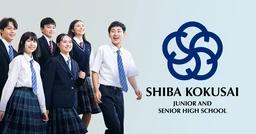
Shiba Kokusai Junior and Senior High School
Tokyo, Japan
Last updated: May 18, 2026
- Qualifications offered
- IGCSE / A-Level
- Tuition
- ¥480,000+(2024-2025)≈ $3,034+
- Students
- ~709
Overview
Shiba Kokusai Junior and Senior High School is an IGCSE, A-Levels school for ages 12–18 in Tokyo, Japan. Founded in 1903, it has approximately 709 students. Taught in Japanese and English. Annual tuition: ¥640,000–¥1,367,500.
Shiba Kokusai Junior & Senior High School is a private co-educational day school (Grades 7–12) located in Minato Ward, Tokyo, minutes from Tamachi and Mita stations. Founded in 1903 as Tokyo High Girls' School, it relaunched in 2023 under the name Shiba Kokusai with a focus on 'world-standard global education.' The curriculum blends STEAM, bilingual learning, entrepreneurship, and Harvard-style dialogic instruction across four high school tracks. The state-of-the-art Arcadia campus features a Stella Theater, Makers Hub, Rapyuta Dome, science and cooking labs, rooftop sports courts, and a full media center. First-graduating cohort (2026) achieved 100% on-time graduation with strong results to top Japanese universities.
Tuition & Fees
Tuition
¥480,000+(2024-2025)≈ $3,034+
Application Fee
¥300,000≈ $1,896
Est. First Year Total
¥1,110,000≈ $7,016
Tuition by Grade
| Grade | Annual Tuition | Application Fee | Deposit |
|---|---|---|---|
| Senior High School | ¥480,000≈ $3,034 | - | - |
Additional Fees
Enrolment Fee
¥300,000≈ $1,896
Technology Fee
¥30,000≈ $190
Approximate values based on ECB reference rates (Oct 5 – 9, 2026). Actual amounts may vary.
Curriculum & Academics
Languages of Instruction
Languages of Instruction
Compulsory / Optional
Subjects Offered
6 subjectsJapanese National Curriculum(6)
Accreditations & Memberships
1 accreditationOutcomes & Results
Graduate Outcomes by Year
2025-2026
Graduates
245
Graduation rate
100%
University Destinations
Admissions
Requirements
Junior High School — International ADVANCED Course
English Requirement: Intermediate English
Interview Required (In-person)
Key Dates
School explanation session (説明会) for prospective families. Up to 2 family members may attend.
Register →School explanation session with class observation for prospective junior high students (9:45–13:00).
Register →Junior high school entrance examination for 2026 intake.
School explanation session (説明会) for prospective families.
Register →School explanation session with partial campus tour (9:00–10:00). Held concurrently with Yotsuya Otsuka mock examination.
Register →School explanation session with campus tour (10:00–11:30). Up to 2 family members may attend.
Register →Start of the new academic year; opening ceremony (始業式) scheduled for early April.
School Life
- Term system
- 3-term system
- Uniform
- Required
- Lunch
- Cafeteria (DELI CAFE SHiBA) providing organic lunc
Support & Wellbeing
Co-curricular Activities
46 activitiesTeam Sports(3)
Grades: Secondary
Individual Sports(4)
Grades: Secondary
Music(2)
Grades: Secondary
Drama & Theatre(1)
Grades: Secondary
Languages & Culture(1)
Grades: Secondary
Visual Arts(2)
Grades: Secondary
Service & Leadership(1)
Grades: Secondary
School-specific(32)
Grades: Secondary
Facilities
26 facilitiesSports & Athletics(2)
Academic Facilities(3)
Arts & Performance(3)
Common Areas(1)
Technology(1)
Dining(2)
School-specific(14)
Location & Access
Getting There
Mita Station (Toei Mita/Asakusa Line) / Tamachi Station (JR)
Arcadia Campus (Main)
2 min walk
Public Transport
2-minute walk from Mita Station (Toei Mita Line / Toei Asakusa Line). 5-minute walk from Tamachi Station (JR Yamanote Line / Keihin-Tohoku Line).
Coverage Areas: Tokyo metropolitan area via Mita and Tamachi stations
Campuses
Main Campus
Arcadia Campus (Main)
4-1-30 Shiba, Minato-ku, Tokyo 108-0014
Schoozy Insights
World-Standard Learning Meets Japanese Academic Rigour
Shiba Kokusai combines STEAM, bilingual education, and Harvard-style dialogic instruction with Japan's high academic standards under the motto 'Become a better person within society.'
Read More
Educational Philosophy: Global Standards, Local Roots
At the heart of Shiba Kokusai's identity is an ambitious educational philosophy that seeks to reconcile two often competing priorities: the rigorous academic standards expected of competitive Japanese schools, and the creative, inquiry-led, globally oriented learning that prepares students for the 21st-century world.
The School Motto
The founding motto — 人の中なる人となれ ('Become a better person within society') — reflects a humanistic vision that has endured since 1903. It speaks not just to individual achievement, but to the idea that education must produce citizens who contribute meaningfully to the communities and world around them.
Three Pillars of the Curriculum
1. STEAM Education: Science, Technology, Engineering, Arts, and Mathematics are woven through the curriculum from junior high. The Arcadia campus was built to support this, with dedicated science labs, a Makers Hub equipped with 3D printers and fabrication tools, and a Rapyuta Dome for immersive space-themed science experiences.
2. Entrepreneurship: The school explicitly incorporates entrepreneurship education — an unusual emphasis for a Japanese secondary school. Students are encouraged to identify problems, develop solutions, and present ideas, cultivating a mindset of initiative and innovation rather than passive knowledge absorption.
3. Harvard-Style Dialogic Instruction: Rather than traditional lecture-based teaching, lessons are conducted through structured dialogue and discussion — a method associated with Harvard's case-study approach. This develops students' ability to articulate reasoning, engage critically with ideas, and collaborate with peers.
Bilingual and International Dimensions
While Japanese remains the primary medium of instruction (estimated at roughly 80% of academic time), the International ADVANCED Course offers significant English-medium content and targets students aiming for overseas or international universities. EAL support is available for students in the international track.
Academic Outcomes
The school's high-track courses (最難関選抜 and 難関選抜) target entry to Japan's most selective universities. The first graduating cohort (2026) produced 54 acceptances to Waseda, Keio, Jochi, and Tokyo Rika (早慶上理), and 162 to the GMARCH group — strong results for a school only in its third year of operation.
From Tokyo's First Girls' School to a 21st-Century Co-ed Global Campus
Shiba Kokusai traces its roots to 1903 but relaunched in 2023 as a coed school with a radically modern campus and global curriculum in central Tokyo.
Read More
A 120-Year Legacy, Reimagined
Shiba Kokusai Junior & Senior High School carries one of the longest histories of any school in its neighbourhood. In April 1903, Tokyo High Girls' School (東京高等女学校) opened its doors as the first private higher girls' school in Tokyo Prefecture — a pioneering institution at a time when formal secondary education for women was still a novelty in Japan.
For over a century the institution operated within the Tokyo Women's Academy (東京女子学園) network, serving generations of female students in the capital. By the 2010s, however, leadership began reimagining the school's identity to meet the demands of an increasingly globalised world.
The Arcadia Campus and the 2023 Relaunch
The physical and conceptual transformation came in two stages. In November 2022, a brand-new 11-storey building named Arcadia was completed at 4-1-30 Shiba, Minato Ward — just two minutes on foot from Mita Station and five minutes from Tamachi. The building was purpose-designed to support inquiry-based, creative, and international learning.
In April 2023, the school reopened under the name Shiba Kokusai Junior & Senior High School (芝国際中学校・高等学校) as a fully co-educational institution. The change was sweeping: new curriculum tracks, a new co-ed student body, a new name, and a new philosophy — while retaining the founding motto 人の中なる人となれ ('Become a better person within society').
Immediate Demand
The relaunch attracted immediate interest from Tokyo families. In the first admissions cycle (2023), approximately 388 candidates competed for around 240 junior high places, and 448 candidates competed for around 240 senior high places, underscoring that the school quickly established itself as a sought-after option in the competitive Tokyo private-school market.
The school's first cohort of senior high graduates completed their studies in March 2026, with a reported 100% on-time graduation rate and strong university placement results — a promising start for an institution with deep roots and a newly modernised vision.
First Graduates Set a Strong Benchmark: Waseda, Keio, and Beyond
Shiba Kokusai's inaugural 2026 graduating class of 245 students achieved 100% on-time graduation with 54 acceptances to top-tier Japanese universities (早慶上理) and 162 to GMARCH.
Read More
Academic Outcomes: The Class of 2026
With its first senior high graduating cohort completing studies in March 2026, Shiba Kokusai has produced early evidence that its dual commitment to 'world-standard global learning' and 'solid academic achievement' (世界標準の教育×確かな学力) is delivering results.
Graduation and University Entry
All 245 students in the first graduating cohort graduated on time — a 100% graduation rate. All students were reported to have graduated as current students (現役卒業), meaning no students had to repeat a year or defer.
University Acceptances (Current-Student Results)
早慶上理 (Waseda / Keio / Jochi / Tokyo Rika): 54 acceptances
- This group represents Japan's top private university tier, broadly comparable to Russell Group universities in the UK.
GMARCH (Gakushuin / Meiji / Aoyama / Rikkyo / Chuo / Hosei): 162 acceptances
- These are Japan's leading second-tier private universities — highly competitive institutions with national recognition.
Notable individual university counts within GMARCH include 24 acceptances to Meiji University.
Track-Based Academic Preparation
The school's four senior high tracks are each calibrated to different university destinations:
- 最難関選抜 (Top Selective): Targets the most competitive national and private universities
- 難関選抜 (Selective): Targets top-tier private universities including 早慶上理
- 特別進学 (Special Advancement): Targets GMARCH and equivalent
- 国際生 (International): Targets international universities and international-track Japanese universities
After-school supplementary programmes and dedicated preparation courses are available, reflecting the school's commitment to holistic academic support alongside its innovative curriculum.
Competitive but Accessible: How Shiba Kokusai Selects Students
Admissions is competitive (roughly 1.5–2x oversubscribed) with written tests, parent-student interviews, and separate tracks for domestic and international/returnee applicants.
Read More
Admissions at Shiba Kokusai
Despite being a young school (founded in its current form in 2023), Shiba Kokusai quickly became a competitive destination in the Tokyo private school landscape. Demand in the inaugural cohort significantly exceeded supply, and this pattern has continued.
Scale of Competition
In 2023, around 388 candidates sat the junior high entrance exam for approximately 240 available places, while 448 senior high candidates competed for roughly 240 places. Ultimately 135 junior high students and 264 senior high students enrolled — a combined total of 399 new students. This suggests an effective acceptance-to-enrollment ratio that implies substantial competition at both levels.
Entrance Examinations
Junior High (中学校):
- Honka Course: Typically Japanese and mathematics (standard 2-subject format)
- International ADVANCED Course: English, mathematics, science, and social studies
- Exams are held in February each academic year
- Individual interviews (with parental attendance) form part of the assessment
Senior High (高等学校):
- Four tracks with differentiated entrance criteria
- Top-Selective (最難関選抜) and Selective (難関選抜) tracks: rigorous 4-subject examination (English, math, Japanese, science)
- International (国際生) track: pathway for returnees and students with strong English
No Specific English Requirement
For the standard (Honka) course, there is no minimum English proficiency requirement — the school is open to students regardless of prior English exposure. The International ADVANCED Course naturally requires stronger English skills, and EAL support is available for enrolled students in international tracks.
Open Days and School Events
The school hosts regular information sessions (説明会) throughout the year. Events in 2025 are scheduled on multiple dates in June and July, with some held in conjunction with Yotsuya Otsuka mock examinations. Reservation is required, and families of up to two people may attend.
An 11-Storey Innovation Hub in the Heart of Tokyo
The Arcadia campus in Minato Ward packs a Stella Theater, Makers Hub, rooftop sports courts, media studio, and Japanese culture center into a modern urban school building.
Read More
Campus Life at Arcadia
Shiba Kokusai's Arcadia campus is a striking example of what a modern urban school can achieve in a constrained Tokyo footprint. Completed in November 2022, the 11-storey building at Shiba 4-1-30, Minato Ward is designed to be a 'small planet' (小さな地球) — a self-contained environment where students from diverse backgrounds can interact, create, and learn together.
Location and Access
The campus is exceptionally well-connected. Mita Station (Toei Mita Line / Toei Asakusa Line) is a 2-minute walk, and Tamachi Station (JR) is 5 minutes away — placing the school within easy reach of most of the Tokyo metropolitan area.
Signature Facilities
- Stella Theater: A two-storey atrium-style theater accommodating approximately 800 people, used for school events, performances, and presentations.
- Rapyuta Dome: An immersive indoor dome for space-themed science experiences — a rare and distinctive facility for a Japanese secondary school.
- Makers Hub: A full fabrication space with 3D printers, laser cutters, and maker tools for STEAM project work.
- Science Lab & Cooking Lab: Fully equipped experimental science classrooms and a professional-grade cooking facility on the 4th floor.
- Art Lab & Fashion (Mode) Lab: Dedicated spaces for visual arts and fashion design.
- Japanese Culture Center: An 11th-floor facility for traditional arts including tea ceremony (茶道) and calligraphy (書道).
- Media Center: A broadcast-quality studio equipped for Youtuber/VTuber content creation — reflecting the school's commitment to digital literacy.
- Rooftop Tennis & Futsal Courts: Outdoor sports facilities on the rooftop — creative use of limited urban space.
- ICT Infrastructure: Every student receives a personal device; high-speed network access throughout the building supports data science, AI exploration, and digital learning.
Atmosphere
The campus is intentionally designed to blur boundaries between subjects and between formal and informal learning. Open collaborative spaces sit alongside specialist labs, encouraging students to move fluidly between artistic, scientific, and entrepreneurial pursuits. The school describes its environment as one that 'stimulates curiosity and creative drive' — an aspiration reflected in the physical design of every floor.
About the School
- Established
- 1903
Leadership
- Ran IchigoPrincipal (校長)2026–
Mission
人の中なる人となれ — Become a better person within society.
Educational philosophy
To foster global-minded individuals who continuously improve themselves. The school motto 'Become a better person within society' (人の中なる人となれ) guides a curriculum that combines world-standard global learning with solid academic achievement, incorporating STEAM education, entrepreneurship, and Harvard-style dialogic instruction.
History
Founded in April 1903 as Tokyo High Girls' School (東京高等女学校), the first private higher girls' school in Tokyo Prefecture. Operated for over a century under the Tokyo Women's Academy network. In 2022 a brand-new campus 'Arcadia' was completed in Shiba, Minato Ward. In April 2023 the school relaunched as the co-educational Shiba Kokusai Junior & Senior High School, combining its 120-year legacy with an innovative global curriculum.
Frequently Asked Questions
What curriculum does Shiba Kokusai Junior and Senior High School teach?
Shiba Kokusai Junior and Senior High School offers IGCSE and A-Levels.
How much is annual tuition at Shiba Kokusai Junior and Senior High School?
Annual tuition at Shiba Kokusai Junior and Senior High School ranges from ¥640,000 to ¥1,367,500 (JPY), depending on the grade level.
What additional fees should I budget for at Shiba Kokusai Junior and Senior High School?
In addition to tuition, Shiba Kokusai Junior and Senior High School charges a registration fee of ¥300,000.
Where is Shiba Kokusai Junior and Senior High School located?
Shiba Kokusai Junior and Senior High School is located in Tokyo, Japan.
What ages does Shiba Kokusai Junior and Senior High School accept?
Shiba Kokusai Junior and Senior High School accepts students from age 12 to 18.
How many students attend Shiba Kokusai Junior and Senior High School?
Shiba Kokusai Junior and Senior High School has approximately 709 students.
Explore More Schools
Learn about these curricula
Compare, fees & rankings
Last updated: May 18, 2026
Sources: the school's official website, accreditation bodies (e.g. IBO, CIS), and public records.