

Japan

International Schools in Japan

International schools in Japan. The most common curriculum is IB Diploma. Annual tuition typically ranges ¥908.5K–¥1.9M (International day schools).

Japan's international-school sector spans day schools and a small boarding segment across Tokyo-Yokohama, Kansai and several regional hubs, using IB, British, American and other curricula rather than one national system. Tuition varies widely by age and provider, and first-year costs typically include non-tuition charges beyond the headline fee. Admissions follow school-specific calendars rather than a single national deadline, and a child's visa route depends on family circumstances, not on school enrolment alone.
Japan

Before You Compare

What families should know

Which curriculum path fits?

Japan's international schools do not converge on one school-leaving system: IB is the most visible programme, British-curriculum schools commonly use Cambridge IGCSE and AS/A Level, and American-format schools typically offer a US diploma with Advanced Placement. Japanese universities recognise several of these qualifications, but individual courses set their own subject and score requirements, so families should check target universities before committing to a track. Japanese nationals should note that attending a non-Article-1 international school does not fulfil compulsory education duty.

Read the detail

Budget beyond the tuition sticker

Published 2026-27 schedules show tuition alone ranging from roughly ¥1.0 million to ¥5.5 million a year, with many established schools around ¥1.8-3.2 million. First-year totals are typically higher once application, acceptance/registration and development or building charges are added — some non-refundable — plus recurring costs such as facilities fees, lunch, transport and uniforms. Ask each school for a grade-specific all-in schedule and its refund policy before paying any deposit.

Read the detail

Where are schools concentrated?

The Tokyo-Yokohama/Kanagawa area offers the widest choice of curricula and age ranges, followed by the Kansai cluster around Osaka, Kobe and Kyoto. Established regional options exist around Nagoya, Fukuoka, Sapporo, Sendai, Hiroshima, Okinawa and Tsukuba, though age ranges, senior-secondary pathways and specialist support can narrow quickly outside the two main metro areas. A small, growing boarding segment—mostly starting around age 11 or 15—adds options in more rural locations such as Iwate, Nagano and Hiroshima.

Read the detail

Does enrolment secure a visa?

No. A foreign child needs a valid Japanese residence status, most commonly Dependent status tied to a parent's own status such as work or study — this is not automatic just because a child is enrolled. Some schools explicitly state they cannot sponsor student visas or support housing. Parents generally cannot obtain residence status merely because their child attends school; they need an independent basis such as employment. Confirm a school's stance on visa documentation before paying non-refundable fees.

Read the detail

Market Data

Quick Stats

56

Cities

¥908.5K–¥1.9M

International day schools

75 schools

median ¥1.4M

¥3.3M–¥7.7M

Boarding schools (incl. boarding, excl. meals)

7 schools

median ¥6.9M

¥538K–¥895K

National-system international tracks

45 schools

median ¥630K

¥264K–¥1.6M

Community & national schools

5 schools

median ¥823.2K

School Directory

Featured Schools in Japan

Selected by overall Schoozy score.

The British School in Tokyo
British National Curriculum
IGCSE
A-Level
Age range
3 – 18 yrs
Annual tuition (est.)
$17,702
IB PYP
IB MYP
IB Diploma
Age range
3 – 18 yrs
Annual tuition (est.)
$13,697
Aoba-Japan International School
IB PYP
IB MYP
IB Diploma
Age range
1 – 18 yrs
Annual tuition (est.)
$11,977
IB PYP
IB MYP
IB Diploma
Age range
3 – 18 yrs
Annual tuition (est.)
$13,308
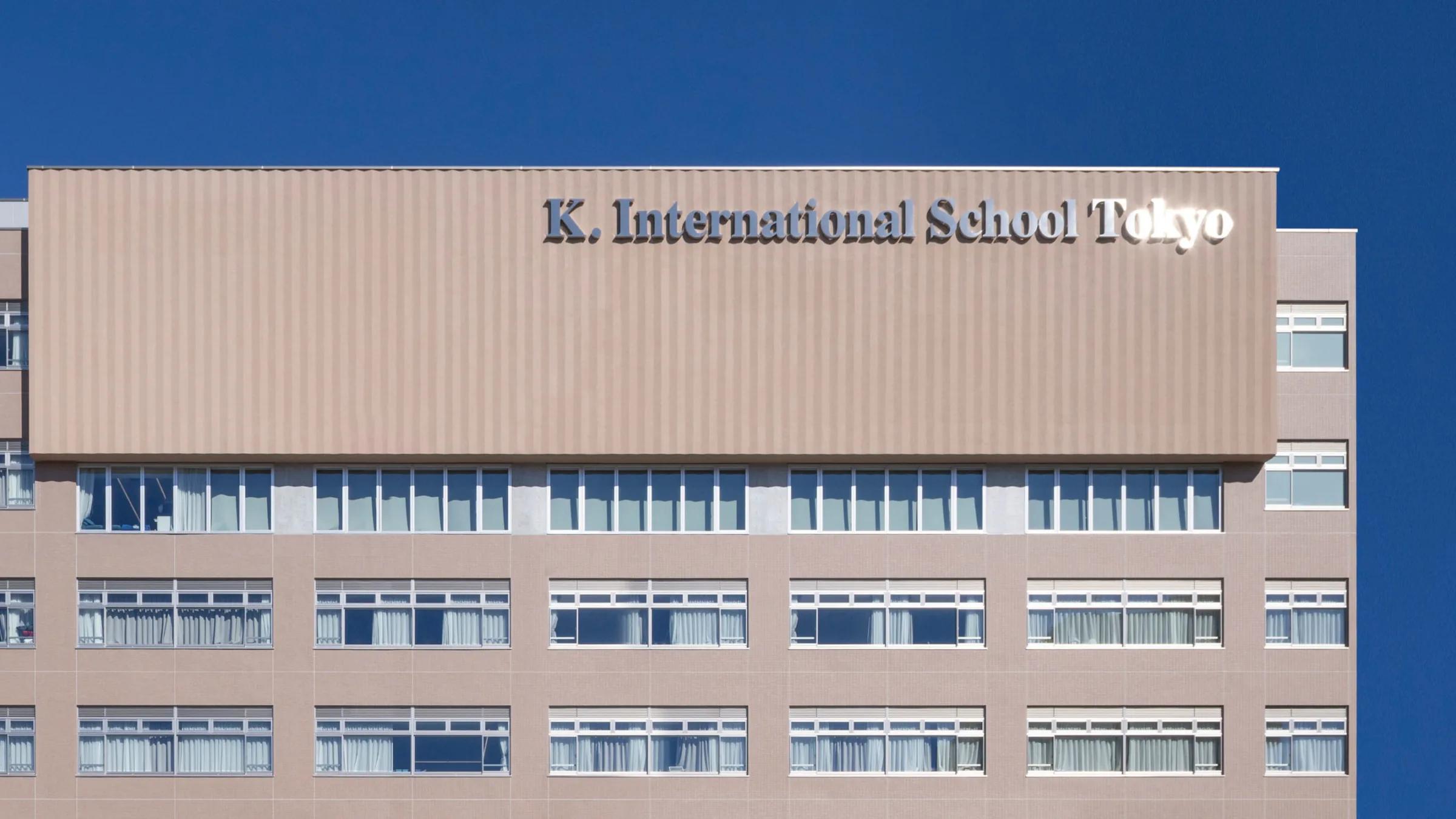
K. International School Tokyo
IB PYP
IB MYP
IB Diploma
Age range
5 – 18 yrs
Annual tuition (est.)
$17,891
IB Diploma
AP
Age range
5 – 18 yrs
Annual tuition (est.)
$16,070

Where these schools are in Japan

Zoom in to see school names. Select a pin to open the school page.

Pins with a dashed outline show the city centre, not the exact campus.

Independent Market Guide

Understanding international schools in Japan

No single school-leaving system dominates

Japan's international-school sector is curriculum-plural rather than standardised. The International Baccalaureate is the most widely available programme, appearing in both international schools and some Japanese schools running international pathways. British-format schools commonly use Cambridge International, including IGCSE and International AS/A Level, alongside a smaller presence of Pearson Edexcel. American-format schools typically follow a US high-school diploma model, often supplemented with Advanced Placement subjects. Canadian, Indian, French, German, Montessori, IPC and bilingual Japanese-international hybrid programmes also exist. Japan's education ministry recognises the IB and GCE/International A Levels among qualifications that meet university entrance requirements, and Cambridge's International A Level gained recognition for university admission eligibility in June 2024. However, recognition at ministry level does not mean universities treat qualifications identically: each institution and course sets its own subject, grade, language and selection criteria, so families should check target universities' current requirements before choosing a senior-secondary pathway.

A plural, unevenly distributed market

Japan's international-school landscape is not one uniform format: day schools are the norm, but a small boarding segment exists in and around Greater Tokyo, Kansai, Aichi, Nagano, Iwate, Hiroshima, Fukuoka and Hokkaido, usually starting around age 11 or age 15, with a limited primary-age exception in Hiroshima. Boarding is a distinct and additional cost line rather than a variant of day-school pricing. Admissions calendars also vary: some schools run an April academic year and open applications from the preceding September, while August or September-entry schools may ask for applications by December for January interviews. There is no single national deadline. Waiting lists are common once popular grades fill, and mid-year entry is possible but constrained by available places rather than by a general rolling-admissions policy. English-language support is widely offered but differs in depth, admissions threshold and whether it is included in tuition or charged separately.

Tuition headlines miss the first-year total

Published 2026-27 schedules show tuition-only prices spanning roughly ¥1.0 million at the lower end for early years to ¥5.5 million at premium providers, with many established schools charging around ¥1.8-3.2 million a year before add-ons. First-year costs are commonly higher once application charges (about ¥20,000-52,000), acceptance or registration charges (roughly ¥25,000 to ¥1 million) and development or building charges (about ¥250,000-750,000) are added; some of these are non-refundable. Recurring costs often include facilities fees, insurance, lunch, technology, activities and uniforms, and optional transport can run from about ¥195,000 to ¥500,000 a year on published route-based schedules. For examinations, there is no single Japan-wide charge: a recent Cambridge private-candidate tariff for the October/November 2026 series lists IGCSE subjects at roughly ¥57,700-66,800 and International A Level subjects at about ¥80,000-89,100, but enrolled students should confirm directly whether their school includes exam entry in tuition or invoices it separately.

Information as of November 2026

Tokyo-Yokohama and Kansai anchor supply

The Tokyo-Yokohama/Kanagawa metropolitan area holds the widest range of international schools and curriculum types, reflected in the breadth of filters on Tokyo's official school-search portal. Kansai, centred on Osaka, Kobe and Kyoto, is the second major cluster. Established regional options also exist around Nagoya/Aichi, Fukuoka, Sapporo/Hokkaido, Sendai, Hiroshima, Okinawa and Tsukuba, though the range of age groups, senior-secondary pathways, specialist support and transport links narrows quickly outside the two main metropolitan clusters. National totals should therefore be read as an aggregate market rather than evenly spread local supply: a family based outside the core clusters may find fewer choices of curriculum or age range nearby. The clearest identifiable growth pattern outside Tokyo-Yokohama is in regional boarding provision, with newer options developing in areas such as Iwate, Nagano, Hiroshima and Aichi.

Information as of January 2025

School enrolment does not equal a visa

A foreign child in Japan needs a valid residence status, but this is not automatically Student status. In practice, most children living with a foreign parent hold Dependent status, defined by Japan's Immigration Services Agency as daily activities undertaken by the spouse or child of an eligible foreign resident, including someone holding Student status. Admissions policies vary: one published school policy requires expatriate pupils to hold an official dependent visa, does not accept temporary visitors, and states it cannot support student-visa applications or arrange housing because it is not a boarding school. A parent cannot generally obtain Dependent status simply because their child is enrolled; the status is defined as available to the spouse or child of the qualifying resident, so a parent moving with a school-age child typically needs an independent residence basis such as employment. Families should confirm a school's documentation stance before paying non-refundable admission charges.

Common Questions

FAQ: International Schools in Japan

Do international schools in Japan all follow the same curriculum?

No single curriculum dominates. The International Baccalaureate is the most widely available programme across both international schools and some Japanese schools offering international pathways. British-curriculum schools commonly teach Cambridge IGCSE and International AS/A Level, and American-format schools typically follow a US high-school diploma with Advanced Placement options. Canadian, French, German, Indian, Montessori, IPC and bilingual programmes also exist. Japan's education ministry recognises the IB and GCE/International A Levels for university entrance eligibility, and Cambridge's International A Level gained similar recognition in June 2024, but each university and course still sets its own subject, grade and language requirements, so families should confirm target-university criteria before choosing a track.

What visa does my child need to attend an international school in Japan?

Enrolling at an international school does not by itself secure a residence status. Most children living with a foreign parent hold Dependent status, which Japan's Immigration Services Agency defines as covering the spouse or child of an eligible foreign resident, such as someone with Work or Student status. Some schools state explicitly that they cannot sponsor student visas or arrange housing, since they are day schools rather than boarding institutions. A parent generally cannot obtain a residence status simply because a child is enrolled; the parent typically needs an independent basis, such as employment. Confirm with each school which visa documentation it can and cannot provide before paying non-refundable fees.

Why is the first-year bill higher than the advertised tuition fee?

Advertised tuition is rarely the full first-year cost. Published schedules commonly add an application or assessment charge, an acceptance, registration or entrance charge, and a development or building charge, some of which are non-refundable even if a family later withdraws. On top of these, most schools also charge recurring items such as facilities fees, insurance, lunch, technology, activities, and sometimes compulsory uniforms, with transport and boarding priced separately. Because these add-ons vary significantly between schools, families should request a grade-specific, itemised “all compulsory costs” schedule for the exact year of entry rather than comparing headline tuition figures across schools.

Is boarding available at international schools in Japan?

Boarding exists in Japan but remains a small, specialised segment rather than the standard format. It is available in and around Greater Tokyo, Kansai, Aichi, Nagano, Iwate, Hiroshima, Fukuoka and Hokkaido, with most programmes starting around age 11 or age 15, and a limited primary-age exception in Hiroshima. Options include full boarding, weekly boarding with weekend returns home, and occasionally a day school with optional boarding. Boarding is billed as a substantial additional cost on top of, or instead of, day tuition, and families should also confirm the child's residence-status route, holiday arrangements, and whether meals, laundry and pastoral care are included in the fee.

Are international school fees subject to consumption tax in Japan?

Whether tuition and entrance-exam fees carry Japanese consumption tax depends on a school's legal status, under a national policy tying the exemption to that status rather than to curriculum or nationality of pupils. Families should ask each school directly whether its published fees are quoted inclusive or exclusive of consumption tax, and whether its legal status qualifies for the exemption, since this can materially change the comparison between two otherwise similar fee schedules.

Research Transparency

Sources