
South Korea

International Schools in South Korea

International schools in South Korea. The most common curriculum is AP. Annual tuition typically ranges ₩18.4M–₩26.3M (International day schools).

South Korea's international-school market spans American, British, IB and other national curricula, concentrated around Seoul-Gyeonggi, Incheon and Jeju. Tuition is only one line in the annual invoice: registration, technology, transport, exams and — for a minority of families — boarding add materially to cost. Visa planning for a studying child and any accompanying parent follows separate immigration routes, and admissions timing and mid-year transfer rules differ by school.

Before You Compare

What families should know

Which Curriculum Track Fits?

Families choose mainly among American-style diploma programmes with AP options, IB Diploma Programme schools, and British-curriculum schools using Cambridge IGCSE and A Levels, alongside a smaller set of Canadian, French, German and Chinese national-system schools. No system is universally 'better recognised'; the right fit depends on the target university system and its course requirements, since institutions set their own subject and qualification rules rather than treating pathways as interchangeable.

Read the detail

Budget Beyond Headline Tuition

Published 2026–27 schedules show day-school tuition rising from lower rates at early years to the highest fees in senior secondary. Non-refundable application, registration and capital-development fees apply at enrolment, and returning families may owe an advance re-enrolment deposit. Transport, lunch, technology, books and examinations are commonly billed separately, and senior-year trips, coursework and exam entries add further cost in the final two years of school.

Read the detail

Where Are the Realistic Options?

The Seoul–Gyeonggi metropolitan area offers the widest day-school choice, with distinct clusters in Incheon's Songdo/Free Economic Zone and in Jeju, which also concentrates most boarding provision. Smaller regional options exist in Busan, Daegu, Daejeon, Ulsan and Gwangju, typically with fewer curriculum and year-group alternatives. Commute time, boarding availability and curriculum on offer vary sharply between these areas, so location and pathway decisions are usually made together.

Read the detail

Visa Routes for Student and Parent

A foreign child enrolling independently in an eligible school can typically use the D-4-3 student status, generally issued for up to a year initially, with foreign-resident registration due within 90 days of arrival. A parent does not automatically qualify for a dependent visa because a child holds D-4-3; parents of school-age children are one possible category under the F-1 Family Visitor route, subject to separate documentation and financial requirements.

Read the detail

Market Data

Quick Stats

4

Cities

₩18.4M–₩26.3M

International day schools

6 schools

median ₩19.2M

Where to Look

Top Cities in South Korea

School Directory

Featured Schools in South Korea

Selected by overall Schoozy score.

Dulwich College Seoul

Seoul, South Korea

A-Level
IB Diploma
IGCSE
Age range
3 – 18 yrs
Annual tuition (est.)
$30,945

Dwight School Seoul

Seoul, South Korea

IB PYP
IB MYP
IB Diploma
Age range
3 – 18 yrs
Annual tuition (est.)
$9,871

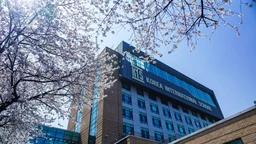
Korea International School

Seoul, South Korea

US Curriculum
AP
Age range
3 – 18 yrs
Annual tuition (est.)
$14,119

Seoul International School

Seoul, South Korea

US Curriculum
AP
Age range
3 – 18 yrs
Annual tuition (est.)
$13,670

Seoul Foreign School

Seoul, South Korea

US Curriculum
AP
Age range
3 – 18 yrs
Annual tuition (est.)
$13,235

NLCS Jeju

Jeju, South Korea

British National Curriculum
IGCSE
A-Level
Age range
4 – 18 yrs
Annual tuition (est.)
$13,194

Where these schools are in South Korea

Zoom in to see school names. Select a pin to open the school page.

Pins with a dashed outline show the city centre, not the exact campus.

Independent Market Guide

Understanding international schools in South Korea

American, IB and British Tracks Coexist

South Korea's international schools generally sit in one of three broad groups: American-style schools built around a US high-school diploma, transcripts, GPA and often AP courses; International Baccalaureate schools, particularly the Diploma Programme in the final two years; and British-curriculum schools using the English National Curriculum with Cambridge IGCSE and International AS and A Levels. A smaller number of schools follow Canadian, French, German, Chinese or other national systems. These groups are not mutually exclusive: some American-style schools also offer IB or AP, and some British schools run IB at sixth-form level. There is no universal rule that any one system receives equal recognition; Korean and overseas universities each set their own subject and qualification requirements, so families comparing pathways should check the specific entry rules of the universities and courses they are targeting rather than assuming one curriculum is uniformly preferred.

Information as of March 2026

Tuition Is Only the Starting Number

A realistic day-school budget for the 2026–27 year runs from the upper tens of millions of won annually at early years to the low forties of millions at senior secondary, and some schools invoice part of tuition in US dollars, adding exchange-rate exposure to any comparison. New families typically face non-refundable application, registration and capital-development charges, plus possible textbook deposits, while returning families may owe an advance re-enrolment deposit months before the next year starts. Transport, lunch, technology and examinations are commonly billed separately from tuition. External-exam costs vary by pathway: a College Board AP exam taken outside the United States costs US$129 per subject before school administration charges, an IB Diploma candidate faces a per-subject fee plus separate core-component charges, and Cambridge charges schools per syllabus entry, with Korea-specific amounts available only from each school's exams officer. Comparing the full first-year invoice is more reliable than comparing tuition alone.

Seoul, Incheon and Jeju Lead a Regional Map

The practical geography for international schooling is led by the Seoul–Gyeonggi metropolitan area, which offers the broadest range of day schools but where commute time can become a deciding factor. Incheon has a distinct cluster around the Songdo Free Economic Zone and Cheongna, suiting families based west of Seoul. Jeju hosts the most concentrated purpose-built international-school cluster and is also the main boarding location nationally, with both full and weekly boarding available from as early as Year 3 at some schools, and boarding fees billed separately from tuition and meals. Smaller regional options exist in Busan, Daegu, Daejeon, Ulsan and Gwangju, generally with fewer curriculum, year-group and specialist-support choices than the larger clusters. Because availability and entry rules vary by campus and year group, families should verify current boarding and place availability directly with each school.

Information as of July 2026

Visa Status Is a Family, Not a Single, Decision

A foreign child who enrols independently in an eligible school can typically hold D-4-3 student status, normally issued for up to one year initially, with a requirement to register as a foreign resident within 90 days of first arrival; admission documents and evidence of financial means are typically required. Holding a D-4-3 visa for the child does not automatically entitle a parent to a dependent F-3 visa, which is intended mainly for spouses and unmarried minor children of an eligible primary visa holder. Parents of students in high school or below are instead named as a possible category under the F-1 Family Visitor route, which still requires its own documentation and is assessed against the relevant Korean mission's rules. A child already accompanying a parent on a long-stay visa may hold dependent status instead of applying separately. A limited education-access regularisation scheme for long-resident undocumented children has been extended through March 31, 2028, but it is a narrow measure rather than a general admissions visa route.

Information as of April 2025

Enrolment Caps and Curriculum Rules Shape Options

Three country-level rules affect how families weigh options in this market. Tuition at authorised or approved schools is exempt from VAT, but the exemption applies to the school's invoicing rather than being a rebate parents claim directly, so it should already be reflected in a school's published fee schedule. Separately, foreign schools operating in South Korea face a cap on local-citizen enrolment, a residency test for Korean applicants, and a requirement to teach elements of the Korean national curriculum; the same combination of an enrolment cap and Korean curriculum requirement applies to foreign educational institutions. In practice, this means a Korean-passport child's access to some foreign-curriculum schools may be more restricted than a foreign-passport child's, and that even English-medium or foreign-curriculum schools may include compulsory Korean-curriculum content. Families should ask a specific school directly how these rules affect its own admissions eligibility and timetable, since implementation sits at school level within the national framework.

Admissions Timing and Language Support Vary by School

Admissions timing is not standardised across the market. A common pattern is applications opening several months before an August or September start, reviewed on a rolling basis where places remain, though one published 2026–27 cycle opened as early as December 1 for the following year. Mid-year entry is possible at some schools for elementary and middle grades, while high-school starts are often restricted to semester boundaries, and at least one published policy rules out mid-term transfers altogether. English-language support, usually labelled EAL, ELL or ESL, is available at many English-medium schools through push-in classroom support, pull-out lessons, or more intensive programmes for children not yet able to access the mainstream curriculum, with placement typically decided by an entry assessment. Charging for this support is inconsistent: some schools include it in tuition, others add a separate fee. Both admissions timing and language support are school-specific questions requiring direct confirmation.

Common Questions

FAQ: International Schools in South Korea

Do all international schools in South Korea follow the same curriculum?

No. The market includes American-style schools built around a US high-school diploma and often AP courses, IB World Schools offering the Diploma Programme, and British-curriculum schools using Cambridge IGCSE and A Levels, plus a smaller number of Canadian, French, German and Chinese national-system schools. Many schools combine elements — for example an American-style school offering IB, or a British school offering IB at sixth-form level. There is no rule making any one system universally preferred by universities; recognition depends on the specific university and course requirements a family is targeting.

What extra costs come on top of tuition?

Published 2026–27 fee schedules show tuition as only the starting figure. New families typically pay non-refundable application, registration and capital-development fees, and sometimes a textbook deposit. Returning families may owe an advance re-enrolment deposit months before the next year. Transport, lunch, technology and examination fees are commonly charged separately, and senior-year trips, coursework and external exam entries add further cost. Some schools also invoice part of tuition in US dollars, which adds exchange-rate exposure. Requesting a full first-year, all-in invoice from each school is more reliable than comparing tuition figures alone.

Can our whole family get visas if our child attends school here?

A child enrolling independently in an eligible school can typically use D-4-3 student status, generally issued for up to a year initially, with foreign-resident registration due within 90 days of arrival. A parent does not automatically receive a dependent visa because the child holds D-4-3; parents of students in high school or below are instead one possible category under the F-1 Family Visitor route, which has its own documentation and financial requirements assessed by the relevant Korean mission. If a parent already holds a long-stay visa, the child may qualify as that parent's dependent instead of applying separately.

Is boarding common, and where is it available?

Boarding is a minority option rather than the norm. The clearest and most concentrated boarding cluster is Jeju, particularly its Global Education City area, with additional boarding options verifiable in or around Seoul, Incheon, Daejeon, Daegu, Pohang and Anseong. Formats include both full and weekly boarding, with entry as early as Year 3 at some schools and later entry points such as Grade 8 at others; boarding tends to become more standard from middle school onward. Boarding and meal fees are billed separately from tuition, so families should compare the full residential contract, including weekend and holiday arrangements, not just the headline boarding fee.

When should we apply, and is mid-year entry possible?

Most schools open applications several months before an August or September start and review them on a rolling basis while places remain; one published 2026–27 cycle opened as early as December 1 for the following year. Mid-year entry varies by school: some allow elementary and middle-grade enrolment throughout the year while restricting high-school starts to semester boundaries, and at least one school's published 2026–27 policy rules out mid-term transfers entirely. Because grade-level availability differs by school and year group, families relocating mid-year should apply to more than one option in parallel and confirm current availability directly.

Research Transparency

Sources