International School · Day School · Through School (K-12)
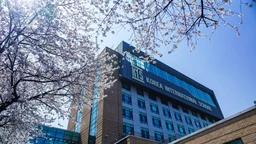
Korea International School
Seoul, South Korea
Last updated: Jun 23, 2026
- Curriculum
- US Curriculum / AP
- Tuition from
- ₩19,500,000 - ₩27,740,000(2026-2027)≈ $14,575 - $20,735
Overview
Korea International School is an international US Curriculum, Advanced Placement (AP) school for ages 3–18 in Seoul, South Korea. Founded in 1999. Taught in English. Annual tuition: KRW 19,500,000–KRW 27,740,000.
Korea International School (KIS) is a U.S.-curriculum international school in the Seoul metropolitan area operating two campuses: the Pangyo Campus (PK–12, approximately 1,200 students) and the Seoul Campus (PK–6, approximately 155 students). KIS offers an inquiry-based, STEM-focused program designed to develop globally minded graduates. The school community brings together Korean and expatriate families from 18 nationalities, with a 7:1 student-teacher ratio and maximum class sizes of 15. Graduates proceed to selective universities worldwide, underpinned by up to 26 AP courses at the high school level.
At a Glance
U.S. curriculum with AP courses and inquiry-based learning approach; 7:1 student-teacher ratio enables personalized instruction across PK-12 grades.
Mid-sized community of ~1,355 students from 18 nationalities, with approximately 70% international students and 30% Korean nationals.
Rolling admissions with entrance testing and interviews required; seeks academically strong students with English proficiency (EAL support available).
Best for Korean and expatriate families in Seoul/Pangyo seeking a U.S.-style education with STEM emphasis and a pathway to selective universities worldwide.
Tuition & Fees
Tuition from
₩19,500,000 - ₩27,740,000(2026-2027)≈ $14,575 - $20,735
Est. First Year Total
₩24,100,000≈ $18,014
Tuition by Grade
| Grade | Annual Tuition | Application Fee | Deposit |
|---|---|---|---|
| Pre / Jr. Kinder | ₩19,500,000≈ $14,575 | ₩400,000≈ $299 | ₩200,000≈ $149 |
| Grades K-5 | ₩21,950,000≈ $16,407 | ₩400,000≈ $299 | ₩200,000≈ $149 |
| Grades 6-8 | ₩23,880,000≈ $17,849 | ₩400,000≈ $299 | ₩200,000≈ $149 |
| Grades 9-12 | ₩27,740,000≈ $20,735 | ₩400,000≈ $299 | ₩200,000≈ $149 |
Additional Fees
Enrolment Fee
₩4,000,000≈ $2,990
Approximate values based on ECB reference rates (Oct 12 – 16, 2026). Actual amounts may vary.
Curriculum & Academics
Class Sizes by Grade
All Grades
- Average
- 15
- Max
- 15
- Student:Teacher
- 7:1
Languages of Instruction
Languages of Instruction
Compulsory / Optional
Accreditations & Memberships
2 accreditationsOutcomes & Results
University Destinations
Reputation & Recognition
In the News
- NewsisMar 25, 2015KIS Selects 3 Special Scholarship Students for Educational Support
KIS selected 3 special scholarship students from low-income families, providing full fee waivers covering tuition, enrollment fees, and other costs valued at approximately 40 million KRW annually.
Admissions
Requirements
Pre-Kindergarten to Kindergarten
English Requirement: Advanced English
Interview Required (In-person)
Application Fee: 400,000
Grades 1 to 6 (Primary)
English Requirement: Advanced English
Interview Required (In-person)
Application Fee: 400,000
Grades 7 to 12 (Middle and High School)
English Requirement: Advanced English
Interview Required (In-person)
Application Fee: 400,000
Key Dates
New academic year begins in August (second or third week depending on campus). Seoul Campus: second week of August; Pangyo Campus: third week of August.
School Life
- Term system
- Semester
Support & Wellbeing
- Counsellors
- 8
Facilities
11 facilitiesSports & Athletics(4)
Academic Facilities(2)
Arts & Performance(2)
Outdoor Spaces(1)
School-specific(2)
Location & Access
Getting There
Pangyo Station (Shinbundang Line)
KIS Pangyo Campus
20 min walk
Daechi Station (Seoul Metro Line 3)
KIS Seoul Campus
5 min walk
School Bus
KIS provides a school bus service covering Seoul and the southern Bundang area. Route tracking is available via the Hello Bus App for smartphones, allowing parents to monitor their child's journey.
Coverage Areas: Seoul metropolitan area and southern Bundang (Seongnam)
Campuses
Main Campus
KIS Pangyo Campus
27 Daewangpangyo-ro 385beon-gil, Bundang-gu, Seongnam-si, Gyeonggi-do, South Korea
KIS Seoul Campus
408 Gaepo-ro, Gangnam-gu, Seoul, South Korea
Schoozy Insights
Inquiry-Based Learning and STEM at the Heart of KIS
KIS builds its entire educational model around inquiry, critical thinking, and STEM, aiming to produce self-directed global citizens ready for top universities.
Read More
Educational Philosophy
Korea International School (KIS) has a clearly articulated educational philosophy centered on inquiry-based learning, critical thinking, and STEM education. This philosophy is not merely aspirational — it is embedded in daily classroom practice across all grade levels from Pre-Kindergarten through Grade 12.
Mission and Vision
The school's official mission states: "The KIS mission is to inspire students with a passion for learning and to cultivate the competence, self-assurance, initiative, and creativity necessary for success in the global community." This mission is complemented by a vision to be "South Korea's most inspiring international school — where students and teachers thrive in a culture of continuous learning."
These are not generic statements. They reflect a coherent pedagogical approach that prioritizes:
- Student agency: Students are encouraged to ask questions, explore ideas, and take ownership of their learning
- Collaborative thinking: Project-based and integrated learning tasks require teamwork and communication
- Global mindset: The curriculum connects local Korean context with broader international perspectives
Core Values
KIS articulates five core values that guide the school community: Integrity, Adaptability, Balance in Life, Empowerment, and Global Citizenship. These values are woven into both academic programming and the pastoral culture of the school, ensuring that students develop character alongside academic competence.
STEM Focus
From its founding, KIS has placed special emphasis on STEM education. The Pangyo campus — located in one of South Korea's premier technology corridors — is particularly well-positioned to draw on partnerships and inspiration from the surrounding innovation ecosystem. Facilities including modern science laboratories, a Design Center (makerspace), and technology-equipped classrooms support hands-on STEM learning.
Inquiry Across Disciplines
While STEM is a flagship, the inquiry approach extends across humanities, arts, and social sciences. The U.S.-curriculum framework, enriched with up to 26 AP courses at the high school level, allows students to pursue depth in areas of genuine passion. The low student-teacher ratio of 7:1 and maximum class sizes of 15 ensure that each student receives individualized attention to develop their curiosity and skills.
Overall, KIS presents a coherent, values-driven educational model that balances academic rigor with personal development — making it well-suited for families seeking an internationally recognized U.S.-curriculum experience in South Korea.
From a Single Seoul Classroom to a 1,200-Student Campus: KIS's Growth Story
Founded in 1999, KIS grew from a small Seoul elementary school into a dual-campus institution anchored by its flagship Pangyo campus serving 1,200 students.
Read More
History and Growth of Korea International School
Founding (1999–2000)
Korea International School was established in 1999 by educators who shared a vision of preparing Korean and international students for leadership and innovation in an increasingly interconnected world. The Seoul Campus opened its doors in 2000, initially as an elementary school serving a modest student body in the Gangnam district — one of Seoul's most internationally connected neighborhoods.
From the outset, KIS distinguished itself by emphasizing inquiry-based learning and a multicultural community ethos at a time when most schools in Korea followed more traditional, rote-learning approaches.
Expansion to Pangyo (2006)
As demand grew and Korea's technology sector boomed, KIS made a strategic decision to open a second, full-scope campus. The Pangyo Campus opened in 2006 in Seongnam's Bundang-gu district — adjacent to the rapidly developing Pangyo Techno Valley, South Korea's answer to Silicon Valley. This campus was designed from the ground up as a comprehensive PK–12 institution with state-of-the-art facilities.
The Pangyo campus has grown to house approximately 1,200 students, becoming the school's primary campus and hub for its STEM, AP, and extracurricular programs.
Accreditation Milestones
KIS earned WASC (Western Association of Schools and Colleges) accreditation, a rigorous international quality standard. This accreditation has been renewed through 2026, reflecting the school's sustained commitment to academic excellence. KIS is also a member of CIS (Council of International Schools), further affirming its standing in the global international school community.
Today
KIS now operates two complementary campuses:
- Pangyo Campus: PK–12, ~1,200 students, full STEM and AP program
- Seoul Campus: PK–6, ~155 students, strong elementary foundation in Gangnam
The school has maintained its founding commitment to inquiry and global citizenship while continuously modernizing its facilities and curriculum to meet the demands of 21st-century education.
AP Courses, STEM Specialization, and a University-Bound Academic Culture
KIS offers up to 26 AP courses within a U.S.-curriculum framework, supported by WASC and CIS accreditation, with virtually all graduates proceeding to university.
Read More
Academic Culture at Korea International School
Curriculum Framework
KIS follows a U.S.-curriculum model across all grade levels (PK–12), aligned with American academic standards and enriched by Advanced Placement (AP) courses at the high school level. The school offers up to 26 AP subjects, giving students the opportunity to pursue university-level coursework while still in high school — a major draw for academically ambitious families.
The school does not offer the IB Diploma Programme or A-Levels, making it a specialized destination for families committed to the U.S. university pathway.
STEM as a Differentiator
STEM education is a signature strength of KIS. The Pangyo campus's location within a major technology district reinforces this identity. Purpose-built facilities — including modern science laboratories and a Design Center (makerspace) — support hands-on, project-based STEM learning from elementary through high school. The school's inquiry-based pedagogy naturally complements STEM disciplines, where questioning, experimenting, and iterating are core skills.
Assessment Approach
While KIS does not publicly release detailed exam results, the school uses MAP (Measures of Academic Progress) testing for ongoing academic monitoring, and students participate in SAT/ACT and AP examinations as standard college preparation milestones. The U.S.-curriculum alignment ensures that assessments are recognized by universities worldwide, particularly in the United States, Canada, and increasingly in the UK and Asia.
University Outcomes
KIS reports that virtually all graduates proceed to university, with a diverse range of destinations spanning the United States, Korea, and internationally. While specific university placement statistics are not publicly disclosed, the school's WASC and CIS accreditation, combined with its strong AP offering, positions graduates competitively for selective university admissions.
Teacher Quality
KIS employs native English-speaking teachers throughout the school, a key marker of academic quality for an English-medium international school. The 7:1 student-teacher ratio ensures that teachers can provide meaningful feedback and individualized support, contributing to the school's strong academic outcomes. The small class sizes (maximum 15 students) further reinforce this personalized learning environment.
Accreditation as Quality Signal
KIS holds WASC accreditation (renewed through 2026) and CIS membership, both internationally recognized markers of educational quality. These accreditations require ongoing self-study, external review, and demonstrated commitment to continuous improvement — providing families with external assurance of the school's academic standards.
Rolling Admissions with Academic Focus: How KIS Selects Students
KIS uses a rolling admissions process with entrance testing and interviews, seeking academically strong and well-rounded students; EAL support is available for those who qualify.
Read More
Admissions Culture at Korea International School
Philosophy
KIS describes itself as seeking students who are "academically strong, well-rounded global citizens." This framing signals a selective but holistic admissions approach — the school values character and curiosity alongside academic achievement.
Process
KIS operates rolling admissions, meaning families can apply throughout the year when spaces are available rather than being restricted to a single annual intake. This is practical for the expatriate families who make up a large portion of the school's community and may relocate to Korea at any time of year.
The admissions process involves:
- Entrance Testing: Applicants sit English and Math assessments to gauge academic readiness
- Parent Interview: Parents meet with admissions staff as part of the evaluation
- School Records: Prior academic transcripts and, typically, recommendation letters and passport documentation
- Result Notification: The school aims to notify families within approximately 14 business days
English Language Requirement
As an English-medium school, KIS expects applicants to have a strong level of English proficiency. However, the school's EAL (English as an Additional Language) support program means that students who need some language development can still be admitted if their overall academic profile is strong. This makes KIS accessible to a broader range of international families than purely English-native schools.
Selectivity and Waitlisting
While KIS does not publish an official acceptance rate, it is described by third-party sources as selective at the high school level, with waitlists common in grades where enrollment is full. The Pangyo campus, with its larger capacity of approximately 1,200 students, offers more places than the smaller Seoul elementary campus.
Scholarship Access
KIS has demonstrated a commitment to widening access through its Education Benefits Scholarship, which in 2015 provided full fee waivers (covering tuition, enrollment fees, textbook costs, and technology fees — valued at approximately 40 million KRW annually) to three students from low-income families. Families interested in financial support are advised to contact the admissions office directly.
Key Contact
Admissions inquiries are managed by Carl Esposito (Director of Admissions and Communications) and can be directed to [email protected] (Pangyo) or [email protected] (Seoul).
Two Campuses, One Community: The KIS Learning Environment
KIS offers a dynamic dual-campus experience — an urban Seoul elementary school and a modern Pangyo PK–12 campus — united by a shared culture of inquiry and global citizenship.
Read More
Campus Atmosphere at Korea International School
Dual-Campus Structure
KIS operates across two distinct campuses that together create a comprehensive international school experience in the Seoul metropolitan area.
Pangyo Campus — located at 27 Daewangpangyo-ro 385beon-gil, Bundang-gu, Seongnam, Gyeonggi-do — is the school's flagship. Situated in the heart of the Pangyo technology corridor, it serves approximately 1,200 students in grades PK through 12. The campus features:
- Modern science laboratories for hands-on STEM learning
- A Design Center (makerspace) for creative and engineering projects
- Art Room and Music Room for creative arts
- Indoor Gymnasium and Rooftop Soccer Field
- Rooftop Playground for outdoor recreation
- Indoor Climbing Wall — an unusual facility that speaks to the school's active, adventurous culture
- A well-stocked Library
- Dining Hall with halal and allergy-aware meal options
Seoul Campus — located at 408 Gaepo-ro, Gangnam-gu, Seoul — is a smaller, elementary-focused campus (PK–6, ~155 students). Its Gangnam location near parks and riverside walking paths creates a nurturing natural environment for young learners. Facilities include outdoor playground equipment, a gymnasium, library, and music room.
Community Feel
With students from 18 nationalities and a Korean-to-international ratio of approximately 30:70, KIS has a genuinely multicultural community. The school does not require uniforms, reflecting a relaxed, inclusive atmosphere more typical of U.S. independent schools than traditional Korean institutions.
The low student-teacher ratio of 7:1 and a maximum class size of 15 students means that relationships between teachers and students are close and personalized. Eight counselors support student wellbeing, and a formal safeguarding policy underpins the school's commitment to a safe, inclusive environment.
School Bus and Accessibility
KIS provides a school bus service covering Seoul and the southern Bundang area, with route tracking via the Hello Bus App — a practical feature for an internationally mobile parent community. The Pangyo campus is approximately 30 minutes from Gimpo Airport by car, while the Seoul campus is close to Daechi Station on Seoul Metro Line 3.
The overall atmosphere at KIS is one of purposeful internationalism: academically serious, culturally diverse, and oriented toward developing students who are as comfortable thinking critically as they are engaging with peers from different backgrounds.
About the School
- Established
- 1999
Leadership
- Cameron FoxSchool Director
- Taryn PereiraPangyo Elementary Principal
- Alex RaySeoul Elementary Principal
- Molly BurgerMiddle School Principal
- Christina PowersHigh School Principal
- Emily EvansDirector of Student Support and Safeguarding
- Carl EspositoDirector of Admissions and Communications
Mission
The KIS mission is to inspire students with a passion for learning and to cultivate the competence, self-assurance, initiative, and creativity necessary for success in the global community.
Educational philosophy
KIS education emphasizes inquiry, critical thinking, creativity, well-being, respect for others, and integrity in all things. The school fosters a passion for learning and develops the competence, self-assurance, initiative, and creativity necessary for success in the global community.
Core values
Integrity, Adaptability, Balance in Life, Empowerment, Global Citizenship
History
Korea International School was founded in 1999 and opened its Seoul elementary campus in 2000. In 2006, KIS expanded by opening the Pangyo Campus, a full PK–12 program in the Seongnam-Pangyo technology district. KIS obtained WASC accreditation (renewed through 2026) and CIS membership, reflecting its commitment to internationally recognized standards. The school has continued to grow its STEM and global education programs, with the Pangyo campus now serving approximately 1,200 students.
Frequently Asked Questions
What curriculum does Korea International School teach?
Korea International School offers US Curriculum and Advanced Placement (AP).
Where is Korea International School located?
Korea International School is located in Seoul, South Korea.
What ages does Korea International School accept?
Korea International School accepts students from age 3 to 18.
What is the student-teacher ratio at Korea International School?
The student-teacher ratio at Korea International School is 7:1.
Does Korea International School have a school bus?
Yes, Korea International School offers a school bus service. KIS provides a school bus service covering Seoul and the southern Bundang area. Route tracking is available via the Hello Bus App for smartphones, allowing parents to monitor their child's journey.
How much is annual tuition at Korea International School?
Annual tuition at Korea International School ranges from KRW 19,500,000 to KRW 27,740,000 (KRW), depending on the grade level.
Explore More Schools
Learn about these curricula
Compare, fees & rankings
Last updated: Jun 23, 2026
Sources: the school's official website, accreditation bodies (e.g. IBO, CIS), and public records.