International School
Al Sanad School Japan
Tokyo, Japan
Last updated: May 1, 2026
- Tuition from
- ¥570,000 - ¥2,970,000(2025-2026)≈ $3,602 - $18,770
Overview
Al Sanad School Japan is an international school in Tokyo, Japan. Founded in 2022. Taught in English. Annual tuition: ¥570,000–¥2,970,000.
At a Glance
Japan's Islamic international school — Only Cambridge curriculum school integrating daily Tahfiz (Quran recitation), Islamic studies, and Arabic alongside core academics
Dual-tier pricing structure — Local residents pay ¥570K-¥780K annually; non-local families pay ¥1.8M-¥2.52M (3-4x higher) plus building development fees up to ¥450K
Young school with limited track record — Opened 2022, only one documented university placement (Kanazawa University); no published exam results or graduation data yet
Four-step admissions process — Requires placement test, complete documentation, and ¥10K non-refundable registration fee; applications due ~2 months before April intake
Best for Muslim families in Japan — Ideal for those prioritizing Islamic values integration with Cambridge qualifications; offers boarding for boys and girls, expanding K-13 from April 2026

Tuition & Fees
Tuition from
¥570,000 - ¥2,970,000(2025-2026)≈ $3,602 - $18,770
Application Fee
¥10,000≈ $63
Est. First Year Total
¥680,000≈ $4,297
Tuition by Grade
| Grade | Annual Tuition | Application Fee | Deposit |
|---|---|---|---|
| Grade 1 (Local Student) | ¥570,000≈ $3,602 | ¥10,000≈ $63 | - |
| Grade 1 (Non-Local / International Student) | ¥1,800,000≈ $11,376 | ¥10,000≈ $63 | - |
| Grade 12 (Local Student) | ¥780,000≈ $4,929 | ¥10,000≈ $63 | - |
| Grade 12 (Non-Local / International Student) | ¥2,520,000≈ $15,926 | ¥10,000≈ $63 | - |
| Grade 13 (Non-Local / International Student) | ¥2,970,000≈ $18,770 | ¥10,000≈ $63 | - |
Additional Fees
Enrolment Fee
¥100,000≈ $632
Approximate values based on ECB reference rates (Oct 12 – 16, 2026). Actual amounts may vary.
Scholarships & Financial Aid
2Dompet Dhuafa Japan Scholarship
Need-BasedHuman Initiative Japan Scholarship
Need-BasedCurriculum & Academics
Languages of Instruction
Languages of Instruction
Compulsory / Optional
Subjects Offered
5 subjectsCambridge International(2)
IGCSE(1)
Islamic Curriculum(1)
Other(1)
Accreditations & Memberships
1 accreditationOutcomes & Results
University Destinations
Reputation & Recognition
In the News
- Dompet Dhuafa JapanDec 1, 2025Dompet Dhuafa Japan Scholarship Program Highlights
On October 1, 2025, Dompet Dhuafa Japan distributed scholarships to students at three schools, including Al Sanad School, Tokyo.
- Human Initiative JapanNov 1, 2025Human Initiative and Al Sanad School Japan Collaborate to Support Students Through Scholarships
Human Initiative Japan provided four scholarships of ¥100,000 each to Al Sanad School students, aimed at students who need financial support to continue their studies.
Admissions
Admissions Overview
Al Sanad School Japan follows a four-step admissions process: (1) Submit an online application with required documents (photos, birth certificate, passport/residence card, parents' IDs, previous school records); (2) Sit a placement test arranged by the school; (3) Receive an official admission offer; (4) Pay required fees and enroll. A non-refundable registration fee of ¥10,000 is due at application, and a one-time enrollment fee (¥100,000–¥320,000 depending on student status) is due upon acceptance. The school generally follows the Japanese academic year (April start), with a typical registration deadline in February for April intake. No formal interview is required, and no waitlist policy is documented.
Requirements
Primary (Grades 1–6)
English Requirement: Intermediate English
Application Fee: 10,000
Secondary (Grades 7–13 / IGCSE and A-Level)
English Requirement: Advanced English
Application Fee: 10,000
Key Dates
Registration deadline for students joining the new Kindergarten program starting April 2026.
Al Sanad follows the Japanese academic year beginning in April.
School Life
Support & Wellbeing
Co-curricular Activities
6 activitiesSchool-specific(6)
Grades: Secondary
Facilities
2 facilitiesResidential / Boarding(2)
Location & Access
Getting There
Public Transport
Access by public bus from Shinden/Dokyo Station in Soka City. No school bus service is provided.
Coverage Areas: Soka City, Saitama / Greater Tokyo area
Campuses
Main Campus
Al Sanad School Japan
2-chome-3-1 Haracho, Soka City, Saitama, Japan
Photo Gallery
Schoozy Insights
Admissions Deep Dive
Al Sanad uses a 4-step process: online application with documents, placement test, admission offer, then enrollment with fees. Registration by Feb 1 for April start; costs vary significantly by res...
Read More
Admissions Process Overview
Al Sanad School Japan operates a four-step admissions process designed to assess student readiness and ensure proper placement. The school follows the Japanese academic calendar, with intake primarily in April.
Step 1: Application Submission
Families must complete an online application form and upload all required documents. The application cannot be processed if any documents are missing. The school emphasizes accuracy throughout the process—any false or misleading information will result in automatic rejection.
Required documents include:
- Two passport-sized photos of the student
- Birth certificate
- Student's passport or residence card
- Both parents' passports or identification documents
- Previous school leaving certificate
- Latest report card from previous school
All documents must be submitted as soft copies (digital files) with the online application.
Step 2: Placement Test
Once the application is reviewed, the school arranges a placement test for the applicant. The test timing is coordinated between the school and family. While specific test content is not publicly disclosed, it likely assesses English and mathematics proficiency appropriate to the student's grade level, given the Cambridge curriculum framework.
Step 3: Admission Offer
Successful applicants receive an official admission letter from the school. No information about waitlists or deferred admission is publicly available, suggesting a straightforward accept/decline process.
Step 4: Enrollment
Upon acceptance, parents must pay the required fees to secure the student's place and complete enrollment formalities before classes begin.
Application Timeline
Al Sanad follows the Japanese academic year, running from April to March. The school announced a registration deadline of February 1, 2026 for students joining the new Kindergarten program in April 2026. This timeline suggests applications should be submitted several months before the intended start date.
Detailed annual calendar dates for placement tests, result notifications, or rolling admission windows are not publicly published. Mid-year admission policies are not documented, indicating the school primarily accepts students for April intake.
Admissions Fees
Several fees are required at different stages:
Registration Fee
A ¥10,000 non-refundable registration (application) fee is required when applying. This can be paid by credit card or crossed cheque.
Enrollment Fees (One-Time)
Upon acceptance, families pay a one-time enrollment fee that varies by residency status:
Local students: ¥100,000–¥160,000 depending on program level Non-local (international) students: ¥320,000 flat rate
Building Development Fee
Non-local students only must pay an additional building development fee:
- Primary level: approximately ¥450,000
- Junior High/IGCSE: approximately ¥400,000
- A-Level: approximately ¥300,000
Local students are not charged building development fees.
Withdrawal and Refund Policy
The deposit (enrollment fee) refund policy is time-sensitive:
- Full refund: Withdrawal 4+ months before term commencement
- 50% refund: Withdrawal 2-4 months before term start
- No refund: Withdrawal less than 2 months before term start
The ¥10,000 registration fee is always non-refundable.
Selection Criteria and Competitiveness
Al Sanad does not publish explicit academic selection criteria beyond the placement test requirement. No formal interview process is mentioned in available materials.
Key factors appear to be:
- Successful completion of placement test
- Complete and accurate documentation
- Payment of required fees
As a relatively new school (opened 2022) that is still growing, acceptance rates and application volume data are not available. The school does not mention waitlist or pool policies, suggesting places are offered directly to qualified applicants.
Admissions Considerations
Language Requirements
While not explicitly stated, the school's use of English as the primary language of instruction (alongside Arabic and Japanese) means applicants should have functional English skills, particularly for secondary-level Cambridge curriculum courses. The placement test likely assesses language readiness.
Age Range
The school currently serves ages 6-18 (Grades 1-13). In January 2026, Al Sanad announced a new Kindergarten program for 5-year-olds starting April 2026, expanding the lower age limit.
Religious Alignment
As an explicitly Islamic international school, Al Sanad integrates daily Tahfiz (Quran recitation), Islamic studies, and faith-based values throughout the program. The admissions process does not mention religious screening, but families should understand that Islamic practices are central to school life.
Boarding Option
Al Sanad offers boarding for both boys and girls, with male boarding recently opened in January 2026. This expands accessibility for families living far from the Sōka City campus, potentially beyond the Tokyo metropolitan area.
Tuition Structure Impact on Admissions
The school maintains a two-tier fee structure that significantly affects affordability:
Local students (Japanese residents): ¥570,000–¥780,000 annual tuition depending on grade Non-local students (international): ¥1,800,000–¥2,520,000 annual tuition
This 3-4x difference means residency status is a crucial factor in the admissions decision for many families. Combined with enrollment and building fees, first-year costs for non-local families can exceed ¥3 million.
Application Tips
Documentation
Ensure all required documents are ready before starting the online application. Incomplete applications are not processed, potentially delaying admission.
Timing
Apply well in advance of the desired April start date. The February 1 deadline for the 2026 Kindergarten intake suggests a 2-month lead time minimum, though earlier application is advisable.
Accuracy
The school explicitly warns that false or misleading information leads to rejection. Double-check all data entered in the application.
Placement Test Preparation
While test content isn't disclosed, families should ensure students are comfortable with age-appropriate English and mathematics, as these are core to the Cambridge curriculum.
Gaps in Public Information
Several aspects of the admissions process are not publicly documented:
- Detailed placement test format and subjects
- Specific selection criteria beyond test performance
- Interview requirements (if any)
- Rolling admission or mid-year entry options
- Special circumstances or accommodations
- Sibling admission priorities
Families may need to contact the school directly for these details after beginning the application process.
University Placement Analysis
Al Sanad School Japan has limited placement data as a new school (opened 2022), with one documented acceptance to Kanazawa University. No exam results or formal counseling programs published.
Read More
University Placement Overview
Al Sanad School Japan is a young institution, having opened in 2022, and consequently has limited university placement data available. As a Cambridge-based international Islamic school offering IGCSE and A-Level programs, the school prepares students for higher education pathways, though comprehensive outcome tracking has not yet been established or publicly reported.
Academic Program Structure
Curriculum Framework
The school follows a Cambridge assessment pathway through secondary education:
- Cambridge Primary for elementary years
- Cambridge Junior High for middle school
- Cambridge IGCSE for grades 9-10
- Cambridge A-Levels for grades 11-13
This curriculum runs parallel to an integrated Islamic studies program and Arabic language instruction, creating a dual-track educational model that balances secular academic rigor with religious education.
Examination System
The school's fee structure references Cambridge examination fees, confirming that students sit for official IGCSE and A-Level external assessments. These internationally recognized qualifications theoretically position graduates for university applications worldwide, particularly in systems that accept Cambridge credentials (UK, Australia, Canada, and many Asian universities).
However, no examination performance data has been published. The school does not report:
- Average IGCSE or A-Level scores
- Pass rates by subject
- Grade distributions (A*/A/B percentages)
- Comparative performance against global or regional benchmarks
- Individual subject strengths or weaknesses
Documented University Outcomes
Confirmed Placement
Only one university acceptance has been publicly documented. In January 2026, the school announced that a former student named Sara gained admission to Kanazawa University for International Studies. Sara, who came from Ishikawa Prefecture and enrolled at Al Sanad in April 2023, represents the school's first publicly celebrated higher education placement.
Kanazawa University is a respected Japanese national university, suggesting the school can prepare students for competitive domestic university admissions. However, this single data point provides insufficient evidence to assess:
- Overall placement rates
- Range of university destinations
- Success with international versus domestic institutions
- Competitiveness for top-tier universities
Missing Data
The following information is not available:
- Total number of graduates to date
- Percentage of graduates attending university versus other pathways
- Geographic distribution of university placements (Japan, Middle East, Southeast Asia, Western countries)
- Type of institutions (research universities, liberal arts colleges, technical institutes)
- Scholarship or merit award recipients
- Waitlist or deferral patterns
- Gap year trends
Graduation and Completion Rates
No graduation rate data has been published. Given the school's 2022 opening, it may have graduated only one or two cohorts thus far (the first Grade 13/A-Level students would have completed in 2024 or 2025). The lack of reported completion rates makes it impossible to assess:
- Student retention through A-Levels
- Dropout or transfer patterns
- Time-to-graduation metrics
University Counseling and Support
The school's website and available materials do not describe a formal university counseling program. There is no mention of:
- Dedicated college counselors or advisors
- University application support services
- SAT/ACT preparation programs
- Personal statement or essay writing workshops
- University fair participation
- Alumni mentoring networks
- Placement tracking systems
International Exposure
While formal counseling is undocumented, the school does provide some international exposure that may indirectly support university preparation:
- Study tours: A 13-day Umrah pilgrimage and educational tour during summer breaks
- University visits: The principal has visited international Islamic universities, such as Al Madinah International University in Malaysia
- Global partnerships: Connections with institutions like Gontor Islamic boarding schools in Indonesia
These programs suggest an awareness of international educational opportunities, though they do not constitute systematic university placement support.
Scholarship Achievements
No information exists regarding students winning external academic scholarships for university study. While the school itself receives NGO scholarship support for current students (Human Initiative Japan and Dompet Dhuafa Japan programs), there are no reports of:
- Merit-based university scholarships earned by graduates
- National or international academic competition awards
- Research grants or fellowships
- Athletic or artistic scholarships
Comparative Context
School Maturity Factor
The limited placement data is understandable given Al Sanad's newness. Most international schools require 5-10 years to establish:
- Track records with university admissions offices
- Alumni networks that support current students
- Reputation-building with higher education institutions
- Refined internal counseling processes
Islamic School Pathway Considerations
As an Islamic institution, Al Sanad students may pursue specialized higher education paths:
- Islamic universities in Malaysia, Saudi Arabia, or Egypt
- Dual-degree programs combining Islamic and secular studies
- Middle Eastern institutions with strong religious studies programs
These pathways may be common among the student body but remain undocumented in public-facing materials.
Assessment and Gaps
Strengths
- Recognized curriculum: Cambridge A-Levels are widely accepted by universities globally
- Balanced preparation: Integration of academic rigor with Islamic education may appeal to specific university programs
- Documented success: The Kanazawa University acceptance demonstrates capability to prepare students for competitive Japanese institutions
Significant Gaps
- Transparency: No systematic reporting of outcomes, making it impossible for prospective families to assess university preparation quality
- Counseling infrastructure: Absence of described support systems raises questions about application guidance
- Breadth of outcomes: Unknown whether students successfully access diverse institutions (international, domestic, Islamic, secular)
- Performance metrics: No examination data to benchmark academic preparation
Recommendations for Prospective Families
Families considering Al Sanad School Japan should:
- Request detailed placement data directly from the admissions office, including multi-year trends if available
- Inquire about university counseling services that may exist but are not publicly advertised
- Understand the pioneering nature of enrolling in a school without established placement track records
- Consider the Cambridge pathway fit for their target universities and geographic preferences
- Evaluate alternative schools with published outcome data if university placement is a primary decision factor
Conclusion
Al Sanad School Japan's university placement profile remains largely undeveloped in public documentation. The single confirmed placement to Kanazawa University demonstrates potential, but insufficient data exists to assess systematic preparation quality, counseling effectiveness, or breadth of higher education outcomes. As the school matures and graduates additional cohorts, more comprehensive placement information will be essential for prospective families to make informed enrollment decisions. Currently, the school's university preparation must be evaluated primarily on its Cambridge curriculum credentials rather than proven outcomes.
School Culture & Community
Al Sanad is an Islamic international school emphasizing holistic education that integrates Cambridge academics with daily Quranic study, Islamic values, and close-knit community events.
Read More
Religious Foundation & Educational Philosophy
Al Sanad School Japan is explicitly Islamic in ethos and practice. The school's vision—"Harmony in Knowledge, Unity in Islam"—encapsulates its mission to blend rigorous academic learning with Islamic spiritual development. Daily life at the school reflects this dual commitment: every morning begins with Tahfiz sessions (Quran recitation and memorization), and Islamic values permeate the curriculum and campus culture.
The school's philosophy centers on holistic education that develops students academically, spiritually, and morally. Core values include:
- Islamic Akhlaq (high moral and ethical standards)
- Personal growth through resilience, humility, and cooperation
- Altruism and community service
- Excellence in knowledge and skills
- Cultural awareness as global citizens
Teachers emphasize practical application of Quran and Sunnah in daily life, creating an environment where faith and learning are inseparable. The approach is individualized and student-centered, with dedicated educators providing supportive attention in what remains a relatively small, growing school community.
Community Composition & Diversity
While precise demographic data is not published, Al Sanad serves a multicultural Muslim community drawing from both Indonesian expatriate families and local Japanese Muslim families. The school operates in three languages—English (primary instruction), Arabic (religious studies), and Japanese—reflecting its diverse student body.
The co-educational environment welcomes students ages 6–18, with a new kindergarten program for 5-year-olds launching in April 2026. The school's multilingual approach and Islamic foundation create a unique cultural space: students share common faith-based values while bringing diverse national and linguistic backgrounds to the classroom.
Daily Life & Religious Observance
Islamic practice is woven into the daily rhythm of school life:
- Morning Tahfiz sessions start each day with Quran recitation
- Prayer times are observed throughout the day
- Modesty standards in dress and behavior align with Islamic principles
- Halal food is the norm (though specific lunch arrangements are not detailed)
- Summer Quran intensive programs offer concentrated religious study during breaks
Beyond academics, the school offers extracurricular clubs covering academic, intellectual, and cultural interests, though specific club listings are not publicly available. The integration of faith into extracurriculars means activities align with Islamic values.
Community Events & Traditions
Al Sanad fosters community through regular school-wide events that bring together students, families, and staff:
Annual Sports Day
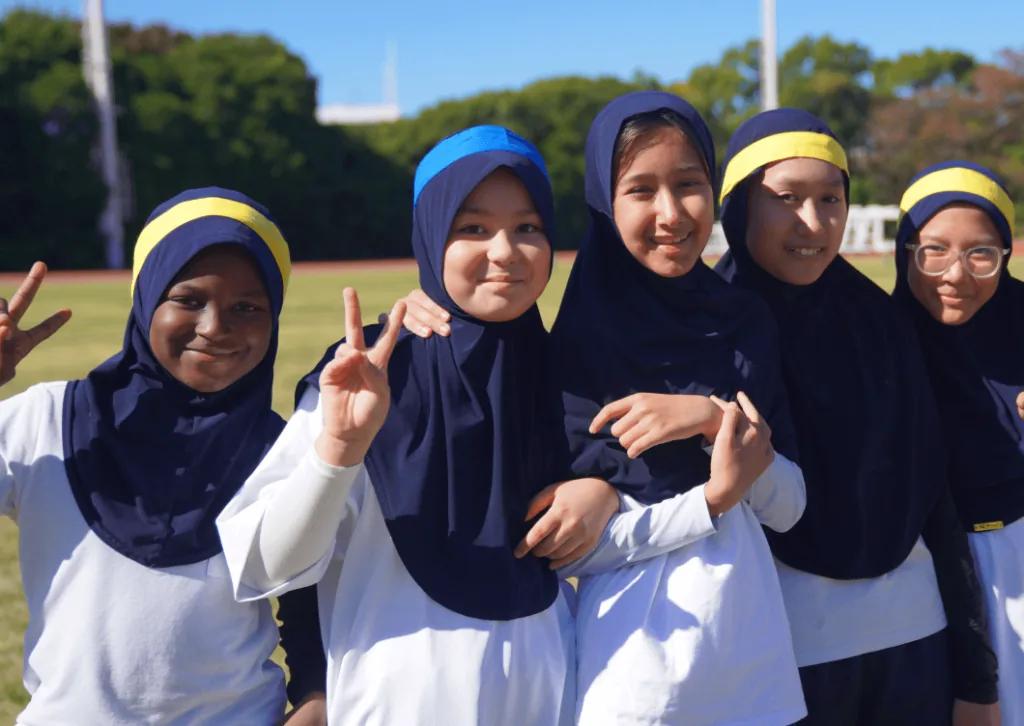
Held in September 2025, this field day exemplified the school's community spirit. Students, teachers, and parents participated together in team competitions including lava races, dodgeball, and tug-of-war. The event emphasized teamwork, sportsmanship, and family involvement—parents weren't just spectators but active participants alongside their children.
Academic Competitions
The school runs an English Internal Competition annually, with students divided by grade level. In 2025, participants recited poetry on assigned themes, showcasing language development. The inaugural Science & Math Festival in July 2025 featured secondary students presenting projects in biology, physics, and other STEM fields, reflecting the school's academic enrichment focus.
Cultural & Religious Celebrations
Islamic holidays and cultural events punctuate the calendar, including Ramadan observances, Eid celebrations, and Quran recitation competitions. The school also hosts significant visitors; in January 2026, directors from Indonesia's prestigious Gontor boarding school visited, highlighting international Islamic educational connections.
International Opportunities
The school offers a 13-day Umrah pilgrimage and study tour during summer breaks, providing older students with spiritual enrichment and exposure to Islamic heritage sites. School leadership has visited Islamic universities abroad, including Al Madinah International University in Malaysia, suggesting future international partnerships.
Boarding & Residential Life
Al Sanad operates boarding programs that expand access beyond the Tokyo area. Girls' dormitories have operated for several years, and in January 2026 the school opened a boys' boarding facility to accommodate male students living far from campus. This residential component creates a 24/7 Islamic living environment with supervised routines, daily prayers, and community meals—effectively extending the school's faith-based culture into students' full daily lives.
Boarding is particularly valuable for families in other prefectures who want their children to access Islamic education unavailable in their home regions.
Family Engagement
Parent involvement is clearly valued, as evidenced by Sports Day participation and the collaborative tone of school communications. While formal parent-teacher organizations or volunteer structures are not detailed in available materials, the school's relatively small size and Islamic orientation likely foster close family-school relationships.
The shared faith commitment creates natural bonds among families, and the school's emphasis on community service and altruism suggests regular opportunities for family participation in charitable activities and school events.
Student Well-being & Support
The school emphasizes a "stimulating and supportive learning environment" where dedicated teachers provide personal attention. Core values of respect, integrity, and personal growth contribute to student well-being. However, no formal counseling program or mental health services are mentioned in available sources.
In practice, student support appears embedded in the school's holistic approach rather than separated into specialized services. Daily prayer, Quran study, and close teacher-student relationships may serve as primary emotional and spiritual support structures. The small community size allows teachers to know students individually.
Cultural Atmosphere
The prevailing culture balances academic rigor with spiritual development. Students are expected to excel in Cambridge-based academics while also progressing in Quranic memorization and Islamic knowledge. The atmosphere emphasizes:
- Discipline in both study and religious practice
- Respect for teachers, peers, and Islamic principles
- Cooperation through team projects and group activities
- Humility and service to others
- Global citizenship while maintaining Islamic identity
The school promotes itself as preparing students to be confident, knowledgeable Muslims who can navigate both Japanese society and the broader international community. The integration of Japanese language study alongside English and Arabic reflects this dual local-global orientation.
Community Gaps & Considerations
As a relatively new school (opened 2022), Al Sanad is still building traditions and expanding programs. Some aspects of community life remain underdeveloped or undocumented:
- No detailed description of parent organizations or governance structures
- Limited information on alumni networks (given the school's youth)
- No mention of community service projects or partnerships with local organizations
- Unclear policies on student discipline or behavioral expectations
- No published student handbook or code of conduct
Prospective families should inquire directly about these aspects during the admissions process. The school's growth trajectory suggests community programs will continue developing as enrollment expands and traditions establish themselves over time.
Total Cost Analysis
Al Sanad School Japan charges ¥2.25M-¥2.97M annually for international students, with significantly lower rates for local students. One-time fees and lack of school scholarships make total costs su...
Read More
Overview
Al Sanad School Japan operates a dual fee structure that distinguishes sharply between "local" and "non-local" (international) students. For international families, total annual costs can reach nearly ¥3 million, placing the school in the upper tier of Tokyo's international school market. Local students benefit from significantly reduced tuition, though all families face substantial one-time enrollment charges.
Annual Tuition Structure
Local vs. Non-Local Pricing
The school's most distinctive feature is its bifurcated fee system:
Local Students:
- Grade 1 (age 6): ¥570,000 per year
- Grade 6: ¥690,000 per year
- Grade 12: ¥780,000 per year
Non-Local Students:
- Grade 1: ¥1,800,000 per year
- Grade 6: ¥2,100,000 per year
- Grade 12-13: ¥2,520,000 per year
Non-local students pay approximately 3-4 times the tuition charged to local families at every grade level. The published fee range spans ¥2,250,000 to ¥2,970,000 depending on grade level and residency status.
Additional Recurring Costs
Beyond base tuition, all students pay annual supplementary fees:
- Facility Fee: Approximately ¥25,000 per year
- Event/Programme Fee: ¥15,000-¥20,000 per year
- Textbooks: ¥20,000-¥40,000 per year (varies by grade)
For example, a local Grade 1 student's true annual cost totals approximately ¥630,000 when all recurring charges are included (¥570,000 tuition + ¥25,000 facility + ¥15,000 events + ¥20,000 textbooks).
One-Time Enrollment Fees
Initial Costs
All new families encounter substantial upfront charges:
Registration Fee: ¥10,000 (paid upon application, non-refundable)
Enrollment Fee:
- Local students: ¥100,000-¥160,000 (varies by program level)
- Non-local students: ¥320,000 (flat rate)
Building Development Fee (non-local students only):
- Primary program: ¥450,000
- Other programs: ¥300,000-¥450,000
For a non-local family enrolling in Primary, first-year costs include: ¥10,000 (registration) + ¥320,000 (enrollment) + ¥450,000 (building) = ¥780,000 in one-time fees, plus the full annual tuition and recurring charges.
Refund Policies
The deposit (enrollment fee) is fully refundable only if withdrawal occurs four or more months before the term starts. After that threshold, these one-time fees become non-refundable, creating significant financial commitment.
Total Cost Scenarios
Year 1 (International Student, Grade 1)
- Registration: ¥10,000
- Enrollment: ¥320,000
- Building Development: ¥450,000
- Annual Tuition: ¥1,800,000
- Facility: ¥25,000
- Events/Programme: ¥15,000
- Textbooks: ¥20,000
- Total Year 1: ¥2,640,000
Subsequent Years (Same Student)
- Annual Tuition: ¥1,800,000-¥2,520,000 (increases with grade)
- Facility: ¥25,000
- Events/Programme: ¥15,000-¥20,000
- Textbooks: ¥20,000-¥40,000
- Typical Annual Total: ¥1,860,000-¥2,600,000
13-Year Total (Grade 1-13, International)
Assuming average annual costs of approximately ¥2,200,000 after the first year and factoring in grade-level increases:
- First year: ¥2,640,000
- Years 2-13: ~¥26,000,000-¥28,000,000
- Estimated 13-Year Total: ¥28,500,000-¥30,500,000
Additional Costs Not Included
Transportation
The school provides no bus service. Families must arrange independent transportation to the Sōka City campus (accessible by bus from Shinden/Dōkyō Station). Transport costs vary by distance but represent an ongoing expense.
Cambridge Examinations
IGCSE and A-Level examination fees are referenced in school materials but not itemized in published fee schedules. These external exam costs (typically several hundred pounds per subject) must be paid separately.
Optional Programs
- Summer Quran Intensive Programs
- 13-day Umrah pilgrimage and study tour
- School trips and special events
Pricing for these enrichment activities is not publicly listed.
Boarding
The school operates girls' and boys' boarding programs for students living far from campus. Boarding fees are not disclosed on the website, representing another potential major cost for families utilizing this option.
Financial Aid Landscape
School-Offered Aid: None
Al Sanad School Japan does not advertise any institutional scholarships, need-based grants, sibling discounts, or sliding-scale tuition. The published fee schedules show flat rates with no mention of financial assistance programs.
External Scholarship Programs
Two charitable organizations have provided limited support:
Human Initiative Japan (2025):
- Awarded four scholarships of ¥100,000 each
- Total distribution: ¥400,000
- Targeted students needing financial support
- Recipients selected through coordination with school administration
- One-time program (November-December 2025); recurring status unclear
Dompet Dhuafa Japan (October 2025):
- Distributed scholarships to Al Sanad students alongside two other Islamic schools
- Award amounts and recipient numbers not disclosed
- Part of ongoing commitment to Muslim education in Japan
These external scholarships provide minimal relief relative to total costs. A ¥100,000 award covers only 3.8% of first-year international costs or 4.5% of annual tuition.
Comparative Analysis
Market Position
Al Sanad's pricing aligns with Tokyo's Islamic international school market. YUAI International Islamic School charges approximately ¥1.44M for primary and up to ¥2.64M in higher grades, placing both schools in similar ranges.
The local vs. international pricing differential appears designed to serve both Japanese Muslim families (at accessible local rates) and expatriate families (at premium international rates).
Value Considerations
Included in Tuition:
- Cambridge Primary, IGCSE, and A-Level curriculum
- Islamic curriculum and Arabic instruction
- Japanese language classes
- Daily Tahfiz (Quran memorization) sessions
- Access to academic clubs and extracurricular activities
- Use of school facilities
Not Included:
- Transportation
- Boarding (separate fees)
- Cambridge exam registration
- Optional trips and programs
- Uniforms and lunch (presumably)
Payment Structure
Tuition is divided into installments (typically 2-3 per year) with payment due before each term begins. The Japanese academic calendar (April-March) governs the payment schedule. The enrollment deposit must be paid in full upon acceptance to secure placement.
Financial Planning Considerations
For International Families
Families should budget approximately ¥2.6M-¥3M for the first year including all one-time fees, then ¥2M-¥2.6M annually thereafter. Over a complete K-12 education, total costs could approach ¥30M per child.
For Local Families
Local tuition (¥570K-¥780K annually) plus one-time fees (¥100K-¥160K enrollment) makes the school more accessible to middle-income Japanese Muslim families, though still representing a significant premium over public education.
Multiple Children
With no sibling discounts, families with multiple children face multiplicative costs. Two children would require double all fees, potentially exceeding ¥60M over 13 years for international enrollment.
Bottom Line
Al Sanad School Japan represents a substantial financial commitment, particularly for international families. The lack of institutional financial aid, combined with high one-time fees and premium annual tuition, positions it as an option primarily for upper-income Muslim families seeking integrated Islamic and Cambridge education in Japan. The minimal external scholarships available provide negligible relief relative to total costs.
Sources
- Al Sanad School Japan - Doris School Directory
- Al Sanad Fees - Doris School
- Al Sanad School Japan Fees - International Schools Database
- Application Process - Al Sanad School Japan
- Human Initiative Japan Scholarship Announcement
- Dompet Dhuafa Japan Scholarship Program
- YUAI International Islamic School Fees
- Al Sanad School Life Updates
Who Is This School Best For?
Al Sanad School Japan is ideal for Muslim families seeking English-medium Cambridge education integrated with Islamic values, particularly Indonesian expatriates and Japanese Muslims.
Read More
Overview
Al Sanad School Japan is explicitly designed for Muslim families seeking an international education that integrates Islamic values with academic excellence. Located in Sōka City, Tokyo, this co-educational school serves students ages 6–18 (with a new kindergarten program starting in 2026) and combines Cambridge curricula with a comprehensive Islamic educational framework.
Ideal Student Profile
Religious and Cultural Background
The school is unambiguously Islamic in orientation. Daily routines include morning Tahfiz (Quran recitation) sessions, summer Quran intensive programs, and Islamic-themed cultural performances. The school's vision—"Harmony in Knowledge, Unity in Islam"—emphasizes blending conventional academics with Islamic teachings.
Best suited for:
- Muslim students from practicing families seeking religious education alongside academics
- Children whose parents want integrated Islamic values (Akhlaq) and character development
- Students comfortable with daily prayer, modest dress codes, and faith-based activities
- Families prioritizing Quranic studies and Arabic language learning
Not suitable for:
- Non-Muslim families or those preferring secular education
- Students unwilling to participate in daily religious observances
- Families seeking purely Japanese-style education
Academic Readiness
Al Sanad follows Cambridge Primary, IGCSE, and A-Level programs, requiring students to handle rigorous international curricula. The admissions process includes a placement test assessing academic preparedness.
Ideal candidates:
- Students with at least average academic preparation
- Motivated learners who can balance demanding coursework with religious studies
- Those aiming for internationally recognized qualifications (IGCSE/A-Levels)
- Families valuing both spiritual growth and scholarly achievement
The school's first documented university placement—a graduate accepted to Kanazawa University for International Studies—demonstrates academic pathways for successful students.
Language Proficiency
Instruction is primarily in English, with Arabic and Japanese also taught. This multilingual environment requires specific language competencies.
Language requirements:
- English: Students should have functional English skills, especially for secondary-level Cambridge studies. No intensive ESL program is mentioned, so conversational proficiency is important
- Arabic: Taught as part of the Islamic curriculum; prior knowledge helpful but not required
- Japanese: Offered as a subject; beneficial for students living long-term in Japan
Best suited for:
- Indonesian families (the school serves "Indonesian families and local Japanese communities")
- Native English speakers or students from international schools
- Japanese Muslim families whose children can handle English-medium instruction
- Multilingual learners comfortable switching between languages
Less suitable for:
- Students with very limited English proficiency
- Families expecting Japanese-language instruction across all subjects
Family Circumstances
Geographic and Residential Considerations
The school offers both day and boarding options (girls' dormitories established, boys' boarding opened January 2026), expanding accessibility beyond the Tokyo area.
Ideal for:
- Families living in or relocating to the greater Tokyo area
- Students from distant prefectures who can board on campus
- Parents seeking 24/7 Islamic residential culture with supervised routines
- Expatriate families on temporary assignment in Japan
Transportation note: The school does not provide bus service, so day students need independent transport arrangements (accessible by bus from Shinden/Dōkyō Station).
Financial Capacity
Tuition is substantial, with significant differences between local and non-local (international) students.
Annual costs (non-local students):
- Grade 1: ¥1,800,000 tuition + facility/program fees
- Grade 12: ¥2,520,000 tuition
- Total annual range: ¥2,250,000–¥2,970,000 depending on grade
One-time fees:
- Registration: ¥10,000
- Enrollment: ¥320,000 (non-local)
- Building development: ¥300,000–¥450,000 (non-local new students)
Best suited for:
- Middle-to-upper-income families who can afford premium international school fees
- Families budgeting ¥2–3 million JPY per year per child
- Those with access to external scholarships (Human Initiative Japan and Dompet Dhuafa Japan have provided limited need-based support)
Note: No institutional financial aid, sibling discounts, or sliding scale tuition is offered by the school itself.
Educational Values and Priorities
Families should align with Al Sanad's core educational philosophy, which emphasizes:
Holistic development:
- Islamic Akhlaq (high moral and ethical standards)
- Personal growth (resilience, humility, cooperation)
- Altruism and community service
- Excellence in knowledge and skills
- Global citizenship with cultural awareness
Best suited for:
- Parents wanting faith integrated into daily academics, not separated
- Families valuing character education alongside intellectual development
- Those seeking practical application of Quran and Sunnah in student life
- Parents who appreciate smaller community settings with close family involvement
Community and Cultural Fit
Student Body Diversity
While precise demographics aren't published, the school serves a multicultural Muslim community with strong Indonesian representation alongside Japanese Muslims.
Ideal for:
- Indonesian expatriate families (the primary demographic)
- Japanese Muslim converts and their children
- Students who thrive in diverse, faith-based communities
- Families comfortable with multi-cultural Islamic environments
Extracurricular and Community Life
The school emphasizes community building through:
- Annual Sports Day (involving students, teachers, and parents)
- English competitions and Science & Math Festivals
- Academic and intellectual clubs
- Summer Umrah pilgrimage and study tours
- Islamic celebrations and cultural performances
Best suited for:
- Families wanting strong parent-school partnerships
- Students interested in STEM (Academic Enrichment strength noted)
- Those valuing both academic competitions and spiritual activities
Who Should Look Elsewhere
Al Sanad is not recommended for:
- Non-Muslim families seeking secular or non-denominational education
- Students requiring significant special education support (no inclusion programs mentioned)
- Families unable to meet the substantial tuition requirements without institutional aid
- Students with very limited English who need intensive language support
- Those preferring Japanese public school systems or purely Japanese instruction
- Families uncomfortable with gender-specific religious practices or modest dress expectations
Summary: The Ideal Al Sanad Family
Al Sanad School Japan is purpose-built for practicing Muslim families—particularly Indonesian expatriates and Japanese Muslims—who seek:
- Cambridge international education (IGCSE/A-Levels) delivered in English
- Comprehensive Islamic curriculum with daily Quran study and Arabic
- Character development grounded in Islamic values and ethics
- Multicultural Muslim community in Japan
- Boarding options for families unable to relocate to Tokyo
Families should be prepared for premium tuition costs, active participation in faith-based school life, and an educational philosophy that seamlessly integrates academic rigor with spiritual development. The school's mission—preparing students as global citizens while maintaining strong Islamic identity—defines its ideal community.
Sources
- Al Sanad School Japan - Doris School Profile
- Al Sanad School Japan - Vision & Mission
- Al Sanad School Japan - Approach & Values
- Al Sanad School Japan - Application Process
- Al Sanad School Japan - School Life News
- Al Sanad School Japan - Fees (Doris)
- Al Sanad School Japan - Tuition and Fees 2025/2026
- Human Initiative Japan - Al Sanad Scholarship Collaboration
Islamic Values at the Core of Al Sanad's Educational Philosophy
Al Sanad School Japan uniquely integrates Cambridge academics with Islamic character education, guided by the vision 'Harmony in Knowledge, Unity in Islam.'
Read More
Educational Philosophy
Al Sanad School Japan operates from a distinctive dual-track educational philosophy that places Islamic values at the centre of every academic endeavour. The school's official vision — "Harmony in Knowledge, Unity in Islam" — captures this synthesis eloquently: rigorous Cambridge-framework academics are not pursued in isolation but are woven together with the Quran, Sunnah, and Islamic moral principles (Akhlaq).
Holistic Character Development
The school explicitly rejects a purely academic model. On its Approach & Values page, Al Sanad describes its commitment to holistic, individualized learning, where dedicated teachers nurture each student's intellectual, spiritual, and personal growth simultaneously. Core values promoted include:
- Islamic Akhlaq — high moral and ethical standards drawn from Islamic tradition
- Resilience, humility, and cooperation — personal character virtues
- Altruism and community service — serving others as a spiritual duty
- Excellence in knowledge and skills — academic achievement as an act of worship
These are not abstract principles; they are built into the daily timetable. Every morning begins with a Tahfiz session — structured Quran memorization and recitation — before academic classes commence. Students are expected to internalize the practical application of Quran and Sunnah not just in religious studies but across all aspects of school life.
Global Citizenship with Islamic Grounding
The school aspires to produce graduates who are global citizens with cultural awareness, capable of navigating a diverse world while remaining anchored in their faith. This dual emphasis reflects the reality of the school's student body: children of Indonesian expatriates, Japanese Muslim converts, and other Muslim families who must function effectively in contemporary Japanese society and beyond, while maintaining their religious identity.
The Cambridge IGCSE and A-Level curriculum provides internationally recognized qualifications that open doors to universities worldwide, while the Islamic curriculum — including Arabic language study and Quran studies — ensures graduates have a strong religious foundation.
Faith as a Pedagogical Framework
Rather than treating religious education as a separate subject confined to one class per week, Al Sanad embeds faith throughout the school day. This approach — sometimes called tarbiyah (Islamic upbringing/education) in Islamic educational discourse — treats every lesson, interaction, and school event as an opportunity to reinforce Islamic values. The Science & Math Festival, the English Internal Competition, and even Sports Day are framed within this larger purpose of developing well-rounded Muslim learners.
For families seeking an education that does not compartmentalize faith and learning, Al Sanad's philosophy represents a compelling and relatively rare offering in the Japanese educational landscape.
Cambridge Curriculum Meets Islamic Education: Academic Life at Al Sanad
Al Sanad combines Cambridge IGCSE and A-Level programs with daily Quran study, Arabic, and a Science & Math Festival, creating an academically ambitious Islamic learning environment.
Read More
Academic Culture at Al Sanad School Japan
Al Sanad School Japan sits at an interesting intersection: it offers one of the most internationally recognized academic frameworks — the Cambridge Assessment International Education curriculum — while embedding it within a rigorous Islamic educational structure. The result is an academic culture that demands both intellectual and spiritual engagement from students.
Cambridge Framework
From primary through to Year 13, Al Sanad follows the Cambridge curriculum pathway:
- Cambridge Primary — foundational literacy and numeracy
- Cambridge Lower Secondary / Junior High — bridging primary and IGCSE
- Cambridge IGCSE — internationally recognized secondary qualifications
- Cambridge A-Levels — university-entry qualifications recognized worldwide
Students sit external Cambridge examinations (IGCSE and A-Level), with associated exam fees charged separately. The school's fee tables explicitly reference Cambridge examination fees, confirming active external assessment. This means Al Sanad graduates hold globally portable qualifications, opening pathways to universities in the UK, Malaysia, Indonesia, and beyond.
Islamic Academic Integration
Alongside Cambridge subjects, the school runs a parallel Islamic curriculum that includes:
- Arabic language — taught as a core subject
- Quran studies (Tahfiz) — daily morning sessions of Quran memorization and recitation
- Islamic studies — integrating Quran and Sunnah into daily learning
- Summer Quran Intensive Programme — an annual deepening programme
This is not a token religious add-on. The school dedicates significant timetable space to Islamic education, reflecting its belief that academic and spiritual development are inseparable.
Academic Enrichment Activities
Even in its early years, Al Sanad has launched meaningful academic enrichment initiatives:
Science & Math Festival (July 2025): Secondary students presented original projects across biology, physics, and mathematics — the school's first-ever science fair. Dorisschool identifies "Academic Enrichment" as one of the school's stated strengths.
English Internal Competition: An annual language competition for all grades, featuring poetry recitation on assigned themes. This builds public speaking skills and English proficiency alongside Islamic literacy.
International Study Tour: The school offers a 13-day Umrah pilgrimage and study tour during summer, blending international exposure with religious enrichment — an unusual combination that reflects the school's integrated philosophy.
University Outcomes
As a school founded in 2022, Al Sanad has limited published university destination data. The one documented placement is a student named Sara, accepted to Kanazawa University (a Japanese national university) for International Studies in January 2026. The school celebrated this as a significant milestone, suggesting university placement is not yet routine but is actively celebrated and pursued. The school's connection to Al Madinah International University in Malaysia (visited by the principal) suggests an aspiration for graduates to pursue Islamic higher education internationally as well.
Japan's Rare Islamic International School: Boarding, Cambridge, and Quran Combined
Al Sanad is one of very few schools in Japan offering Cambridge IGCSE/A-Levels, daily Quran study, boarding for boys and girls, and instruction in English, Arabic, and Japanese.
Read More
What Makes Al Sanad School Japan Unique
In the landscape of international schools in Japan — dominated by IB World Schools, American curriculum schools, and British-style institutions — Al Sanad School Japan occupies a genuinely rare niche. It is one of only a handful of schools in all of Japan offering Cambridge-accredited IGCSE and A-Level qualifications within an explicitly Islamic educational framework.
The Islamic International School Niche in Japan
Japan has a small but growing Muslim population, including Indonesian and other Southeast Asian expatriates, as well as Japanese converts. Schools like YUAI International Islamic School have served this community for longer, but Al Sanad represents a newer, more ambitious institution offering A-Level qualifications — a qualification level not always available at Islamic schools in Japan. For Muslim families in Japan who want globally portable qualifications and faith-integrated education, options are extremely limited, making Al Sanad's existence significant.
Trilingual Environment
Few schools in Japan offer instruction across three languages in such an integrated way: English (primary academic medium), Arabic (religious and linguistic heritage), and Japanese (local context and integration). This trilingual environment serves a student population that may one day live and work across multiple countries, equipping graduates with a rare linguistic toolkit.
Boarding for Both Boys and Girls
The January 2026 opening of the male boarding dormitory (joining the existing girls' boarding) transforms Al Sanad into a full residential school. This is significant in Japan's international school landscape, where boarding options for Muslim students are essentially non-existent. Students from across Japan can now attend without requiring local family accommodation, enabling Al Sanad to draw from a national catchment rather than just Greater Tokyo.
External Philanthropic Partnerships
Al Sanad has established relationships with two major Islamic philanthropic organizations:
- Human Initiative Japan — provided four ¥100,000 scholarships in November 2025
- Dompet Dhuafa Japan — distributed scholarships on 1 October 2025 as part of a broader programme supporting Muslim schools in Japan
These partnerships reflect Al Sanad's embeddedness in the global Muslim charitable network and provide a potential financial support pathway for needy families that purely secular international schools cannot offer.
Connections to Global Islamic Education Networks
The school's principal has visited Al Madinah International University in Malaysia, and the school hosted directors of Indonesia's renowned Gontor pesantren (boarding school) in January 2026. These connections suggest Al Sanad is positioning itself not just as a local school but as a node in a transnational Islamic educational network — potentially offering graduates pathways to reputable Islamic universities in Malaysia, Indonesia, and beyond, in addition to mainstream universities reachable via Cambridge qualifications.
Notable Alumni
- Sara
International Studies
Former Al Sanad student from Ishikawa Prefecture who joined in April 2023 and was accepted to Kanazawa University for International Studies in January 2026.
About the School
- Established
- 2022
Mission
Harmony in Knowledge, Unity in Islam
Educational philosophy
Al Sanad School Japan operates on a holistic educational philosophy that integrates conventional Cambridge-based academics with Islamic values and character development. The school emphasizes the practical application of Quran and Sunnah in daily life, combined with rigorous academic preparation through Cambridge IGCSE and A-Level curricula. Students are guided by dedicated educators to develop as global citizens with cultural awareness, resilience, and ethical integrity rooted in Islamic Akhlaq.
Core values
Islamic Akhlaq, Resilience, Humility, Cooperation, Altruism, Excellence in Knowledge
Frequently Asked Questions
How much is annual tuition at Al Sanad School Japan?
Annual tuition at Al Sanad School Japan ranges from ¥570,000 to ¥2,970,000 (JPY), depending on the grade level.
What additional fees should I budget for at Al Sanad School Japan?
In addition to tuition, Al Sanad School Japan charges a registration fee of ¥10,000.
What are the admission requirements for Al Sanad School Japan?
Al Sanad School Japan follows a four-step admissions process: (1) Submit an online application with required documents (photos, birth certificate, passport/residence card, parents' IDs, previous school records); (2) Sit a placement test arranged by the school; (3) Receive an official admission offer; (4) Pay required fees and enroll. A non-refundable registration fee of ¥10,000 is due at application, and a one-time enrollment fee (¥100,000–¥320,000 depending on student status) is due upon acceptance. The school generally follows the Japanese academic year (April start), with a typical registration deadline in February for April intake. No formal interview is required, and no waitlist policy is documented.
When is the application deadline for Al Sanad School Japan?
The application deadline for Kindergarten Registration Deadline for April 2026 Entry is 2026-02-01.
Where is Al Sanad School Japan located?
Al Sanad School Japan is located in Tokyo, Japan.
Compare, fees & rankings
Last updated: May 1, 2026
Sources: the school's official website, accreditation bodies (e.g. IBO, CIS), and public records.