International School · Day School · Through School (K-12)
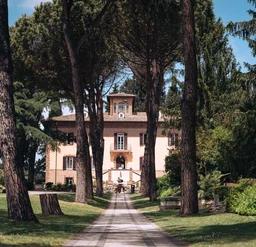
Marymount International School Rome
Rome, Italy
Last updated: Jul 5, 2026
- Curriculum
- US Curriculum / IB Diploma / AP
- Tuition from
- €13,900 - €28,000(2026-2027)≈ $15,575 - $31,374
- Students
- ~946
- Nationalities
- 94+
Overview
Marymount International School Rome is an international US Curriculum, IB Diploma Programme, Advanced Placement (AP) school for ages 3–18 in Rome, Italy. Annual tuition: €13,900–€28,000.
Marymount International School Rome, founded in 1946, is Rome's longest-established international school offering an American-style curriculum from Early Childhood (age 2) through Grade 12. Operated by the Religious of the Sacred Heart of Mary (RSHM), it is a co-educational Catholic day school providing the IB Diploma Programme and Advanced Placement courses within a 40-acre forested campus. With 946 students from 94 nationalities and a 1:6 student-teacher ratio, Marymount combines academic excellence with whole-child formation rooted in values of justice, dignity, and service. Its state-of-the-art facilities include science labs, a performing arts theater, FIFA-standard soccer fields, and a Forest School, all within a secure, park-like setting in northern Rome.
At a Glance
University placement — 100% of graduates proceed to higher education, supported by IB Diploma (authorized since 1982) and AP programs
Globally diverse community — 946 students from 94 nationalities create a truly international environment with no dominant cultural group
Rolling admissions with capacity limits — applications reviewed individually, early application recommended due to enrollment caps; EAL support available for non-native English speakers
Tuition ranges €13,900–€28,000 annually depending on grade level, plus €5,000 family registration fee; lunch included at no additional cost
Suited for internationally mobile families seeking American-style curriculum with Catholic values in Rome, ages 2–18, benefiting from 1:6 student-teacher ratio
Tuition & Fees
Tuition from
€13,900 - €28,000(2026-2027)≈ $15,575 - $31,374
Est. First Year Total
€13,900≈ $15,575
Tuition by Grade
| Grade | Annual Tuition | Application Fee | Deposit |
|---|---|---|---|
| Early Childhood | €13,900≈ $15,575 | - | - |
| Kindergarten | €17,750≈ $19,889 | - | - |
| Grades 1-5 | €21,000≈ $23,531 | - | - |
| Grades 6-8 | €23,900≈ $26,780 | - | - |
| Grade 13 | €28,000≈ $31,374 | - | - |
| Grades 9-12 | €28,000≈ $31,374 | - | - |
Approximate values based on ECB reference rates (Oct 12 – 16, 2026). Actual amounts may vary.
Scholarships & Financial Aid
2Marymount Academic Scholarship Program
Merit-BasedLimited Financial Aid
Need-BasedCurriculum & Academics
Class Sizes by Grade
All grades
- Average
- 16
- Student:Teacher
- 6:1
Languages of Instruction
Languages of Instruction
Compulsory / Optional
Subjects Offered
13 subjectsAdvanced Placement(3)
IB Diploma(10)
Accreditations & Memberships
2 accreditationsOutcomes & Results
Graduate Outcomes by Year
2024
Graduation rate
100%
University acceptance
100%
University Destinations
Admissions
Key Dates
Deadline for current and prospective students to apply for the Marymount Academic Scholarship for entry into Grades 6, 9, and 11 in the 2026-2027 academic year.
Register →School Life
- Uniform
- Required
- Lunch
- Included in Tuition
Support & Wellbeing
Co-curricular Activities
22 activitiesTeam Sports(3)
Grades: Middle School · Secondary
Individual Sports(4)
Grades: Middle School · Secondary
Music(2)
Grades: Middle School · Secondary
Drama & Theatre(1)
Grades: Middle School · Secondary
Academic Clubs(1)
Grades: Secondary
STEM(1)
Service & Leadership(1)
Grades: Secondary
Visual Arts(2)
Grades: Primary
School-specific(7)
Grades: Primary · Middle School · Secondary
Facilities
14 facilitiesSports & Athletics(6)
Academic Facilities(3)
Arts & Performance(1)
Common Areas(1)
Outdoor Spaces(1)
Dining(1)
School-specific(1)
Location & Access
Getting There
School Bus
School bus service operating routes within Rome's GRA ring road and beyond. Round trip and one-way options available. A late bus departs campus at 17:10 for students participating in after-school activities.
Coverage Areas: Inside GRA (Grande Raccordo Anulare) ring road and outside GRA. Round trip and one-way options for both zones.
Transport Fee: €2,500 - €3,700
Campuses
Main Campus
Villa Lauchli Campus
Via di Villa Lauchli 180, 00191 Rome, Italy
Schoozy Insights
Catholic Roots, Global Outlook: The RSHM Educational Philosophy
Marymount Rome blends Catholic RSHM values — justice, dignity, whole-child formation — with rigorous IB and AP academics to develop tomorrow's global leaders.
Read More
The RSHM Foundation
Marymount International School Rome is operated by the Religious of the Sacred Heart of Mary (RSHM), a Catholic congregation whose educational philosophy centers on what they call the "formation of the whole child." This means that academic achievement is never pursued in isolation; it is always framed within a broader commitment to spiritual growth, personal character, and social responsibility.
The school's official mission statement captures this holistic vision with unusual clarity:
"Marymount's mission is to welcome students of diverse cultural and religious backgrounds, seeking to guide them toward their full potential by striving to prepare them both academically and spiritually to be lifelong learners and tomorrow's leaders, as well as to respond generously to the needs of our world and promote justice and dignity for all."
This statement does several things simultaneously. It signals openness — the school welcomes students of all faiths, not only Catholics. It establishes dual preparation — academic and spiritual development are co-equal. And it frames education as fundamentally outward-facing: students are not just preparing for university or careers, but to contribute meaningfully to the world.
Academic Rigor Within a Values Framework
In the classroom, this philosophy translates into a student-centered American curriculum enriched by the IB Diploma Programme and AP courses. Teachers are expected not merely to deliver content but to promote critical thinking, curiosity, and genuine intellectual engagement. The school's curriculum design emphasizes:
- Inquiry-based learning that encourages observation, exploration, and logical argumentation
- Cross-cultural perspectives built naturally into a student body from 94 nationalities
- Service learning integrated throughout the school's House System and student-led clubs
- Ethical reflection grounded in Catholic social teaching, though not restricted to Catholic students
Core Values in Practice
The RSHM's core values — Catholic values, academic excellence, formation of the whole child, justice, and dignity — manifest in concrete school structures. The House System, for example, is not merely a social grouping device but a deliberate vehicle for developing leadership, service, and community belonging. Student clubs like the Environmental Club and Model UN connect classroom learning to real-world issues of sustainability and global governance.
The school also maintains a School Psychologist and robust learning support team, reflecting its commitment to the wellbeing of every student, not just the academically gifted. EAL (English as an Additional Language) support ensures that newly arrived international families are not disadvantaged.
Welcoming Diversity Within a Catholic Identity
One of Marymount Rome's most distinctive philosophical positions is its ability to hold together Catholic identity and radical openness to diversity. Students from 94 countries — representing a wide range of religions, cultures, and family backgrounds — study together in an environment that takes Catholic values seriously without imposing them coercively. This balance, maintained over 78 years, is arguably the school's most distinctive philosophical achievement.
From Post-War Embassy Request to Rome's Premier International School
Founded in 1946 at the U.S. Embassy's request, Marymount Rome grew from 30 students into a 946-student institution from 94 nationalities on a 40-acre Roman campus.
Read More
Origins in Post-War Rome
Marymount International School Rome owes its existence to the turbulent aftermath of World War II. In October 1946, a delegation from the American Embassy in Rome approached the Religious of the Sacred Heart of Mary (RSHM) — a Catholic congregation with a long tradition in international education — and asked them to establish a school for the children of U.S. diplomatic and military personnel stationed in Italy during the post-war occupation period.
The response was immediate. On October 16, 1946, Marymount Rome opened its doors with just 30 students, a figure that already exceeded the original expectations by a factor of two. The school's name itself carried heritage: the Marymount network, founded by Mother Joseph Butler of the RSHM in New York in 1907, had already established schools across the United States and internationally.
Growth and Relocation
The initial premises quickly proved inadequate as the student body expanded rapidly throughout the late 1940s and early 1950s. In 1953, the school relocated to its current home — the Villa Lauchli (Via di Villa Lauchli 180), a historic 40-acre estate set among the hills of northern Rome in the Parioli/Fleming neighborhood. The Villa's main hall, a historic building now housing the school's administrative offices, became the architectural heart of the campus.
This move proved transformational. The expansive grounds allowed the school to develop world-class sports facilities, science laboratories, performing arts spaces, and — in more recent years — an innovative Forest School program for younger students, all within a secure, park-like environment.
Becoming a Full International School
Over the following decades, Marymount Rome evolved from a school serving primarily American families into a truly international institution. By the early 1980s, it had earned authorization as an IB World School (February 1982), becoming one of Italy's earliest and longest-standing providers of the International Baccalaureate Diploma Programme. The school also added Advanced Placement (AP) courses, creating a dual-pathway upper school curriculum.
Today, Marymount Rome serves nearly 946 students from 94 nationalities, taught by 170 faculty in a 1:6 student-teacher ratio. It is accredited by the Middle States Association (MSA-CESS), the Council of International Schools (CIS), and maintains its membership in the RSHM Global Network of schools spanning four continents.
A Living Legacy
What began as an emergency solution for Cold War-era diplomats has become Rome's most established and diverse international school — a 78-year-old institution that has shaped generations of global citizens while remaining rooted in the RSHM's founding mission of academic excellence, spiritual formation, and social justice.
IB Diploma and AP: Building University-Ready Global Scholars
Marymount Rome has offered the IB Diploma since 1982 alongside AP courses, achieving 100% university placement through rigorous academics and dedicated support services.
Read More
Dual-Pathway Upper School Curriculum
At the heart of Marymount Rome's academic identity is its dual-pathway upper school curriculum: the International Baccalaureate Diploma Programme (IBDP), for which the school has been authorized since February 1982, and Advanced Placement (AP) courses across multiple disciplines. This combination gives Grade 11–12 students exceptional flexibility in crafting their academic profile for university applications worldwide.
The IB Diploma at Marymount follows the standard six-group structure, with students selecting Higher Level (HL) and Standard Level (SL) courses across:
- Language A: English (instruction language), Italian (SL option)
- Language B: Spanish, French (SL)
- Individuals & Societies: History, Economics, Business Management
- Sciences: Biology, Chemistry, Physics
- Mathematics: Analysis & Approaches (SL/HL), Applications & Interpretation (SL/HL)
- The Arts: Music, Visual Arts (elective)
AP courses in subjects such as Calculus, Biology, English, and History supplement the IB offerings and are particularly valuable for students targeting U.S. universities.
Early Years to Middle School: American Curriculum Foundations
Below the high school, Marymount runs a US-aligned curriculum across its Early Childhood (ages 2–5), Elementary (Kindergarten–Grade 5), and Middle School (Grades 6–8) divisions. This scaffolded approach means students transition into the demanding IB and AP programs having already developed strong foundational skills in literacy, numeracy, critical thinking, and research.
The school's 1:6 student-teacher ratio — one of the lowest among major Rome international schools — ensures that individual attention is genuinely available at every level. Average class sizes of approximately 16 students further support this.
Learning Support and EAL
Marymount's academic culture is deliberately inclusive. A dedicated team of EAL (English as an Additional Language) teachers supports students for whom English is not a first language, while a School Psychologist and specialist learning support staff serve students with diverse learning needs. This means the school's academic rigor is not gatekept by language background or learning style.
Outcomes
Third-party data indicates a 100% graduation rate and 100% university placement rate for Marymount graduates, reflecting the effectiveness of both the academic program and the pastoral support structure. Specific data on Oxbridge, Ivy League, or QS Top 50 placements is not publicly disclosed by the school.
A 40-Acre Forest Campus in the Heart of Rome
Marymount Rome's Villa Lauchli campus offers FIFA-standard sports facilities, science labs, a performing arts theater, and a Forest School — all within a 40-acre wooded estate.
Read More
The Villa Lauchli Estate
Few international schools in a major European city can claim a campus as distinctive as Marymount Rome's. Occupying 40 acres (approximately 162,000 m²) of wooded grounds at Via di Villa Lauchli 180, 00191 Rome, the school sits in the Parioli/Fleming residential neighborhood of northern Rome — a leafy, secure district that feels remarkably distant from the urban bustle despite being within the city limits.
The campus centerpiece is the historic Villa Lauchli building, dating from the early 20th century, which today houses the school's main administrative offices. Around it, purpose-built academic and sports facilities have been developed over the decades to create what is, in effect, a self-contained educational village embedded in a natural parkland.
Sports and Outdoor Facilities
The outdoor facilities are exceptional by any standard:
- FIFA-standard football (soccer) pitch used for competitive ASIL-league matches
- Calcetto (5-a-side) mini football pitch
- Basketball and volleyball courts
- Tennis courts
- Cross-country and athletics track
- Forest School — a dedicated outdoor learning environment for younger students that uses the natural woodland setting to encourage curiosity, observation, and exploratory play
Academic and Arts Facilities
Indoors, the school provides:
- Science laboratories for Biology, Chemistry, and Physics
- Two separate libraries — one for Secondary, one for Elementary students
- Large multipurpose arena/auditorium used for performances, assemblies, and large events
- Computer rooms with full ICT equipment
- Smart boards in every classroom, with campus-wide Wi-Fi
- Early Childhood indoor gymnasium designed for the youngest learners
- Elementary gymnasium
- Conference rooms
Community and Spiritual Spaces
Consistent with its Catholic identity, the campus includes a chapel for prayer and religious celebrations, as well as communal spaces that support the school's emphasis on community bonding. The school cafeteria provides free lunch to all students — an unusual policy that removes socioeconomic barriers to the shared meal experience and reinforces the school's ethos of community and equality.
Access and Location
The campus is most easily reached by car; the nearest metro station (Flaminio, Line A) is approximately 20 minutes away by bus. The school operates a comprehensive bus service covering both routes inside Rome's GRA ring road (€3,500/year round trip) and destinations beyond the GRA (€3,700/year round trip), with one-way options also available.
94 Nationalities, One Community: Student Life at Marymount Rome
With students from 94 countries, Marymount Rome fosters global citizenship through a House System, student clubs, performing arts ensembles, and competitive sports teams.
Read More
A Genuinely Global Community
With 946 students from 94 nationalities sharing a single campus, Marymount Rome may be one of the most internationally diverse school communities in Europe. This diversity is not merely a demographic statistic — it is the lived daily experience of every student, who sits beside classmates from dozens of different countries, learns about world events from peers with personal connections to them, and develops the cross-cultural fluency that defines a truly international education.
The school's admissions philosophy reinforces this: Marymount explicitly welcomes families of all cultural and religious backgrounds, asking only that they embrace the school's commitment to academic excellence and respectful community life.
The House System
Marymount Rome operates a House System that cuts across grade levels, deliberately mixing younger and older students from different divisions in collaborative activities focused on service, leadership, and school spirit. The House System is a key vehicle for the school's pastoral culture, creating bonds of belonging that extend beyond the classroom and year group.
Student Clubs and Activities
The school's co-curricular offer is broad and structured:
Academic and Leadership Clubs:
- Model United Nations (MUN) — preparing students for international debate competitions
- Environmental Club — community conservation projects
- Royal Liar (student newspaper)
- STEM Club and Junior Architects
Performing Arts Ensembles:
- Royal Winds (brass and wind ensemble)
- Royal Voices (choral ensemble)
- Royal Strings (string orchestra)
- Drama productions
- Individual music lessons
Sports Teams (ASIL-competitive):
- Soccer, basketball, volleyball (competitive, ASIL league)
- Swimming, tennis, cross-country/track & field
- Karate, capoeira, equestrian (recreational/training)
Creative and Cultural Activities:
- Origami Club, Arts & Crafts (Elementary)
- Multicultural Club
- Italian, French, Spanish, Latin language clubs
A late bus service departing at 17:10 means students can participate in after-school activities without placing an additional logistical burden on families.
Shared Meals as Community Builder
One subtle but significant aspect of Marymount's community culture is its free lunch provision for all students. Rather than a transactional cafeteria experience, the shared midday meal is framed explicitly as a community-bonding ritual — a daily moment when students from 94 countries gather informally, without the social stratification that paid lunch systems can inadvertently create.
Pastoral Support
The community is supported by a School Psychologist, EAL teachers, and specialist learning support staff. The Catholic ethos of care — "dignity for all" — translates practically into a school culture where student wellbeing is treated as a serious institutional priority alongside academic outcomes.
About the School
- Established
- 1946
Leadership
- Sarah GallagherHeadmistress
- Helen DavicoElementary School Principal
- Viviane MingazziniSecondary School Principal
- Jasmin ZarinehDirector of Admissions & Marketing
Mission
Marymount's mission is to welcome students of diverse cultural and religious backgrounds, seeking to guide them toward their full potential by striving to prepare them both academically and spiritually to be lifelong learners and tomorrow's leaders, as well as to respond generously to the needs of our world and promote justice and dignity for all.
History
Marymount International School Rome was founded on October 16, 1946, at the request of a delegation from the U.S. Embassy in Rome, who approached the Religious of the Sacred Heart of Mary (RSHM) to establish a school for the children of American diplomatic and military families after World War II. The school opened with just 30 students — twice the originally expected enrollment. Following a period of significant growth, the school relocated in 1953 to its current campus, the historic Villa Lauchli (Via di Villa Lauchli 180, 00191 Rome), a 40-acre estate in the Parioli/Fleming district. The IB Diploma Programme was authorized in February 1982, making Marymount one of Italy's longest-standing IB World Schools. The school has remained part of the RSHM Global Network of schools throughout its history, maintaining its Catholic educational mission while growing into a diverse international community of over 940 students from 94 nationalities.
Frequently Asked Questions
What curriculum does Marymount International School Rome teach?
Marymount International School Rome offers US Curriculum, IB Diploma Programme and Advanced Placement (AP).
Is Marymount International School Rome an IB World School?
Yes, Marymount International School Rome is an IB World School offering the IB Diploma Programme.
How much is annual tuition at Marymount International School Rome?
Annual tuition at Marymount International School Rome ranges from €13,900 to €28,000 (EUR), depending on the grade level.
What additional fees should I budget for at Marymount International School Rome?
In addition to tuition, Marymount International School Rome charges a registration fee of €500.
When is the application deadline for Marymount International School Rome?
The application deadline for Academic Scholarship Application Deadline (Grades 6, 9, 11) is 2026-01-19.
Where is Marymount International School Rome located?
Marymount International School Rome is located in Rome, Italy.
What ages does Marymount International School Rome accept?
Marymount International School Rome accepts students from age 3 to 18.
How many students attend Marymount International School Rome?
Marymount International School Rome has approximately 946 students from 94+ nationalities.
What is the student-teacher ratio at Marymount International School Rome?
The student-teacher ratio at Marymount International School Rome is 6:1.
Does Marymount International School Rome have a school bus?
Yes, Marymount International School Rome offers a school bus service with 4 routes. School bus service operating routes within Rome's GRA ring road and beyond. Round trip and one-way options available. A late bus departs campus at 17:10 for students participating in after-school activities.
Explore More Schools
Learn about these curricula
Last updated: Jul 5, 2026
Sources: the school's official website, accreditation bodies (e.g. IBO, CIS), and public records.